A quit smoking app for COPD can support you between appointments, but it should sit beside medical care, not replace it. This guide, based on NHLBI and NHS guidance, covers why quitting matters most with COPD, what to ask your provider, what an app can add, how to tell breathlessness from a craving, and how to plan for flare-ups.
The Short Answer
If you have COPD, a quit app is a helpful extra, not the main treatment. The NHLBI page on preventing and living with COPD says “Quitting smoking is the most important step you can take to help slow the progression of COPD,” and it asks you to “Talk with your provider about how best to quit.” An app can sit beside that care and support you between appointments.
iQuit is a general quit-smoking app, free on Google Play and the App Store. It is not a COPD program and does not diagnose, treat or manage COPD or any other condition. For a full plan, see our guide to quitting with COPD.
Why Quitting Matters Most With COPD
The NHS COPD overview says “The main cause is smoking,” and it lists stopping smoking among the treatments: “if you have COPD and you smoke, this is the most important thing you can do.” It also notes that “The damage to the lungs caused by COPD is permanent, but treatment can help slow down the progression of the condition.”
The NHS COPD treatment page adds: “If you smoke, stopping is the most effective way to prevent COPD getting worse.” And it is honest about timing: “Although any damage done to your lungs and airways cannot be reversed, giving up smoking can help prevent further damage.” Its encouragement for people with advanced disease is: “it’s never too late to stop – even people with more advanced COPD will benefit from quitting.”
If you want the wider numbers, see our page on COPD statistics, and for what happens to breathing after quitting, lung function recovery (FEV1).
Medical Support Comes First
Quitting with COPD works best with your care team involved. Both health sources point the same way.
- Talk to your provider. The NHLBI prevention page says to “Talk with your provider about how best to quit.” The NHS treatment page says “You may also want to talk to a GP about the stop smoking treatments available to you.”
- Use group or peer support if you struggle alone. NHLBI says “If you have trouble quitting smoking on your own, consider joining a support group,” and to “Ask your family members and friends to support you in your efforts to quit.”
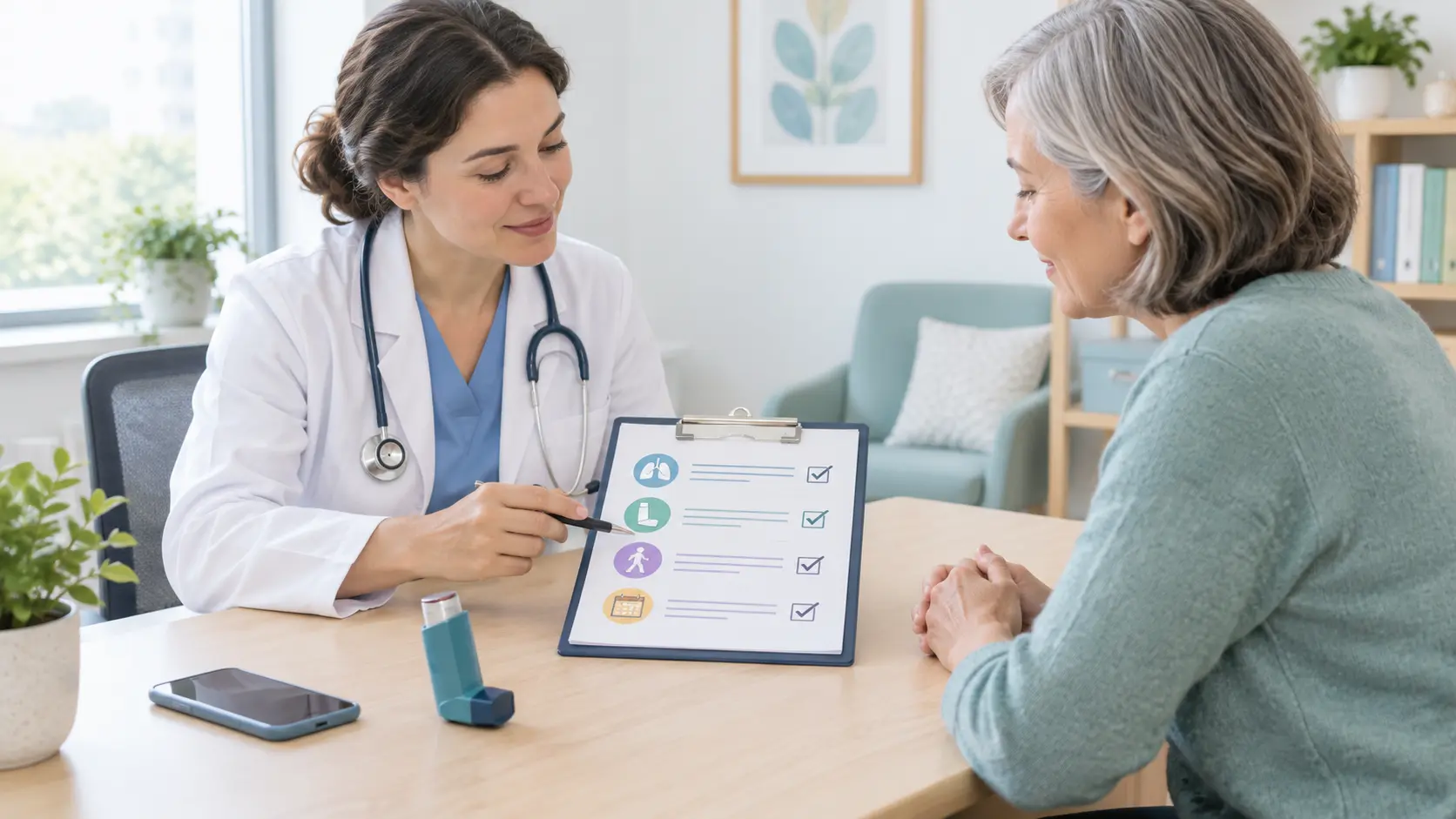
- Keep your COPD treatment going. An app does not replace inhalers or medicines. The NHLBI COPD treatment page says “Ask your provider to show you the correct way to use your inhaler.”
- Pulmonary rehabilitation. NHLBI describes it as “a supervised program that includes exercise training, health education, and breathing techniques.” The NHS calls it “a specialised programme of exercise and education.” For general breathing and exercise ideas after quitting, see lung capacity exercises after quitting, and check with your team first.
Be careful with e-cigarettes. NHLBI says “Some people use e-cigarettes or vape to try to quit smoking tobacco, but this is not a good idea for smokers who have COPD.” Ask your provider before switching to any nicotine product.
A Short Video on COPD and Quitting Tobacco
The American Lung Association has a short video on COPD and quitting tobacco use. It is general information, so take your own questions to your care team.
What a Quit Smoking App for COPD Can Add
A quit smoking app for COPD cannot examine your lungs or change your medicines. What it can do is fill the gaps between appointments, when you are on your own with a craving.
- Record cravings with triggers. Notes on when cravings hit make your next conversation with a clinician more specific.
- Offer something to do in the first minutes. Craving timers, distraction tips and grounding exercises give you a short task while the urge passes.
- Keep daily structure. Daily missions and a smoke-free day count can help you keep going on flat days.
- Show the money. Seeing what you save can be a motivator when medical costs are also on your mind.
NHLBI notes that “Some people find it helpful to do a rehabilitation program using the phone, the web, or a mobile app.” That is about remote pulmonary rehab, not quit apps, but it shows digital tools can sit alongside formal care. For a wider view of the options, the best quit smoking apps ranked compares features, and our page on a quit app for anxiety covers the worry and stress that often travel with breathlessness.
Breathlessness vs Cravings: Do Not Confuse Them
COPD and nicotine withdrawal can both make you feel unsettled, and breathlessness can cause anxiety that feels like a craving. Treat them differently.
- Breathlessness, a tight chest or a worsening cough is a medical symptom. Follow your COPD plan and your clinician’s instructions. Do not wait for a craving to pass.
- A craving is an urge to smoke. It comes in waves and usually fades.
- If you cannot tell which it is, do not assume it is a craving. Follow the COPD plan your care team gave you, and contact them if your breathing does not settle.
The breathing exercises in a quit app are meant for the urge to smoke. They are not a substitute for the breathing techniques taught in pulmonary rehab or for your prescribed treatment. The NHS notes that some people dismiss a cough with phlegm as just a “smoker’s cough,” so persistent symptoms deserve a visit to your doctor.
Flare-Up Plans and Staying Quit
The NHS explains that COPD symptoms usually get worse over time and “There may also be periods when they get suddenly worse, known as a flare-up or exacerbation.” Flare-ups are stressful, and stress is a common trigger for smoking.
NHLBI advises: “Be sure to discuss a plan with your provider for treating a flare-up, including any special medicine you might need.” Add a second question: how will you stay smoke-free through one?
- Write the flare-up plan from your provider in one place and keep it where you can see it.
- Note your personal smoking triggers around illness, such as hospital waiting, poor sleep or worry.
- Tell someone close that a flare-up is a high-risk time for you, and ask them to check in.
- If you slip, log it, note the trigger, and tell your care team. A slip is not the end of the attempt.
One more safety point from NHLBI: “Oxygen poses a fire risk, so you should never smoke or use flammable materials when using oxygen.” If you use oxygen, that reason alone is worth sharing with the people around you.
Questions to Ask Your Provider
Write your questions down before the visit. A quit attempt with COPD is a team effort, and clear questions make the visit useful.
- Which stop smoking treatments are suitable for me, given my COPD and other medicines?
- Is there a stop smoking service or counselor I can be referred to?
- Can I join pulmonary rehabilitation, and are there remote options?
- What is my plan if my breathing gets suddenly worse?
- Am I using my inhalers correctly, and can you show me the technique again?
- Who do I contact between visits if I am struggling to stay quit?
Bring your craving notes. If you have been logging triggers in an app, show the pattern. “I smoke most when I am short of breath at night” is far more useful to a clinician than “I find it hard.”
A Simple Weekly Routine Alongside Treatment
Routines make quitting less dependent on willpower on any single day. This is a practical suggestion, not medical advice, and you should adjust it to your own plan.
- Morning: take your medicines as prescribed and check in with your quit app. Note how you feel.
- Craving moments: use the first minutes for a short distraction or a grounding exercise, then log the trigger.
- Evening: look at your smoke-free days and what you saved. Write one thing that went well.
- Weekly: review your log and pick the one trigger to plan for next week.
- At each appointment: mention how the quit attempt is going, even if you slipped.
Keep the routine small. Three steps you do every day beat ten you abandon by the weekend.
Support for Family and Caregivers
If someone you love has COPD and smokes, your support matters. NHLBI suggests asking “family members and friends” to support the person quitting, and the same applies in reverse: ask how you can help.
- Offer to come to appointments or to help with a quit plan.
- Avoid smoking around the person, and if you smoke yourself, consider quitting together.
- Do not nag. Ask “What would help today?” instead.
- Remember flare-ups are scary. Be calm, follow the written plan and call for medical help if the plan says to.
NHLBI also lists secondhand smoke among the lung irritants to avoid, so a smoke-free home helps the person with COPD directly.
iQuit as a Free Companion
iQuit is free on Google Play and the App Store. For someone with COPD who is quitting with medical support, the relevant free parts are a craving log with triggers and intensity, SOS craving support with breathing exercises, grounding, distraction tips and craving timers, daily missions, a money dashboard, a health-recovery timeline and disease-risk insights for 11 conditions.
It does not have a COPD mode, does not measure your lungs and does not replace your inhaler, rehab or doctor. Use it as a companion to the plan your care team gives you.
Frequently Asked Questions
Is there a quit smoking app for COPD?
iQuit has no COPD-specific mode; it is a general quit app, free on Google Play and the App Store. It can log cravings and offer SOS support between appointments, but NHLBI advises talking with your provider about how best to quit, so your care team should lead the plan.
Why is quitting so important with COPD?
The NHS says that if you have COPD and you smoke, stopping is the most important thing you can do, and NHLBI says quitting is the most important step you can take to help slow the progression of COPD.
Is it too late to quit with advanced COPD?
No. The NHS says it is never too late to stop, and that even people with more advanced COPD will benefit from quitting. Damage already done cannot be reversed, but giving up smoking can help prevent further damage.
Can I use e-cigarettes to quit if I have COPD?
NHLBI says some people use e-cigarettes or vape to try to quit smoking tobacco, but this is not a good idea for smokers who have COPD. Ask your provider which quit options suit you before switching products.
Can an app replace pulmonary rehabilitation?
No. NHLBI describes pulmonary rehabilitation as a supervised program that includes exercise training, health education and breathing techniques. It says some people do a rehab program using the phone, the web or a mobile app, but that is a rehab program, not a quit app.
What if I cannot tell breathlessness from a craving?
Do not assume it is a craving. Follow the COPD plan your care team gave you and contact them if your breathing does not settle. A craving is an urge to smoke and usually fades; breathlessness is a symptom to take to your clinician.
Should I discuss a flare-up plan?
Yes. NHLBI says to be sure to discuss a plan with your provider for treating a flare-up, including any special medicine you might need. It is worth adding a plan for staying smoke-free during a flare-up too.
A Free Quit App to Use Between Appointments
iQuit is free on Google Play and the App Store. Log cravings, use SOS craving support and keep daily missions going alongside the plan from your care team. It does not treat COPD.
Download iQuit Free on Google Play
Download on the App Store