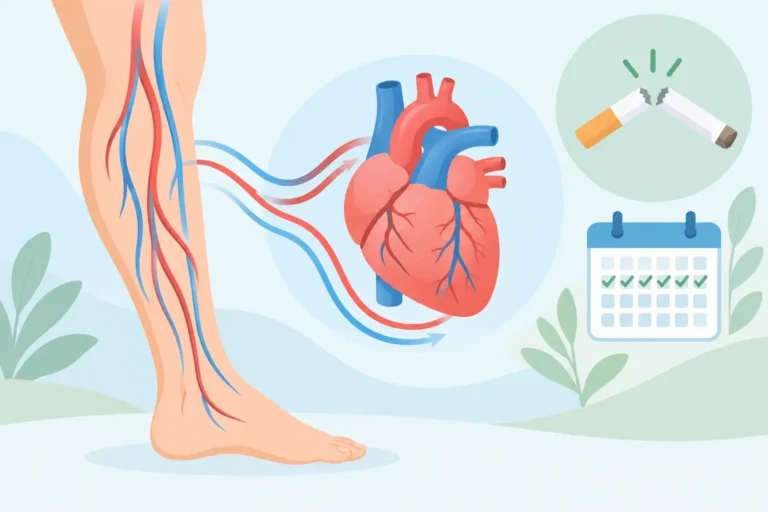
Your smoking breaks at work did not exist to give you nicotine. They existed to give you a reason to stand up, step outside, and stop looking at a screen for ten minutes. Now that you have quit, that reason still needs a home. If you drop the break along with the cigarette, you lose one of the few built-in pauses the workday ever gave you, and that gap is exactly where a lot of relapses start.
What to Do With Your Smoking Breaks
The simplest plan is also the one most people skip: decide, before your first shift as a non-smoker, exactly what replaces the walk outside. Not “I’ll figure it out” — an actual substitute. A lap around the building, a phone call to someone who isn’t a smoking buddy, five minutes with a breathing app, or just standing in fresh air with a bottle of water. The point of the break was never only the cigarette; it was permission to leave your desk. Keep giving yourself that permission.
If you quit smoking while trying to manage a demanding job, this is one of the places quitting smoking while managing stress and anxiety gets tested every single day, because the workday keeps coming whether or not you’ve replaced the ritual.
It helps to think about this before your quit date rather than during it. Look at your actual schedule: how many times a day did you step out, and at roughly what times? Those slots are now open. Some people fill every one of them with a new activity; others deliberately leave a couple of them as quiet standing-outside time, with nothing to do except breathe and look at something other than a screen. Either approach works — what tends not to work is pretending the slot doesn’t exist and hoping the urge quietly disappears on its own.
Why You Miss the Break More Than the Cigarette
Most new ex-smokers are surprised by what they actually miss. It usually is not the taste or even the hit of nicotine — it is the five-to-ten minutes that were unquestionably yours. Nobody messaged you during a smoking break. Nobody expected you at your desk. That structural gap, repeated six or seven times a day, was doing real psychological work: it paced the day and gave your brain a reset between tasks.

Once you name that clearly, the plan gets easier: you are not trying to replace a cigarette, you are trying to replace a pause. Anything that genuinely counts as a pause — stepping outside, changing rooms, moving your body — will do more for the craving than sitting at your desk gritting your teeth.
There’s also a simple physical piece to this. Standing up, walking, and breathing more deeply outside all do something a chair at a desk cannot: they change your body’s state, not just your mental focus. A cigarette used to force that state change by giving you a reason to step away for a fixed few minutes. A short walk or a few slow breaths outside can do a version of the same thing, just without the smoke.
Keeping the Break, Dropping the Cigarette
Practical version: keep your usual break times on the clock, but change what’s in your hand and where your attention goes.
- Same time, different object. Water, gum, a mint, or nothing at all — just get your hands away from the old motion.
- Move, don’t just stand. A short walk uses some of the restless energy that a cigarette used to burn off through the ritual of lighting and smoking.
- Log it. If a craving shows up at the usual break time, logging the trigger and intensity in a craving tracker turns a vague urge into a data point you can look back on, which is exactly the kind of pattern-spotting nicotine craving vs. habit differences are built on.
- Give it three minutes. Cravings tend to rise and fall in a few minutes; a short walk or a breathing exercise is usually enough to ride it out.
The goal is not to white-knuckle through an empty pause. It’s to fill the same slot with something that still counts as a break.
Going Outside With Colleagues: Yes or No
This one is genuinely personal, and there’s no single right answer.
| Situation | Often helps | Often hurts |
|---|---|---|
| Early days (week 1–2) | Stepping away from the smoking spot; going for your own walk | Standing directly in the smoke while cravings are at their sharpest |
| You like the company more than the cigarette | Joining outside but visibly not smoking, with a drink in hand | Accepting “just one” to fit in |
| A specific colleague is a strong trigger | Suggesting a different activity together (coffee run, short walk) | Continuing the exact same routine in the exact same spot |
| Weeks in, feeling steady | Rejoining the group comfortably once the urge has faded | Assuming you’re “cured” and testing yourself unnecessarily |
If you’d rather quit without your workplace knowing at all, standing apart from the smoking group can feel like an announcement — see how to quit smoking privately, without telling anyone for ways to step back without drawing attention to it. For a broader look at handling the smoke itself, group dynamics, and rehearsing your exit before you’re standing there, see how to be around smokers without smoking again.
The 3pm Slump and the Coffee-Cigarette Pairing
The mid-afternoon energy dip is one of the most reliable craving windows in an office day, and it’s made worse by the fact that coffee and cigarettes were probably paired for years. Caffeine and nicotine interact in the body, and for a lot of people the coffee cup itself becomes a trigger, independent of tiredness. That’s covered in detail in why coffee triggers a cigarette craving — worth reading before your first Monday back if coffee breaks and smoke breaks used to be the same fifteen minutes.
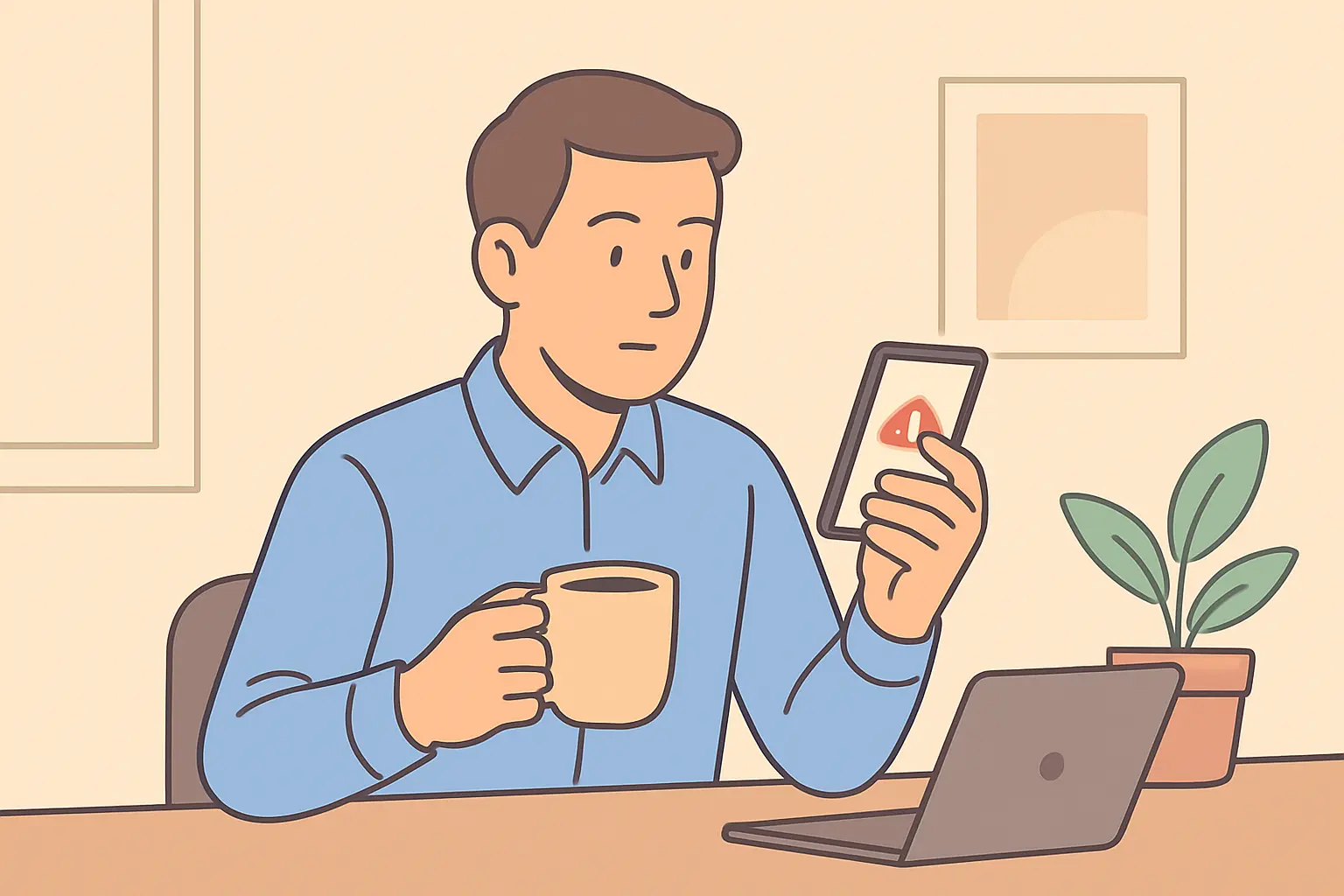
A practical fix for the slump itself: separate the coffee from the old smoke-break location. Drink it at your desk, at a different table, or standing rather than in the exact spot where you used to smoke. Breaking the physical association matters as much as breaking the chemical one.
It’s also worth checking whether the “slump” is partly just tiredness or a dip in blood sugar rather than a true nicotine craving. A short walk, a glass of water, or a small snack can settle a slump that has nothing to do with smoking at all — and if the urge is still there after that, you’ll know it’s genuinely the old habit talking, not just your body asking for fuel.
Stress at Work Without a Cigarette
Plenty of people genuinely believed smoking helped them handle work stress. It’s worth saying plainly: that feeling of relief was mostly the cigarette temporarily reversing the discomfort of nicotine withdrawal building up between cigarettes, not a real stress-management tool. Once withdrawal is gone for good, the underlying stress is still there — and still needs a real outlet.
This short CDC video looks at replacing the old “smoke break for stress relief” habit with something that actually helps:
The UK’s Health and Safety Executive treats work-related stress as a serious, ordinary part of many jobs — not a personal failing — and points employees toward recognizing early signs and asking for support rather than self-medicating with anything, cigarettes included. If stress was your main reason for lighting up, it may also be worth reading how to quit smoking while managing stress and anxiety alongside this piece, and looking at staying smoke-free after quitting for a broader relapse-prevention plan that covers more than just the workday.
Are You Allowed the Same Breaks Now?
Here’s the part almost nobody says out loud: in the US, federal law does not guarantee you any break at all, smoking or otherwise. The U.S. Department of Labor states it plainly — “Federal law does not require lunch or coffee breaks” under the Fair Labor Standards Act. Whatever break you took as a smoker was never a legal entitlement tied to the cigarette; it was company policy, full stop. States can and do add their own meal- and rest-break rules on top of that federal floor, so what you’re owed varies by state and by employer, not by whether you smoke.
What’s true almost everywhere is that a short, occasional walk or standing break is a reasonable ask even without a cigarette attached to it — many people simply don’t ask, because they assume the smoke break was the only “acceptable” reason to step away. If you’re unsure, the honest move is to check your employee handbook or ask HR directly rather than guessing.
Some workplaces are more flexible about non-smoking breaks than employees expect, precisely because they no longer involve leaving the property to find a designated smoking area. Others are stricter about clock time regardless of what the break is for. Neither is a reason to hide what you’re doing — a short, honest conversation with a manager (“I’ve quit smoking, I’m still taking a few minutes to walk instead”) tends to land better than quietly disappearing and hoping nobody notices the change.
Frequently Asked Questions
Should I still take my usual break times after quitting smoking?
Yes, if your job allows it. The pause itself — stepping away from your desk, changing your environment — has value on its own, separate from the cigarette. Keeping the timing while changing what you do during it tends to work better than cutting the break out entirely (Health and Safety Executive, general workplace wellbeing guidance).
Why do I still crave a cigarette at the exact same times every day?
Repeated pairing of a time, place, or activity with smoking creates a strong learned trigger, separate from physical nicotine dependence. That’s why the 10am break, the post-lunch coffee, and the drive home can all provoke cravings on their own schedule, even weeks after quitting.
Is it a bad idea to keep going outside with coworkers who smoke?
It depends on your stage and your triggers. In the first week or two, when cravings are sharpest, stepping back from the smoking spot is usually the safer choice. Later, many people can rejoin the group socially without smoking, as long as they’ve decided that in advance rather than deciding in the moment.
Why does coffee suddenly make me crave a cigarette?
Coffee and cigarettes are commonly paired for years, so the cup itself becomes a cue independent of caffeine’s effects. Changing where or how you drink coffee at work can weaken that specific association over time.
Am I legally entitled to the same number of breaks now that I’ve quit?
No, not because of quitting specifically. In the US, federal law (the Fair Labor Standards Act) does not require employers to give any breaks at all, so there was never a nicotine-specific legal entitlement to lose. Some states require rest or meal breaks on top of that federal floor, so check your state’s rules and your employee handbook rather than assuming.
What can I actually do instead of smoking during a work break?
A short walk, a few minutes of slow breathing, a phone call, or simply standing outside with water all preserve the pause without the cigarette. Logging the urge in a craving tracker also helps you notice which specific breaks are hardest, so you can plan for them ahead of time.
Turn Your Break Times Into Craving-Free Wins
iQuit’s craving forecasts learn your riskiest hours — including your usual break times — and nudge you before the urge peaks, while the SOS tools and virtual cigarette give you something to do with your hands when you step outside. Free on Google Play and the App Store.
Download iQuit Free on Google Play
Download on the App Store