
A cigarette that can’t hook you sounds like a contradiction, but that’s exactly what US regulators proposed in January 2025. Very low nicotine cigarettes — sometimes called VLNCs — deliver a small fraction of the nicotine of a normal pack, and the science behind them sat at the center of a real federal rule. Here’s what the milligram numbers actually mean, what the trials found, and why the policy is now going nowhere.
What “Very Low Nicotine” Means in Milligrams
The FDA’s own rulemaking gives the cleanest benchmark. In the top 100 US cigarette brands, the average nicotine content measured in 2017 was 17.2 mg per gram of total tobacco, and the agency calculates from an estimate of about 0.7 grams of tobacco per cigarette — which works out to roughly 12 mg of nicotine sitting in a single conventional cigarette. A smoker absorbs only a portion of that per cigarette, but it is more than enough to maintain dependence pack after pack.
Very low nicotine cigarettes engineer that number down dramatically. The commercial reduced-nicotine cigarettes sold in the US are marketed as containing approximately 95% less nicotine than conventional cigarettes, and the research cigarettes used in federally funded trials go lower still. The tobacco is genetically modified or specially processed so nicotine content drops while the tobacco still burns and looks like a normal cigarette.
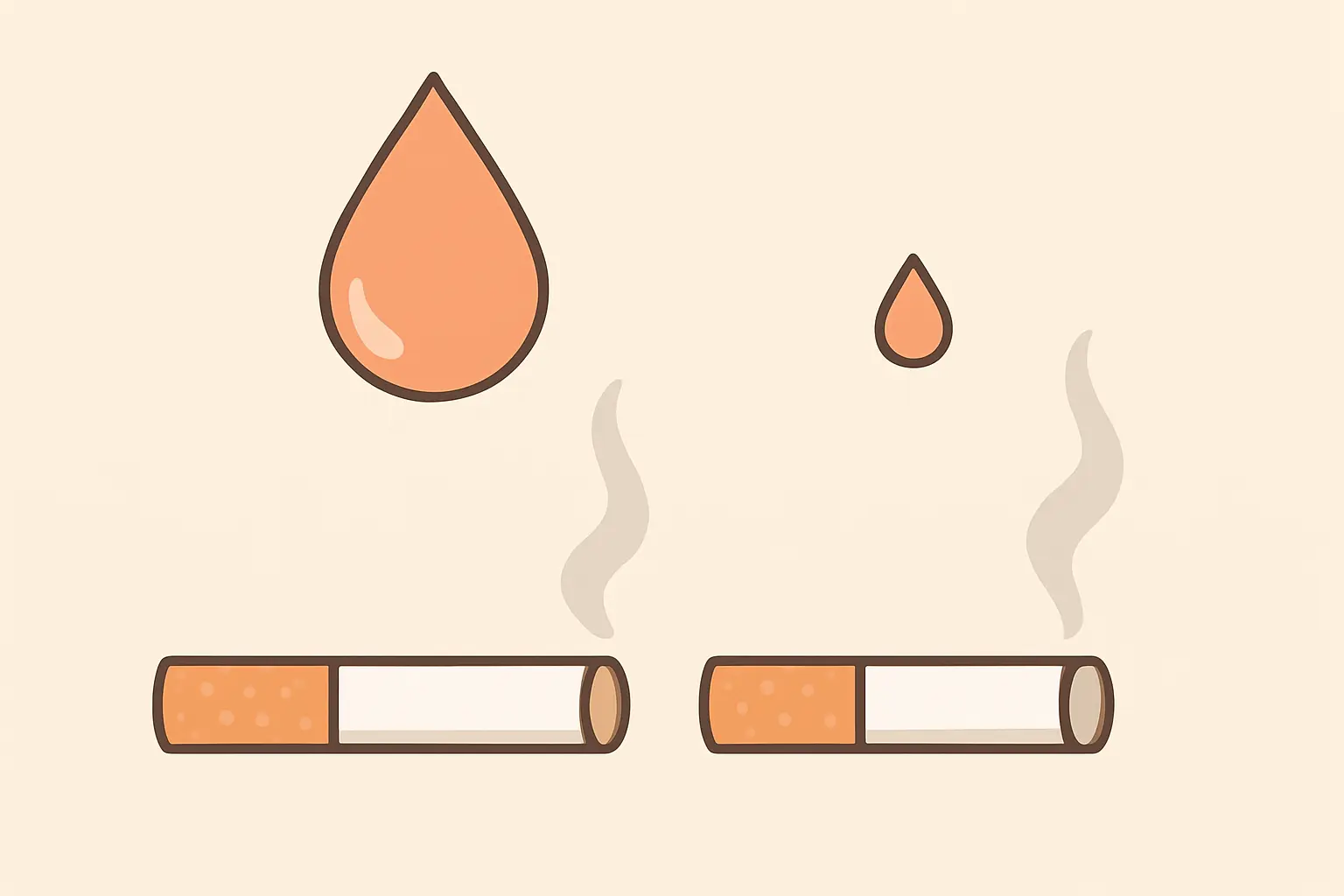
This matters for a simple reason our guide on how much nicotine is in one cigarette covers in more detail: it’s the nicotine dose per cigarette, not the number of cigarettes, that drives dependence. Cut that dose low enough, the theory goes, and the addictive loop weakens even if someone keeps lighting up. It is worth being clear about what does not change: the tar, the carbon monoxide and the carcinogens are all still there, exactly as they are with any other burning cigarette — and, as our piece on whether cigarette filters actually do anything shows, no amount of product engineering at the mouth end has ever fixed that.
The Proposed FDA Product Standard, and Its Status Now
On January 15, 2025, the FDA announced a proposed rule that would cap nicotine yield in cigarettes, cigarette tobacco, roll-your-own tobacco, most cigars and pipe tobacco at 0.70 mg per gram of total tobacco — low enough, the agency argued, to stop the products from creating or sustaining addiction. E-cigarettes, nicotine pouches, smokeless tobacco, heated tobacco, waterpipe tobacco and premium cigars would all have been excluded, since the rule targeted combusted products rather than nicotine delivery in general.
The projected effect was enormous. According to the FDA’s own press announcement, its population health model estimated the standard could prevent approximately 48 million US youth and young adults from ever starting to smoke by 2100, prompt more than 12.9 million people to stop smoking within a year of the rule taking effect (rising to 19.5 million within five years), and avert 1.8 million tobacco-related deaths by 2060 and 4.3 million by the end of the century.

None of that has happened. The proposal was published in the Federal Register on January 16, 2025, the comment period ran until September 15, 2025, and no final rule was ever issued. More pointedly, the government’s own Unified Agenda entry for the rulemaking (RIN 0910-AI76) now files it under completed actions, with a withdrawal dated April 21, 2025 — a withdrawal that was never itself published in the Federal Register, and the RIN has not reappeared in a later agenda edition.
The practical translation is blunt: nothing has changed for cigarettes on shelves, and on the current record nothing is scheduled to. This is not the first tobacco product standard to stall — our coverage of the menthol cigarette ban and its cessation data and the generational smoking ban both show how slowly these proposals move from announcement to enforcement, and why smokers shouldn’t wait on policy to make their own decision.
What the Reduced-Nicotine Trials Found
The FDA’s proposal didn’t come out of nowhere — it followed more than a decade of federally funded trials testing what happens when smokers are switched to reduced-nicotine cigarettes instead of their usual brand. A summary from Duke University’s Center for the Study of Tobacco Products research group highlights one representative example: a 2019 randomized controlled trial by Smith and colleagues in which patients assigned to VLNC cigarettes reduced the number of cigarettes smoked per day over six weeks compared with those smoking regular cigarettes.
The same summary is blunt about the limits. It quotes a clinician stating that the smoke from VLNC cigarettes “is just as harmful as conventional cigarettes” — reducing nicotine does nothing to tar, carbon monoxide or carcinogens. What changes is addictiveness, not toxicity. These products are a potential tool for breaking dependence, not a safer way to keep smoking, and the underlying assumption being tested is that a cigarette with a fraction of the nicotine should produce less dependence over time.
Compensatory Smoking: Do People Just Smoke More?
The obvious worry about any low-nicotine product is compensatory smoking — puffing harder, inhaling deeper, or lighting more cigarettes to chase the same nicotine hit. A systematic review and meta-analysis published in JAMA Network Open in 2026 by Denlinger-Apte and colleagues (open access on PubMed Central) looked directly at that question. It reviewed 17 randomized controlled trials published between 2010 and 2024, covering 5,500 adolescents and adults who smoked, and pooled a subset of 2,454 participants from 7 US trials for the meta-analysis itself.
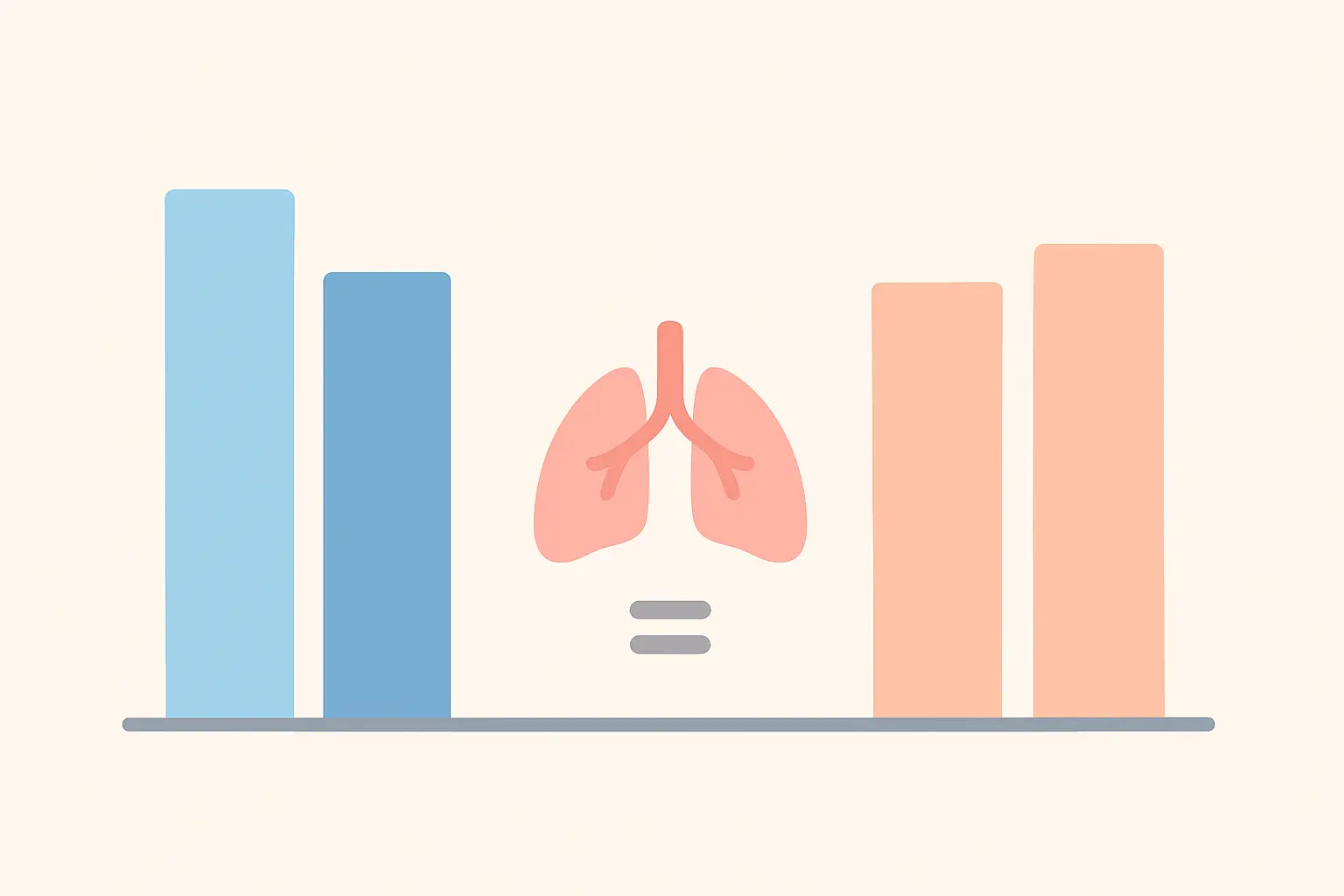
The finding: minimal evidence of compensation. No trial reported an increase in the mean number of cigarettes smoked per day or in carbon monoxide exposure at the end of the intervention among people assigned VLNCs. The modeling estimated that 0.8% of participants could expect an increase in smoking (maximum 3.3 extra cigarettes a day) and 8.1% an increase in carbon monoxide exposure (maximum 4.2 parts per million) six weeks after randomization. The authors’ conclusion was that widespread compensatory smoking is unlikely if a low-nicotine product standard is ever implemented.
| Measure | Standard cigarette | Very low nicotine cigarette |
|---|---|---|
| Nicotine content | ~17.2 mg per gram of tobacco (top 100 US brands, 2017) | Marketed at ~95% less; the proposed cap was 0.70 mg/g |
| Tar, carbon monoxide, carcinogens | Present | Present — largely unchanged |
| Addictive potential | High | Substantially reduced in trials |
| Compensatory smoking | n/a | Not seen at group level; ~0.8% smoked more, ~8.1% had higher CO |
| Safe to smoke long-term? | No | No — still combusted tobacco smoke |
VLNCs vs Simply Cutting Down: Not the Same Thing
People often hear “reduced nicotine” and picture the same thing as smoking fewer cigarettes. The two work in opposite directions, and confusing them is the single most common misreading of this research.
When you cut down on your own, the dose per cigarette stays exactly where it was. Your body still gets its familiar nicotine hit each time you smoke, so the reward loop is intact — you simply run it fewer times a day, usually while smoking each remaining cigarette harder. That is why gradual reduction on willpower alone so often drifts back to baseline: nothing about the cigarette itself has changed.
A nicotine cap does the reverse. The number of cigarettes stays under your control, but each one delivers far less of the thing that maintains dependence. That’s the mechanism the trials were testing — and it’s why the compensation question mattered so much. If smokers had simply doubled their consumption, the whole idea would have collapsed. They didn’t.
The practical implication for an individual today, with no cap in force, is that the equivalent move is not “smoke lighter cigarettes” — no such product is reliably available to most smokers, and “light” descriptors have been banned in the US since 2010 anyway. It is to cut the nicotine dose deliberately using a product designed for it: nicotine replacement therapy at a tapering dose, or a prescription medication, alongside a plan for the behavioral side.
VLN Cigarettes: Who They’re For
VLN is a commercial brand of reduced-nicotine cigarette from a US manufacturer, sold as an FDA-authorized product marketed as containing approximately 95% less nicotine than conventional cigarettes. It’s aimed specifically at adult smokers who want to cut their nicotine intake or move toward quitting — not as a starter product, and not as a “safer” cigarette to smoke indefinitely, because the combustion byproducts are the same ones found in any burned tobacco.
In practice, products like this sit closest to a taper tool: something a smoker already committed to quitting might use to unhook from the nicotine dose while working on the behavioral side of the habit — the hand-to-mouth ritual, the trigger moments, the routine — with a real quit method and support behind it. Because a reduced-nicotine cigarette still delivers smoke, it isn’t a substitute for nicotine replacement therapy or medication; it’s better understood as one possible bridge within a broader plan, not the plan itself.
Would a Nicotine Cap Actually Make Quitting Easier?
The evidence so far points toward yes, at a population level. Lower dependence, fewer cigarettes per day and no meaningful compensatory smoking is a genuinely encouraging combination for anyone trying to loosen nicotine’s grip — and it is why tobacco control researchers have pushed this idea for more than a decade. The catch has never been the science. It is that a national product standard has to survive rulemaking, litigation and politics, and this one did not get past the first.
For an individual smoker deciding what to do this month, that’s largely irrelevant. Nicotine dependence — consistently ranked among the hardest substances to quit — doesn’t wait for regulation, and neither should a quit attempt. The tools that already work (NRT, prescription medication, structured behavioral support) don’t need a rule change to be effective today. It’s also worth remembering that a nicotine cap targets the addictive driver only; it says nothing about the thousands of other chemicals covered in our piece on what’s actually in cigarette smoke, which keep doing damage regardless of the nicotine dose.
What to Do Now the Rule Has Stalled
- Don’t wait for the policy. The cap is not in force, is not scheduled, and would not retroactively make your current cigarettes easier to quit even if it were revived.
- Understand what’s actually in your smoke today. Nicotine is the addictive driver, but it’s one of roughly 7,000 chemicals in cigarette smoke doing the physical damage.
- Taper the dose deliberately, not accidentally. Cutting cigarettes without cutting nicotine per cigarette is the version that tends to rebound; NRT at a stepped-down dose is the version with evidence behind it.
- If you’re curious about harm-reduction products more broadly, including where reduced-nicotine cigarettes fit on that spectrum, our plain-language explainer on what tobacco harm reduction actually means lays out the whole continuum.
Whatever cigarette you’re currently smoking, the useful measure isn’t the pack on the table — it’s where and when the pull is strongest. The iQuit app logs every craving with its trigger and intensity, and its craving forecasts learn which hours are riskiest for you, so the shape of your dependence is visible long before any product on the market changes.
Very Low Nicotine Cigarette FAQ
What is a very low nicotine cigarette?
A cigarette engineered or processed to contain a small fraction of standard nicotine content — commercial versions are marketed at about 95% less than a conventional cigarette — while still delivering the same tar and combustion byproducts as ordinary cigarette smoke.
How much nicotine is in a normal cigarette?
The FDA’s rulemaking cites an average of 17.2 mg of nicotine per gram of total tobacco across the top 100 US brands in 2017, calculated on about 0.7 grams of tobacco per cigarette — roughly 12 mg per cigarette. The proposed cap of 0.70 mg per gram would have cut that by around 95%.
Has the FDA banned high-nicotine cigarettes?
No. The FDA proposed the rule in January 2025, the comment period closed on September 15, 2025, and no final rule was issued. The government’s Unified Agenda now lists the rulemaking (RIN 0910-AI76) under completed actions with a withdrawal dated April 21, 2025.
Do people smoke more cigarettes to compensate for lower nicotine?
A 2026 JAMA Network Open review of 17 randomized trials found no trial reported an increase in mean cigarettes per day or carbon monoxide exposure with very low nicotine cigarettes. Modeling estimated 0.8% of participants might smoke more and 8.1% might show higher carbon monoxide.
Are very low nicotine cigarettes safer to smoke?
No. Reducing nicotine does not reduce tar, carbon monoxide, or carcinogens — a clinician quoted by Duke’s tobacco research group put it plainly: the smoke is just as harmful as conventional cigarettes. They may reduce dependence, not the health risk of the smoke itself.
Is a nicotine cap the same as cutting down on cigarettes?
No, and it’s the opposite mechanism. Cutting down keeps the full nicotine dose in every cigarette you still smoke, so the reward loop stays intact. A cap lowers the dose per cigarette while leaving the count to you, which is why trials looked so closely at whether people would simply smoke more.
What is VLN and can I buy it?
VLN is a commercial reduced-nicotine cigarette brand sold as an FDA-authorized product in select US markets, marketed as having approximately 95% less nicotine than conventional cigarettes and aimed at adult smokers cutting their nicotine intake. It is not a starter product and not a safer alternative.
Why did the proposed rule exclude e-cigarettes and nicotine pouches?
The proposal targeted combusted tobacco products — cigarettes, roll-your-own, most cigars and pipe tobacco — because these deliver the smoke responsible for most tobacco-related disease. E-cigarettes, heated tobacco, nicotine pouches, smokeless tobacco and waterpipe tobacco were all outside its scope.
Should I wait for the nicotine cap before trying to quit?
No. The rule was never finalized and is currently recorded as withdrawn. Existing quit methods — NRT, prescription medication and structured support — already work today and don’t require any regulatory change.
See Your Craving Pattern, Not Just Your Cigarette Count
iQuit logs every craving with its trigger and intensity, counts the cigarettes you avoid, and forecasts the hours when the urge is most likely to hit — no need to wait for a policy change to start loosening the grip. Free on Google Play and the App Store.


