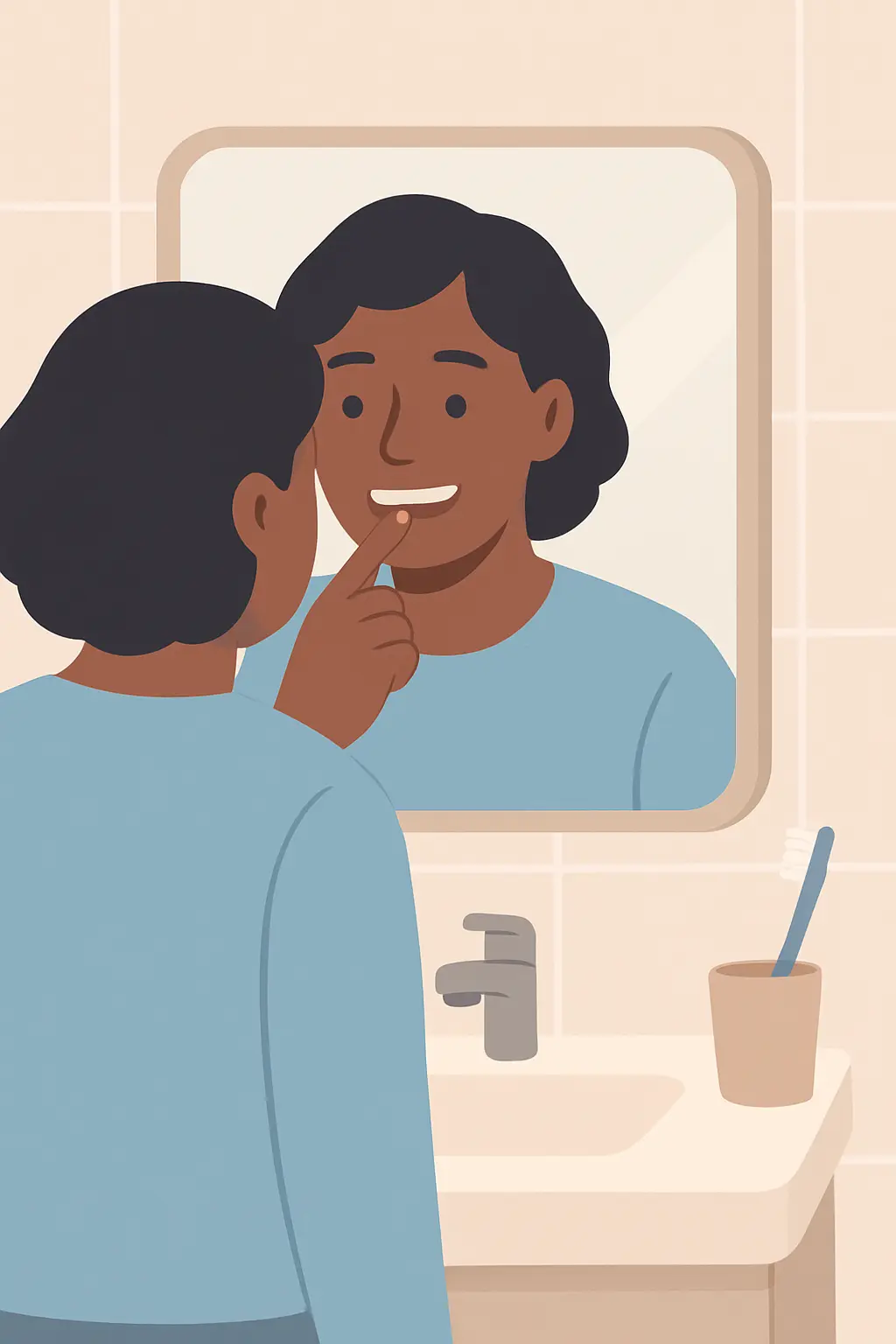
A pink-tinged toothbrush a week or two after quitting can be genuinely alarming. If you are searching bleeding gums after quitting smoking, the reassuring — if slightly counterintuitive — explanation is that this is often blood flow returning to tissue that smoking had been quietly restricting, not new damage from quitting itself. It is a strange kind of good news: the same nicotine that made your gums look calmer than they were is exactly what is no longer there to hide the picture.
Why gums bleed more after quitting
Bleeding gums are one of the most common reasons people brush their teeth, floss, or eat something crunchy and get an unwelcome surprise. According to the NHS, gum bleeding when you brush, floss, or eat hard foods like apples, along with gums becoming swollen, red, and sore, are classic symptoms of gum disease caused by plaque build-up on the teeth. That is true whether or not you smoke — but smoking changes how visible those symptoms are, which is the twist that catches newly quit smokers off guard.
The NHS also lists stopping smoking as part of the recommended treatment for early-stage gum disease, which tells you something important: quitting is part of the fix here, not the cause of the problem.
It also helps to rule out the ordinary, non-smoking-related causes before assuming the worst. The American Dental Association notes that starting a new flossing routine, pregnancy, certain blood-thinning medications, and brushing too hard can all cause bleeding gums on their own, independent of smoking status. If any of those apply to you as well, they are worth mentioning to your dentist alongside your quit date, since more than one factor can be contributing at once.
How nicotine masked gum disease
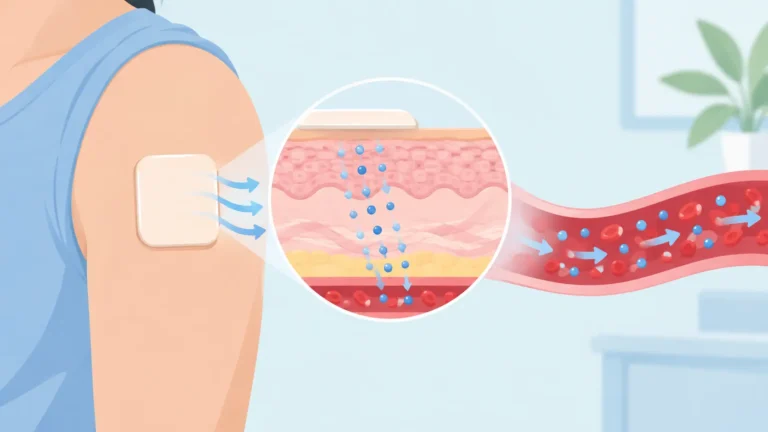
Here is the mechanism behind the paradox. Nicotine constricts blood vessels — including the small vessels in your gums. A 2026 scoping review of gingival blood vessels found that smokers consistently show narrower blood vessel lumens in their gums compared with nonsmokers, and, notably, that “despite the severity of periodontal disease, smokers demonstrated reduced clinical signs of inflammation in gingivitis and periodontitis.” In plain terms: smoking can make existing gum disease look and bleed less than it actually is.
When you quit, blood flow to the gums increases as those vessels widen back toward normal. That returning blood flow is exactly what makes bleeding, redness, and swelling — signs of gum disease that may have been present but suppressed for years — suddenly visible. You have not developed new gum disease overnight. You are very possibly seeing, for the first time, disease that was already there.
Cleveland Clinic explains what gum disease is and how it develops, which helps put newly visible bleeding in context.
What was already there before you quit
It is worth being precise about what the evidence does and does not say here. The masking mechanism is well supported: smokers really do show narrower gum blood vessels and blunted clinical signs of inflammation, even with equally severe disease underneath. What is less settled is exactly how quitting changes bleeding on its own — a 2026 meta-analysis of cessation studies found modest short-term improvements in probing depth and attachment level (two measures of gum health) at three and six months, but no significant change in bleeding-on-probing specifically at any point measured, and the probing-depth improvement was not sustained at 12 months either.
Put together, the honest picture is: quitting removes the mask, which is why bleeding often becomes more visible rather than less in the near term, while the underlying disease itself needs dental treatment, not just time, to actually improve.
None of this is a reason for regret about quitting. The alternative — continuing to smoke — does not make the underlying gum disease go away; it only keeps it hidden while the disease itself continues to progress underneath the surface. Finding out now, while you are also giving your body every other advantage of not smoking, is a considerably better position than finding out years later when more damage has accumulated.
How long the bleeding lasts
There is no single fetched, precise timeline for how many days or weeks this specific “unmasking” bleeding lasts — it depends heavily on how much gum disease was already present and how quickly you get it professionally treated. What research does support is that improvements to gum measurements like probing depth show up within three to six months of quitting in cessation studies, though those improvements were not sustained at the one-year mark in the same research, underscoring that quitting alone is a start, not a complete substitute for a dental visit and cleaning.
If bleeding is mild, decreasing week over week, and your gums otherwise look pink rather than angry red, that is consistent with things settling down as you also improve your home care. If it is heavy, not decreasing, or paired with loose teeth or persistent bad breath, that points toward needing professional treatment rather than more time.
| Measurement | Change after quitting |
|---|---|
| Probing depth (3 and 6 months) | Modest improvement found |
| Attachment level (3 months) | Modest improvement found |
| Probing depth and attachment level (12 months) | Improvement not sustained |
| Bleeding on probing (any point measured) | No significant change found |
Source: meta-analysis of 6 prospective studies, n=1,934 (Frontiers in Oral Health, 2026). Results describe group averages, not a guarantee for any individual.
What a dentist will check for
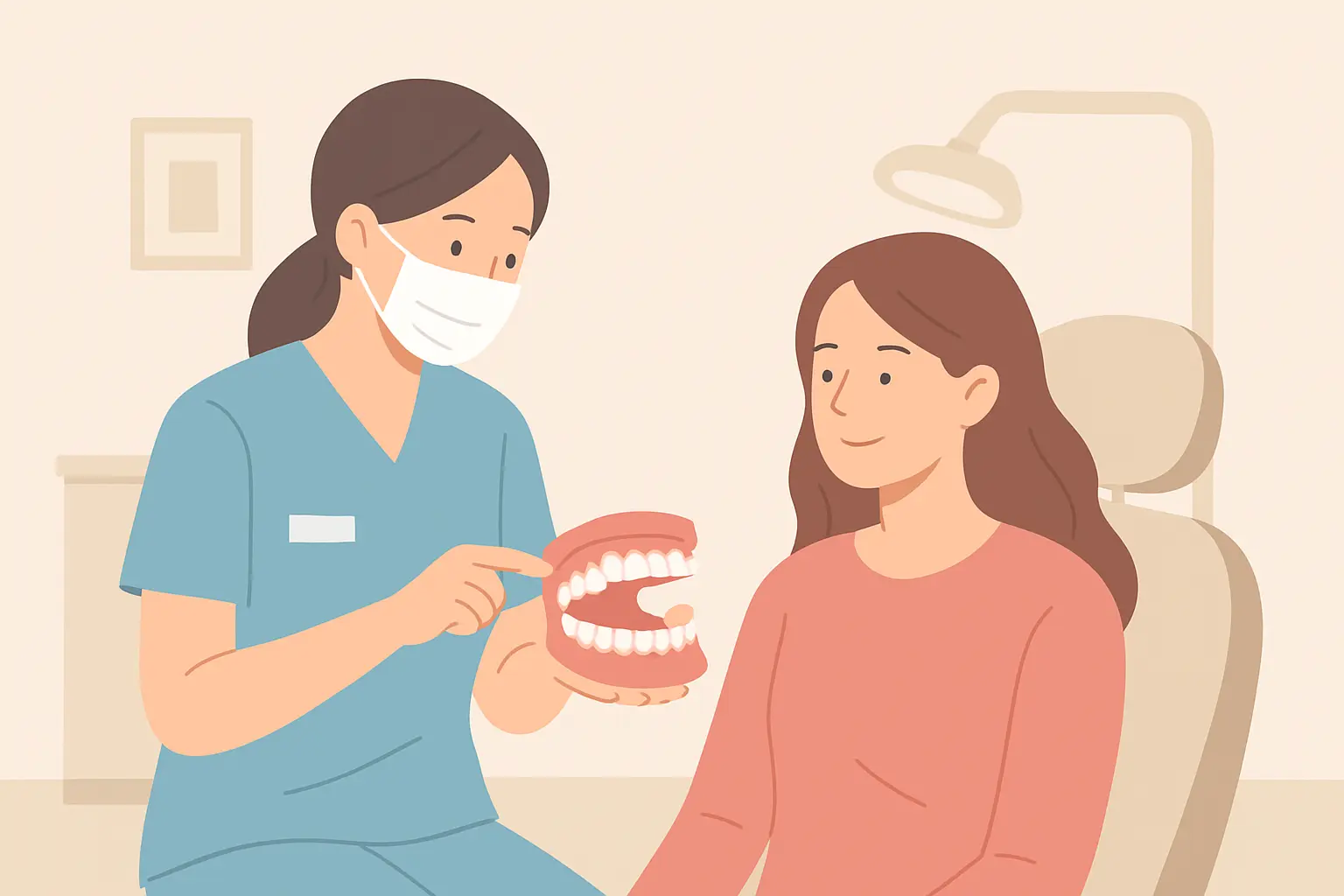
A dentist or hygienist looking at newly visible bleeding after you quit will typically check:
- Probing depth — how deep the pockets are between your teeth and gums, a direct measure of gum disease severity
- Plaque and tartar build-up — the underlying cause the NHS points to for gum disease generally
- Attachment loss — whether gum tissue has receded or detached from the tooth over time, often invisible to you day to day
- Whether this is gingivitis (reversible) or periodontitis (more advanced, requiring more intensive treatment)
This is also the appointment to mention that you have recently quit smoking — it changes nothing about the exam itself, but it gives your dentist useful context for how your gums are likely to respond to treatment going forward. Many dental practices also use quitting as a natural prompt to review your whole oral health picture, not just the immediate bleeding, since a mouth exam picks up plenty that a mirror check at home cannot.
Home care during the first month
While you wait for or recover from a dental visit, a few simple habits help without any risk:
- Keep brushing and flossing gently but consistently — stopping because gums bleed usually makes things worse, not better
- Use a soft-bristled toothbrush, which the ADA specifically recommends for anyone whose gums bleed easily
- Floss daily if you are not already — the ADA notes that starting a new flossing routine can itself cause temporary bleeding as gums “get used to” the cleaning, separate from the quitting-related mechanism
- Avoid brushing too hard, another documented cause of gum bleeding on its own
- Note any medicines you take, since blood-thinning medications are a separate, documented cause of gum bleeding worth mentioning to your dentist
When bleeding is not normal
Get it checked rather than waiting it out if you notice: bleeding that is heavy or does not decrease over a couple of weeks, teeth that feel loose, gums that are visibly receding, persistent bad breath, or pus around the gum line. None of those are expected parts of the “unmasking” process described above — they are signs of gum disease that needs active dental treatment. The one thing not to do is restart smoking to make the bleeding “go back to normal” — that simply re-masks a problem that still needs treating, while adding back every other harm of smoking.
It is worth repeating because it is easy to forget under stress: none of this is a reason to doubt the decision to quit. The bleeding is information, not a verdict on whether quitting was the right call. Getting a proper diagnosis now, while you have already removed one major driver of oral inflammation, puts you in a stronger position than continuing to smoke while the same underlying disease keeps advancing unseen.
For the wider picture of oral recovery after quitting, teeth and gums after quitting smoking covers staining, healing, and appearance changes beyond bleeding specifically, and the underlying risk numbers are laid out in smoking and gum disease statistics. If a tooth extraction or implant is part of your dental plan, how long after a tooth extraction you can smoke and stopping smoking before a dental implant both cover timing that affects healing directly. Once bleeding has settled, many people also ask about how long after quitting teeth start to whiten, and the wider evidence-based health benefits of quitting put this one symptom in context with everything else improving at the same time.
Frequently Asked Questions
Why do my gums bleed more after I quit smoking?
Nicotine narrows blood vessels in the gums, which can mask bleeding and inflammation while you smoke. After quitting, blood flow returns toward normal, which can make pre-existing gum disease visibly bleed for the first time rather than causing new damage.
Does quitting smoking cause gum disease?
No. Quitting does not cause gum disease — it can reveal gum disease that was already present but masked by smoking-related vasoconstriction. The NHS lists stopping smoking as part of the treatment for gum disease, not a cause of it.
Does quitting smoking actually improve gum bleeding?
A 2026 meta-analysis found modest improvements in probing depth and attachment level at three and six months after quitting, but no significant change specifically in bleeding-on-probing at any measured point, and the probing-depth gains were not sustained at 12 months. Professional treatment, not time alone, is what resolves existing disease.
Should I stop brushing if my gums are bleeding?
No — keep brushing and flossing gently with a soft-bristled brush. Stopping typically allows plaque to build up further, worsening the underlying cause of the bleeding rather than resolving it.
When should I see a dentist about bleeding gums after quitting?
See a dentist if bleeding is heavy, not improving over a couple of weeks, or paired with loose teeth, receding gums, persistent bad breath, or pus — these point to gum disease needing professional treatment rather than a temporary quitting-related symptom.
Will restarting smoking stop my gums from bleeding?
It may reduce visible bleeding again by re-narrowing gum blood vessels, but it does not treat the underlying gum disease — it simply masks it again, while adding back every other harm smoking causes.
Book the hygienist, not another cigarette
iQuit tracks the money you save from quitting — often enough to easily cover a dental check-up you have been putting off.
Download iQuit Free on Google Play
Download on the App Store