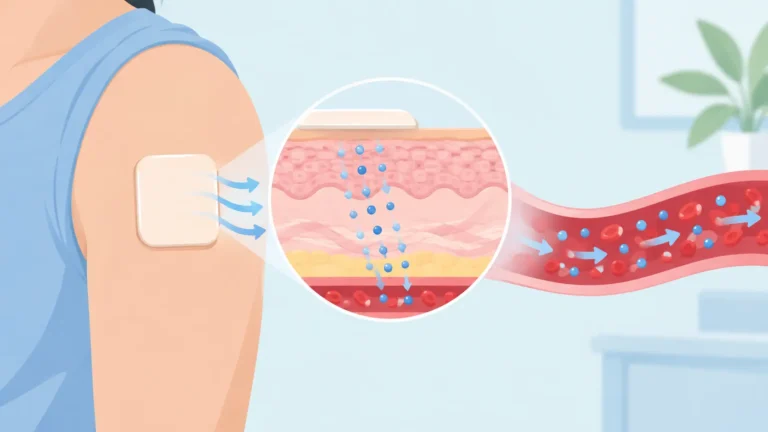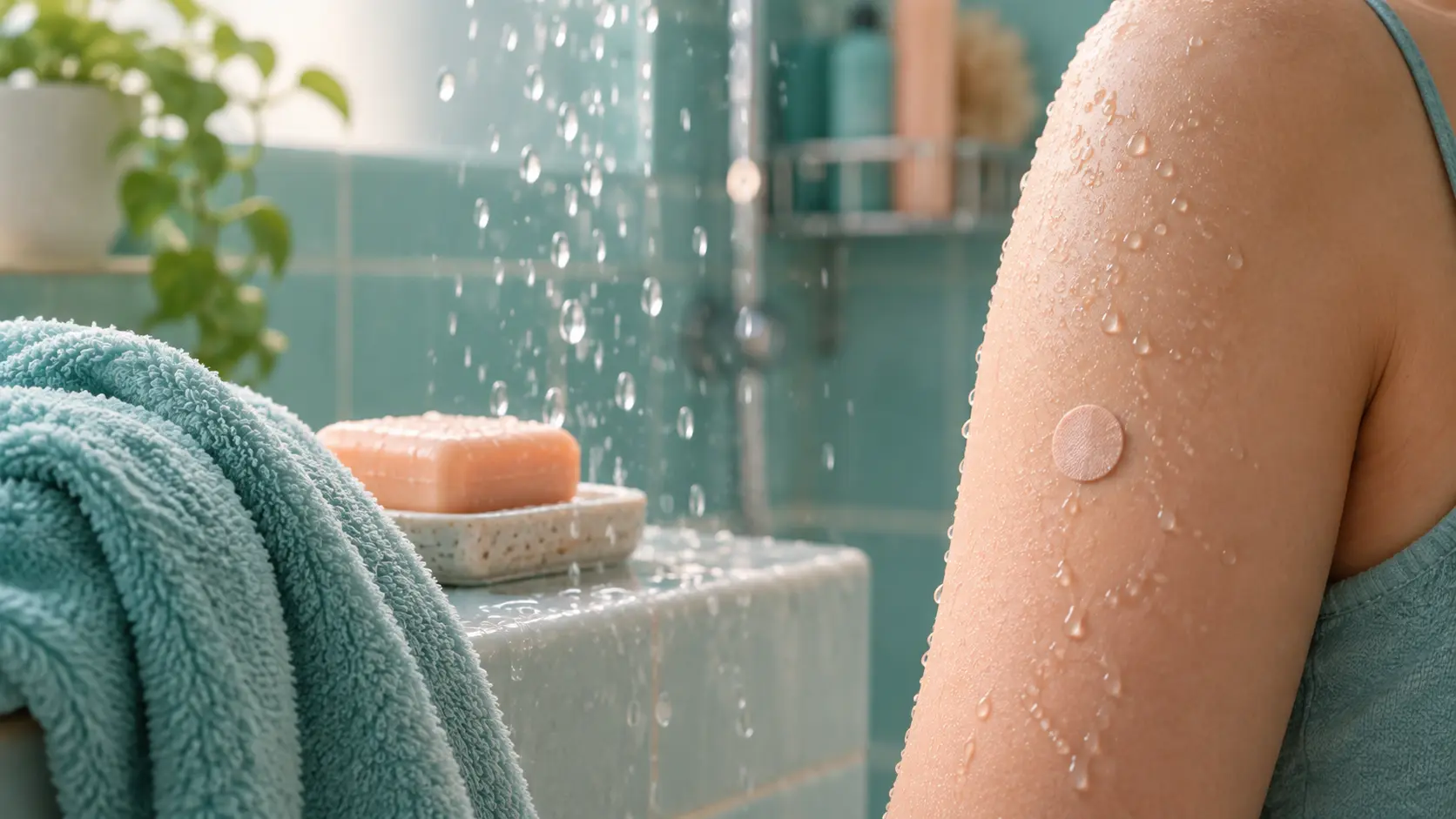
Yes, in most cases you can shower with a nicotine patch on. The clearest official statement is in the UK product information for NiQuitin Clear patches, which says water will not harm a patch that has been applied properly. If you are asking can you shower with a nicotine patch because you are worried about losing a day of nicotine, this guide covers what the labels say about showers, baths and swimming, what they do not say about saunas, hot tubs and sweat, and what to do if a patch peels off.
Can you shower with a nicotine patch? The short answer
Two documents matter here. The first is the NiQuitin Clear 7 mg patch Summary of Product Characteristics, which is the official product information for a 24-hour patch sold in the UK. It says: “Water will not harm the nicotine transdermal patch, if it has been applied properly. The user can bathe, swim or shower for short periods while wearing the nicotine transdermal patch.” That text was last revised on 18 May 2022.
The second is the NicoDerm CQ label on DailyMed, the US over-the-counter label. Its directions do not mention showers, baths or swimming at all. Silence is not a “no”. It simply means the US label gives you no water guidance either way, so the UK wording is the clearest published statement available.
Two cautions follow from this. First, “if it has been applied properly” is doing real work in that sentence, and proper application is covered below. Second, brand labels differ. Your own pack and leaflet come first, and the NHS Better Health: find the best stop-smoking products for you page advises you to speak to a healthcare professional before using nicotine replacement so they can help you choose the right product.
Showers, baths and swimming
For a normal shower, the UK wording points to yes. “Short periods” is the phrase to remember. The SmPC does not define it with a number of minutes. A brisk shower fits that description for most people. A very long soak is more of a gray area, and the label does not say what happens to the patch if you stay in the water for an hour.
If you prefer to see the basics of putting a patch on, this short video from the Taking Texas Tobacco Free program shows how to use nicotine patches.
Some practical points that follow directly from the label’s application rules:
- Apply to clean, dry skin. The UK SmPC says to use “a different non-hairy, clean, dry skin site.” The NicoDerm CQ label says “skin that is dry, clean and hairless.” That makes the best time to put on a fresh patch right after you shower and dry off, not right before you step in.
- Press firmly for 10 seconds. Both documents say to hold the patch in place for 10 seconds. The UK text adds “pressed firmly on the skin with the palm of hand” and says to avoid skin creases.
- Do not stack a second patch. Both documents are clear: only one patch at a time.
- Check the edges after you dry off. If the patch edges are lifting, treat it as not properly applied and read the section on what to do if it comes off.
Swimming follows the same logic as showering in the UK text, which names “bathe, swim or shower” together as fine for short periods. That is the extent of what the labels say.
Sweating, the gym and saunas
Neither the NicoDerm CQ label nor the NiQuitin SmPC gives rules for exercise, sweat or saunas. Be wary of any article that gives you a confident rule about them without a source.
Here is what the text does say that is nearby. The UK SmPC lists “sweating increased” among the common side effects of the patch, in the group affecting between 1 in 100 and 1 in 10 people. That describes a possible effect of nicotine on your body, not a statement that sweat makes the patch fall off. If your skin gets red, sore or itchy under the patch, the NicoDerm CQ label says to stop and ask a doctor if the redness does not go away after four days, or if your skin swells or you get a rash. Our guide to nicotine patch side effects and what is normal goes through the usual ones.
If you train hard or work in heat, the sensible step is to ask a pharmacist how your brand handles it. They can see the leaflet that came in your box, which may carry wording that these two documents do not.
What to do if the patch falls off or lifts
This is the question behind most “can I shower with a patch” searches, and it is the one the labels answer least. The NicoDerm CQ directions say to apply a new patch every 24 hours and to replace the used patch “at the same time each day.” The UK SmPC says patches may be removed before bed if you wish. Neither text gives a step-by-step rule for a patch that falls off mid-day.

What the documents do support:
- Only one patch at a time. If you replace a patch that fell off, do not leave the old one on as well.
- Not beyond 24 hours. The UK text says the patch “should not be left on for longer than 24 hours,” and the US label warns that a patch left on longer “may irritate your skin and loses strength after 24 hours.”
- Use fresh, dry skin for the replacement. Dry the area first, since both texts call for clean, dry skin.
- Do not assume a fallen patch can be stuck back on. Neither label covers re-sticking one, so ask your pharmacist.
If patches keep lifting, ask a pharmacist before trying home fixes such as tape. A different placement site may also help. Pharmacy staff can tell you whether another product, such as a 16-hour patch or a different NRT, suits you better; our comparison of the 16 hour and 24 hour nicotine patch covers one such choice.
Hot tubs and heat: what the labels do not say
You may have read that heat makes a patch release more nicotine. Neither label contains hot water, heat or sauna wording, and no regulator page sets out such a rule, so lines like “heat doubles absorption” are unsupported.
What can be said is narrower. The UK text approves “short periods” in water. It does not mention hot tubs, long baths or saunas by name. If you want to use one, keep it brief, take the patch’s edges as your guide (if they lift, replace it), and ask your pharmacist or doctor if you are unsure about your dose. Remember too that the NHS Better Health guidance says to talk to a healthcare professional before starting NRT.
One more detail from the UK SmPC is about soap, not water. In the section on handling it says: “After handling, wash hands with water alone as soap may increase nicotine absorption.” That sentence is about washing your hands after touching the patch. It does not say that showering with soap changes absorption through a patch on your arm, so do not read more into it than it says. Washing your hands with plain water after you apply or peel a patch is an easy habit to adopt.
Where to place the patch and how to rotate sites
Placement is the part of proper application you control. The UK SmPC says to apply the patch “to a different non-hairy, clean, dry skin site” each time and says “skin sites should not be reused for at least seven days.” The NicoDerm CQ label likewise says to put a new patch on “a different skin site at the same time each day.” Clean, dry, hairless skin is what both labels call for, and the UK text says to avoid skin creases.

A simple routine that fits the label:
- Shower and dry off completely.
- Pick a hairless, unbroken area on your upper body, different from yesterday’s.
- Remove the backing and press the patch on straight away, holding it for 10 seconds.
- Take off the old patch, fold the sticky ends together, put it back in its pouch and discard it, as the NicoDerm CQ label directs.
- Wash your hands with plain water.
The step-by-step basics are in our guide on how to use nicotine patches correctly. If you are not sure whether to cut a patch to lower your dose, the answer is on the label (the NicoDerm CQ text says “do not cut patch in half or into smaller pieces”), and we explain it in can you cut a nicotine patch in half.
Keeping the quit on track
A patch that falls off in the shower is a small problem if you handle it calmly, and a bigger one if it leads to a cigarette. Nicotine patches give a steady background dose, but they do not stop the sudden urges that come with triggers. That is why many people pair a patch with a faster-acting product or with support. Our comparison of the best NRT options shows how the different forms fit together, and our overview of what happens to your body when you stop smoking shows why those first days are worth protecting.
iQuit can help you spot whether a lost or loose patch is linked to a rough patch in your day. You can log each craving with its trigger and how strong it was, and the pattern shows which hours need extra support. You can quit gradually or cold turkey; the app works alongside whatever your pharmacist or doctor recommends. iQuit does not give dosing advice, so follow your product’s label and your clinician for the patch itself.
Protect your quit between patches
A patch handles the steady background craving, and iQuit helps with the rest: log each craving, see your triggers, and track smoke-free days and money saved. It is free on Google Play and the App Store.
Download iQuit Free on Google Play
Download on the App Store
Frequently Asked Questions
Can you shower with a nicotine patch on?
Usually yes. The UK NiQuitin Clear product information says water will not harm a properly applied patch and that you can bathe, swim or shower for short periods. The US NicoDerm CQ label does not mention water, so check your own leaflet (NiQuitin Clear SmPC, 2022).
Can you swim with a nicotine patch?
The UK NiQuitin Clear text lists swimming along with bathing and showering as fine for short periods when the patch is properly applied. It does not define how long that is or mention hot tubs or saunas, so ask a pharmacist if you plan a long soak (NiQuitin Clear SmPC).
What if my nicotine patch falls off in the shower?
Neither the UK nor the US label gives a mid-day rule. Wear only one patch at a time, never leave a patch on longer than 24 hours, and apply a fresh one to clean, dry skin. A pharmacist can check your product’s leaflet (NiQuitin Clear SmPC; NicoDerm CQ label).
When is the best time to put a patch on?
Both the UK and US labels call for clean, dry skin and say to press the patch on for 10 seconds. Putting it on right after you shower and dry off follows that advice. Choose a different site each day (NiQuitin Clear SmPC; NicoDerm CQ label).
Does sweat or heat make a nicotine patch stronger?
Neither label says that heat or sweat changes how much nicotine you absorb, so treat claims that it does with caution. The UK text lists increased sweating as a possible side effect of the patch, which is different. Ask a pharmacist about hot tubs or saunas (NiQuitin Clear SmPC).
How often should I change where I put the patch?
Every day. The NicoDerm CQ label says to apply the new patch to a different skin site at the same time each day, and the UK NiQuitin Clear text says not to reuse a skin site for at least seven days (NicoDerm CQ label; NiQuitin Clear SmPC).
Should I talk to someone before using patches?
Yes. The NHS Better Health guide says to speak to a healthcare professional before using nicotine replacement so they can help you choose the right product or combination. A pharmacist can also check your dose and brand leaflet (NHS Better Health).