A cough that greets you every morning, a rattle in the chest and phlegm you have stopped noticing: for many long-term smokers that is chronic bronchitis, and it is easy to dismiss as just a smoker’s cough. Chronic bronchitis, smoking and COPD are closely linked. This guide explains what chronic bronchitis is, how it fits with emphysema and COPD, what happens to the cough when you stop, and what the evidence does and does not promise. It does not replace a proper assessment by your own clinician.
What chronic bronchitis is
The American Lung Association explains that bronchitis is a lung condition where the bronchi, the large airways in your lungs, become inflamed. That can cause severe coughing spells that bring up sputum (mucus or phlegm), wheezing, chest pain and shortness of breath. There are two main types, acute and chronic. Acute bronchitis usually develops from a lung infection such as a cold and goes away in a week or two. Chronic bronchitis, in the association’s words, “is a more serious condition that develops over time.”
The definition is specific. To classify it as chronic bronchitis, “you must have a productive cough (producing mucus or phlegm) that lasts at least three months and over the course of two years. In addition, other lung conditions like asthma must be ruled out.” The US National Heart, Lung, and Blood Institute describes it as being caused by “repeated or constant irritation and inflammation in the lining of the airways,” with a lot of thick mucus forming and making it hard to breathe.
The NHS puts the same idea in plain terms. Its page on bronchitis says bronchitis that is usually caused by an infection often gets better without treatment in around 3 weeks, but “some people have long-term inflammation of the airways in the lungs called chronic bronchitis. This is known as chronic obstructive pulmonary disease (COPD).” That difference between a short infection and a long-term condition is the one that matters most.
Chronic bronchitis: smoking is a leading cause
The American Lung Association says: “Cigarette smoking is a leading cause of chronic bronchitis.” Other risk factors include exposure to indoor and outdoor air pollution such as dust, fumes or chemicals in the workplace, and it may occur more often in people with a family history of bronchitis. The NHLBI states that “in the United States and other high-income countries, cigarette smoking is the main cause of COPD,” and that most people who have COPD smoke or used to smoke.
The NHS notes that the likelihood of developing COPD “increases the more you smoke and the longer you’ve smoked.” It also says COPD develops slowly: most people with COPD “do not have any noticeable symptoms until they reach their late 40s or 50s.” That is why a long-standing morning cough deserves attention even if you feel otherwise fine. If you are not sure whether your cough is ordinary, our guide to smokers cough signs red flags when it stops sets out what to watch for.
Chronic bronchitis vs emphysema vs COPD
These three terms overlap, which is why they confuse people. The NHS describes COPD as the name for “a group of lung conditions that cause breathing difficulties,” including emphysema (damage to the air sacs in the lungs) and chronic bronchitis (long-term inflammation of the airways). The NHLBI adds that “most people who have COPD have a mixture of both emphysema and chronic bronchitis in different proportions, and how serious each condition is varies from person to person.”
| Term | What it describes | Source |
|---|---|---|
| Chronic bronchitis | Long-term inflammation of the airways with a productive cough | NHS; American Lung Association |
| Emphysema | Damage to the air sacs in the lungs | NHS; NHLBI |
| COPD | The umbrella name for the group, usually a mixture of both | NHS; NHLBI |
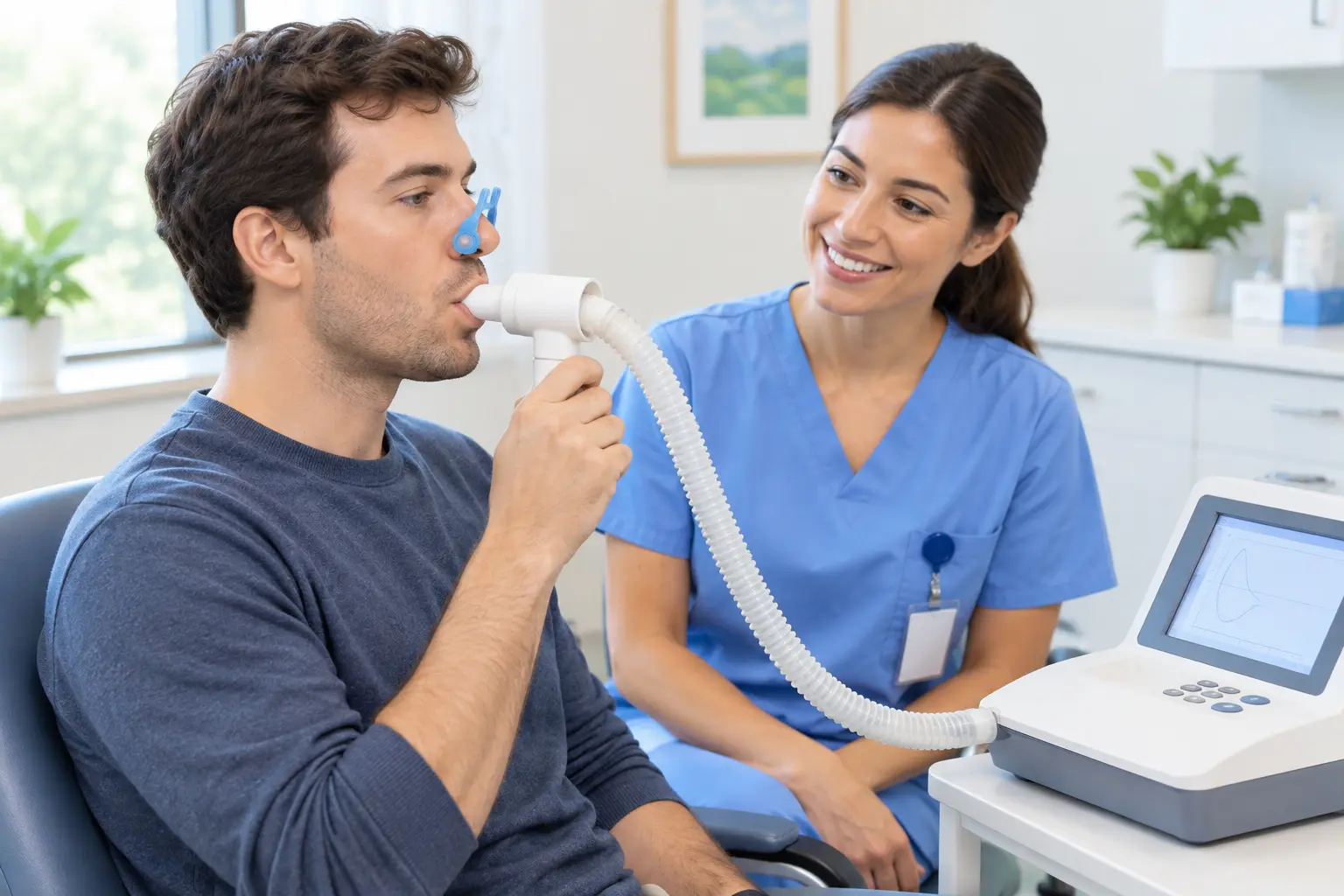
Because most people have a mix, the question of which label applies is less important than getting your lungs tested. The American Lung Association says that to diagnose chronic bronchitis your healthcare provider will ask about your health and family history, carry out a physical exam and review lung function tests, and notes that “spirometry is a common lung function test that can determine if you have COPD.” Other tests may include a chest X-ray, a CT scan and a blood test to check oxygen levels. For the emphysema side of the picture, see can emphysema be reversed after quitting.
This American Lung Association video explains emphysema and chronic bronchitis as the two main forms of COPD.
Symptoms after quitting: why cough can increase first
Many people are surprised that the cough does not simply vanish on day one. There is no reliable timeline for when it settles, so this guide does not give a number: the honest answer depends on how much damage is already there, and the American Lung Association is blunt that with established chronic bronchitis, “symptoms may get better or worse, but they will never completely go away.”
There is, however, one piece of research that helps explain why the cough can feel worse early on. In a study published in the European Respiratory Journal in 2006, 29 chronic smokers had their cough reflex sensitivity tested with inhaled capsaicin while smoking and again two weeks after quitting. Sensitivity rose significantly, and in those who stayed quit it kept rising over the following 24 weeks. The authors concluded: “Even after many years of smoking, cough sensitivity is enhanced as early as 2 weeks after smoking cessation.” Their reading was that smoke had been dulling the airway cough receptors, and they suggested the change may provide clinical benefit, because an intact cough reflex matters. It is our inference, not theirs, that this may be one reason a cough feels more noticeable in the first weeks, and it is a small study, but it fits what many ex-smokers describe.
A review in the European Respiratory Journal in 2004 looked at what happens to smokers with no chronic symptoms, those with non-obstructive chronic bronchitis and those with COPD. It concluded: “Smoking cessation clearly improves respiratory symptoms and bronchial hyperresponsiveness, and prevents excessive decline in lung function in all three groups.” It also warned that the effect on lung inflammation is less clear, and a small 1995 biopsy study found that airway inflammation can persist in ex-smokers who still have chronic bronchitis symptoms. In plain terms: stopping helps, and it is not a switch.
If your cough is bringing up phlegm after you quit, our article on coughing up phlegm after quitting smoking explains what is common. If you are also dealing with an infection, see quitting smoking with a chest infection.
When to get medical help
The NHS says to see a GP if you have persistent symptoms of COPD, particularly if you are over 35 and smoke or used to smoke, and not to ignore them, because “if they’re caused by COPD, it’s best to start treatment as soon as possible, before your lungs become significantly damaged.”
For bronchitis symptoms, the NHS gives these thresholds:
- Ask for an urgent GP appointment or get help from NHS 111 if you have had a cough for more than 3 weeks and it is not getting better; you cough up blood or blood-stained mucus; you have chest pain that comes and goes, or when breathing or coughing; you are over 65; you are pregnant; you have a long-term condition, such as diabetes, or a heart, lung or kidney condition; you have a weakened immune system; you feel too unwell to do usual daily activities; or you are feeling short of breath.
- Call 999 if you are struggling to breathe (you are choking, gasping and unable to speak); your lips or skin are turning very pale, blue or gray; you suddenly feel confused, for example you do not know where you are; or you are unable to wake your baby or they feel floppy.
The NHS adds: do not drive yourself to A&E. The person you speak to at 999 will give you advice about what to do. If you live outside the UK, use your local emergency number.
Treatment and rehabilitation
The NHS is direct that “the damage to the lungs caused by COPD is permanent, but treatment can help slow down the progression of the condition.” Its treatment list includes stopping smoking (“if you have COPD and you smoke, this is the most important thing you can do”), inhalers and medicines to make breathing easier, pulmonary rehabilitation (a specialized program of exercise and education), and, for a very small number of people, surgery or a lung transplant. The American Lung Association likewise lists bronchodilators that open your airways, quitting smoking, oxygen therapy and pulmonary rehabilitation, and says there is no cure for chronic bronchitis or COPD.
The NHLBI says that although there is no cure, “treatments and lifestyle changes such as quitting smoking can help you feel better, stay more active, and slow the progress of the disease.” For the numbers on how common COPD is, see our COPD statistics prevalence deaths smoking article.

Building a quit plan around a cough
A cough and heavy phlegm can make quitting feel discouraging, because you may not feel better right away. It helps to plan for that.
- Get the cough assessed. Ask your doctor about a breathing test, particularly if you are over 35.
- Ask what stop-smoking support is available. The NHS points people to free advice and to stop smoking services; our what happens when you quit smoking complete health recovery guide shows the wider changes over time.
- Do not judge success by the cough alone. Track what you can control: smoke-free days, cravings handled, money saved.
- Treat a lingering cough seriously. If it stays, changes or brings up blood, use the NHS thresholds above.
The free iQuit app can support the quitting side. You can choose cold turkey or gradual reduction, log cravings and their triggers, use SOS tools when an urge hits, and track smoke-free days and money saved. It does not diagnose or treat bronchitis or COPD, so it works alongside your clinician and never replaces a breathing test. You can see how it compares in our best quit smoking apps feature comparison rankings.
Frequently Asked Questions
What is chronic bronchitis?
The American Lung Association says chronic bronchitis is a more serious condition that develops over time, defined by a productive cough lasting at least three months over two years, once other lung conditions like asthma are ruled out. It is one of the main lung diseases that make up COPD (American Lung Association).
Is chronic bronchitis the same as COPD?
Not exactly, but they overlap. The NHS says COPD includes emphysema and chronic bronchitis, and the NHLBI says most people with COPD have a mixture of both in different proportions. Chronic bronchitis is one of the conditions that make up COPD (NHS; NHLBI).
Does smoking cause chronic bronchitis?
Smoking is a leading cause. The American Lung Association says cigarette smoking is a leading cause of chronic bronchitis, and the NHLBI says it is the main cause of COPD in the United States and other high-income countries. Air pollution and workplace fumes are other risk factors (American Lung Association; NHLBI).
Will the cough go away if I quit smoking?
No one can promise that. A 2004 review found that quitting clearly improves respiratory symptoms and prevents excessive decline in lung function, but the American Lung Association says symptoms of chronic bronchitis may get better or worse and never completely go away. Timing varies by person (Eur Respir J, 2004; American Lung Association).
Why does my cough feel worse after quitting?
A 2006 study of 29 smokers found cough reflex sensitivity was enhanced as early as two weeks after quitting. That may be one reason a cough becomes more noticeable early on, though it is a small study and not proof. See a doctor if the cough persists (Eur Respir J, 2006; NHS).
Can chronic bronchitis be cured?
The American Lung Association says there is no cure for chronic bronchitis or COPD. The NHS says the damage caused by COPD is permanent, but treatment can help slow the progression, and stopping smoking is the most important thing you can do if you smoke (American Lung Association; NHS).
When should I see a doctor about a smoker’s cough?
The NHS says to see a GP for persistent symptoms of COPD, particularly if you are over 35 and smoke or used to smoke. For bronchitis, it advises an urgent GP appointment or NHS 111 for a cough lasting more than 3 weeks that is not getting better or for coughing up blood (NHS).
Quit Smoking and Protect Your Airways
Stopping smoking is the step the NHS calls the most important for people with COPD who smoke. iQuit is free on Google Play and the App Store and helps you log cravings and triggers, use SOS tools when urges hit and track smoke-free days.