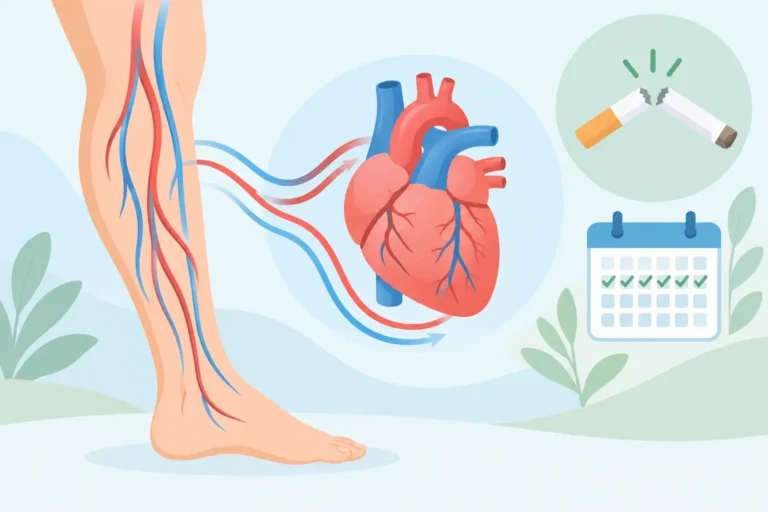
If you are asking does smoking dehydrate you, the careful answer is that there is no good evidence that smoking dehydrates the whole body. The NHS list of the causes of dehydration does not include smoking. What the evidence does support is narrower and still worth knowing: smokers can have a drier mouth, and one 2025 study found lower saliva flow in smokers than in non-smokers. This guide separates the myth from the documented effect and then shows how water can help you quit.
Does smoking dehydrate you? Dry mouth yes, whole-body dehydration unproven
It is easy to blur two different ideas. Dehydration means your body has lost more fluid than it has taken in. Dry mouth means your mouth is not making enough saliva. They can overlap, but they are not the same thing, and the evidence for smoking is different for each.
On dehydration, the NHS: dehydration page lists who gets dehydrated more easily: people with diabetes, those who have been sick or have diarrhea, those who have been in the sun or a hot environment too long, who have drunk too much alcohol, sweat a lot after exercise, have a high temperature, take medicines that make them pee more, or rely on others for drinks. Smoking is not on that list. That does not prove smoking never affects fluid balance, but there is no good evidence that it does, so this guide does not claim it.
On dry mouth, there is more. The NHS: dry mouth page includes “do not smoke” in its list of things to avoid if your mouth is dry, and the 2025 study we describe below found lower saliva flow in smokers. Keep that distinction in mind as you read on.
Dry mouth and saliva: what is documented
The American Dental Association (MouthHealthy): dry mouth page explains that “dry mouth—also called xerostomia—results from an inadequate flow of saliva. It is not a disease, but a symptom of a medical disorder or a side effect of certain medications.” It adds that saliva “washes away food and other debris, neutralizes acids produced by bacteria in the mouth and provides disease-fighting substances throughout the mouth.” Common problems with dry mouth include a constant sore throat, a burning sensation, trouble speaking, difficulty swallowing, hoarseness or dry nasal passages.
So what about smokers? A 2025 case-control study in the Rambam Maimonides Medical Journal compared 150 smokers with 150 healthy non-smokers. In its results, xerostomia symptoms were reported by 19% of the smokers and none of the non-smokers, and salivary flow measured at 1, 2 and 3 minutes was significantly lower in smokers. The authors concluded there was “a clear association between long-term smoking and xerostomia, with a notable decrease in unstimulated salivary flow.”
Treat that study with care. It is one study. All the smokers in it were men and most smoked cigarettes. It is a case-control design, which shows an association, not a proof of cause. It does not tell us how much of the effect comes from nicotine, from smoke, or from other differences between the groups. It is a useful signal, not the last word.
Penn Dental Medicine has a short video explaining the causes and treatment of dry mouth, which is a helpful overview whether or not you smoke.
Other causes of dry mouth worth ruling out
Because dry mouth has many causes, blaming cigarettes alone can miss the real culprit. The NHS says the main causes of a dry mouth are dehydration (for example from not drinking enough, sweating a lot or being ill), medicines, breathing through your mouth at night (for instance with a blocked nose), anxiety, cancer treatment, and oral thrush. It adds that a dry mouth that does not go away can sometimes be caused by a condition such as diabetes or Sjögren’s syndrome. The ADA likewise lists antihistamines, decongestants, painkillers and diuretics among the medications that can cause it.
| Cause | Example |
|---|---|
| Not enough fluid | Not drinking enough, sweating a lot, being ill |
| Medicines | Antihistamines, decongestants, painkillers, diuretics, many others |
| Mouth breathing | Blocked nose, sleeping with your mouth open |
| Health conditions | Diabetes, Sjögren’s syndrome, oral thrush |
| Treatments and stress | Radiotherapy or chemotherapy, anxiety |
| Smoking | Associated with lower saliva flow in one 2025 study of male smokers |
If your mouth stays dry, ask a dentist or doctor. The NHS says to see a doctor if your mouth is still dry after trying home or pharmacy treatments for a few weeks, if it makes talking or eating difficult, if your sense of taste is going wrong, or if you notice sore white patches. Our guide to how to get rid of smoker’s breath covers the link between a dry mouth, bacteria and breath.
Why the myth sticks
There is a reasonable explanation for why people believe smoking dehydrates you. The NHS lists “a dry mouth, lips and tongue” among the symptoms of dehydration, alongside feeling thirsty, headache, dark yellow strong-smelling pee, peeing less often than usual, feeling dizzy or lightheaded, and feeling tired. A smoker who notices a dry mouth can easily assume the whole body is short of fluid.
But the arrow can point the other way. A dry mouth has many causes, as the section above shows, and the ADA calls it “a symptom of a medical disorder or a side effect of certain medications” rather than a disease in itself. Dryness in the mouth does not by itself prove you are dehydrated, and being well hydrated does not guarantee a moist mouth if medicines or mouth breathing are involved.
The practical lesson is to look at the whole picture. If your pee is pale and plentiful and you are rarely thirsty but your mouth is dry, think about saliva, medicines, a blocked nose or night-time mouth breathing. If you are thirsty, dizzy, tired and peeing little, think about fluids and see the NHS dehydration advice.
Skin, thirst and caffeine: what we cannot claim
You may have read that smoking dries out skin or that nicotine acts like a diuretic. Neither claim is backed by the sources cited here, so this guide leaves them out. The NHS dehydration page does say to avoid caffeinated drinks and alcohol when you are dehydrated because “both will dehydrate you,” but nicotine is not mentioned.
Thirst is another unknown. People sometimes say that a craving and a dry mouth can feel alike, or that they reach for a cigarette when they are thirsty. There is little research on that, so treat it as a personal experiment rather than a fact: next time a craving hits, take a drink of water and see what changes.
The NHS lists symptoms that signal real dehydration, including feeling thirsty, headache, dark yellow strong-smelling pee, peeing less often than usual, dizziness, tiredness and a dry mouth, lips and tongue. If you have those, the NHS says to drink fluids and gives advice on when to see someone, particularly for children and babies.
Water as a craving tool
Whatever the science of dehydration, water is a handy quitting tool for practical reasons. It gives your hands and mouth something to do, it takes a few minutes, and it keeps a dry mouth comfortable while you adjust. The NHS dry mouth page suggests taking regular sips of cold water through the day, keeping some by your bed, sucking on ice cubes, and chewing sugar-free gum or sucking sugar-free candy. The ADA also says sugar-free gum or candy stimulates saliva flow.

You can build a simple routine around it:
- When an urge starts, pour a glass of water and drink it slowly.
- Wait through the craving for a few minutes before deciding anything.
- Use sugar-free gum or a mint if your mouth still feels dry.
For the first two weeks, a few small anchors make water automatic: a glass when you wake, water within reach at the moments you used to smoke, and a bottle by the bed because the NHS suggests keeping some there at night if your mouth is dry. None of these needs a number of liters, and this guide does not set one, because the NHS and ADA pages cited here do not give a fixed daily target for people who are quitting.
Our article on the water hydration craving tool walks through the technique in detail.
What happens to your mouth and body after you quit
Quitting is the step the NHS and ADA both point to. The NHS dry mouth page lists “do not smoke” among the things to avoid, and the ADA’s bad-breath page, which we cite in our smoker’s breath guide, lists quitting among its solutions. There is no reliable timeline for how quickly saliva flow changes after the last cigarette, so this guide does not give one.
What we can offer are links to the areas where the changes are well mapped. Our guide to the taste and smell timeline shows how those senses recover, and our overview of what happens to your body when you stop smoking gives the wider picture. Digestion also shifts for many people, which we cover in why smoking makes you poop, and if you are wondering how long nicotine itself stays in your system, see how long nicotine stays in your body.
iQuit can support the habit change. Use the SOS craving tools when an urge hits, log each craving with its trigger and intensity, and pair them with a daily water routine that suits you. The dashboard shows smoke-free days and money saved in your currency. You can quit gradually or cold turkey. iQuit does not diagnose dry mouth or dehydration, so see a dentist or doctor if symptoms persist.
Use water and support to quit
Water gives your hands and mouth something to do when an urge hits, and iQuit adds craving logging, SOS craving tools and a dashboard of smoke-free days and money saved. It is free on Google Play and the App Store.
Download iQuit Free on Google Play
Download on the App Store
Frequently Asked Questions
Does smoking dehydrate you?
There is no good evidence that smoking dehydrates the whole body, and the NHS list of dehydration causes does not include smoking. The documented effect is a drier mouth, which a 2025 study found in smokers compared with non-smokers (NHS: dehydration; Christy et al., 2025).
Does smoking cause dry mouth?
A 2025 case-control study of 150 smokers and 150 non-smokers found xerostomia symptoms in 19% of smokers and none of the non-smokers, with lower saliva flow in smokers. It is a single study of men, so it shows an association, not proof (Christy et al., 2025).
What else causes dry mouth besides smoking?
The NHS lists dehydration, medicines, mouth breathing at night, anxiety, cancer treatment and oral thrush, and sometimes conditions such as diabetes or Sjögren’s syndrome. The ADA names antihistamines, decongestants, painkillers and diuretics among medicines that can cause it (NHS; ADA).
Does drinking water help a dry mouth?
The NHS suggests regular sips of cold water through the day, water by your bed at night, ice cubes and sugar-free gum or candy. The ADA says sugar-free gum or candy stimulates saliva flow. If it lasts a few weeks, see a doctor (NHS: dry mouth; ADA).
Does nicotine make you pee more or act like a diuretic?
The sources cited here do not show that, so this guide does not claim it. The NHS dehydration page names caffeine and alcohol as drinks to avoid when dehydrated but does not mention nicotine (NHS: dehydration).
When should I see a doctor about a dry mouth?
The NHS says to see a doctor if your mouth is still dry after trying home or pharmacy treatments for a few weeks, makes talking or eating difficult, affects your sense of taste, or is painful, red or swollen, or you have sore white patches (NHS: dry mouth).
Can quitting smoking help with dry mouth?
The NHS lists do not smoke among the things to avoid with a dry mouth. There is no reliable timeline for how fast saliva flow changes after quitting, so a dentist is the best person to check your own mouth (NHS: dry mouth).