If you smoke cigarettes and vape, you already know the usual quitting advice does not quite fit — most guides assume you only have one habit to break. Learning how to quit smoking and vaping at the same time means dealing with two nicotine sources, two sets of triggers, and often two different reasons you reach for each one. The good news is that dual use is common, well studied, and very quittable with the right sequencing.
Why Dual Use Is Its Own Problem
Dual use — smoking cigarettes and vaping — is not a rare in-between phase. Research tracking adults in England found that among people who smoke, the share who also vaped was fairly stable at an average of 18.6% between July 2016 and May 2021, then rose sharply to 34.2% by April 2024 (Jackson et al., 2025). The same study found the most common pattern by far was daily cigarette smoking combined with daily vaping, at 49.0% of all dual users.
That matters because most quit programs are written for one habit. If you have ever tried to quit smoking while still vaping “to take the edge off,” or tried to quit vaping while still occasionally smoking, you are not failing at a simple plan — you are running an unwritten plan for a genuinely harder problem.
Total Nicotine: Adding Both Up
The first mental shift is to stop treating cigarettes and vapes as separate ledgers. Your brain does not care which delivery device the nicotine came from — it only tracks total exposure and how quickly each dose arrives. A pack-a-day habit plus a vape used “in between” is not half a cigarette habit; it is a combined dependence that can be harder to unpick than either habit alone, because you have built two different rituals around the same drug.
The CDC frames the health case for vaping narrowly: e-cigarettes “may have the potential to benefit adults who smoke and are not pregnant if they are used as a complete substitute for smoked tobacco products.” That word “complete” is doing a lot of work — the benefit the agency describes applies to switching fully away from cigarettes, not to adding a vape on top of them.
Mayo Clinic Health System clinicians answer common questions about smoking, vaping and tobacco risk.
Sequential or Simultaneous? What the Evidence Supports
Here is the honest answer: there is no large trial that settles whether dual users should drop cigarettes first, drop vaping first, or quit both on the same day. The evidence on sequencing specifically is thin. What UK health authorities have been consistent about is the destination, not the order: a 2022 government evidence review concluded that “all smokers should be supported to stop smoking completely, including dual users who smoke and vape,” and that policies which “support smokers to completely switch from smoking to vaping will reduce exposure to toxicants and carcinogens” — but that benefit depends on completing the switch, not stalling in dual use indefinitely (GOV.UK evidence update, 2022).
In practice, this means either order can work, and the right one depends on which habit has looser roots for you. The two plans below give you both, so you can pick the one that matches your situation instead of forcing yourself into someone else’s sequence.
A Sequential Plan: Cigarettes First
This route suits people whose cigarette habit feels more automatic — morning coffee, driving, after meals — while vaping is more occasional or stress-driven. Dropping cigarettes first removes combustion, which is where most of the acute harm sits, and lets you use vaping temporarily as a lower-step bridge before tackling it directly.
- Week 1–2: Set a firm quit date for cigarettes only. Replace every cigarette trigger with your vape or an NRT product (see the section below on combining the two).
- Week 3–4: Once cigarettes are fully out, start counting vape sessions the same way you once counted cigarettes.
- Week 5 onward: Apply a taper to the vape — fewer sessions, then lower strength, then done — following the same discipline you used for cigarettes.
If your smoking is heavier than a few cigarettes a day, read our comparison of nicotine intake between cigarettes and vapes first, so your vape use during the bridge period does not quietly turn into a bigger habit than the one you left.
A Simultaneous Plan and Who It Suits
Some people do better setting one quit date for both products at once, particularly if smoking and vaping have become interchangeable — you reach for whichever is closer, not for a specific reason. Trying to sequence two interchangeable habits often just means relapsing back to whichever one you have not yet quit.
- Pick a single quit date for both cigarettes and vaping.
- Remove or give away both products the night before.
- Line up NRT (patch plus a fast-acting product) to cover both nicotine deliveries from day one.
- Expect a harder first 72 hours than a single-habit quit, and plan extra support for it.
Our step-by-step vaping quit plan and the evidence on whether vaping is harder to quit than smoking are both useful background before you commit to quitting everything on one day.
Where NRT Fits When You Already Vape
Nicotine replacement therapy was designed with cigarette smokers in mind, but it works just as well for the nicotine dependence underneath a vaping habit. If you are dropping cigarettes while still vaping, a patch can cover your background nicotine level while the vape becomes your only “top-up,” which makes the eventual vape taper smaller. If you are dropping both together, combination NRT — a steady patch plus a fast-acting gum, lozenge or spray for cravings — tends to outperform a single product alone, because dual users are managing two sets of triggers rather than one. See our full comparison of combination NRT versus single NRT for how to build that stack.
Triggers That Belong to Each Habit
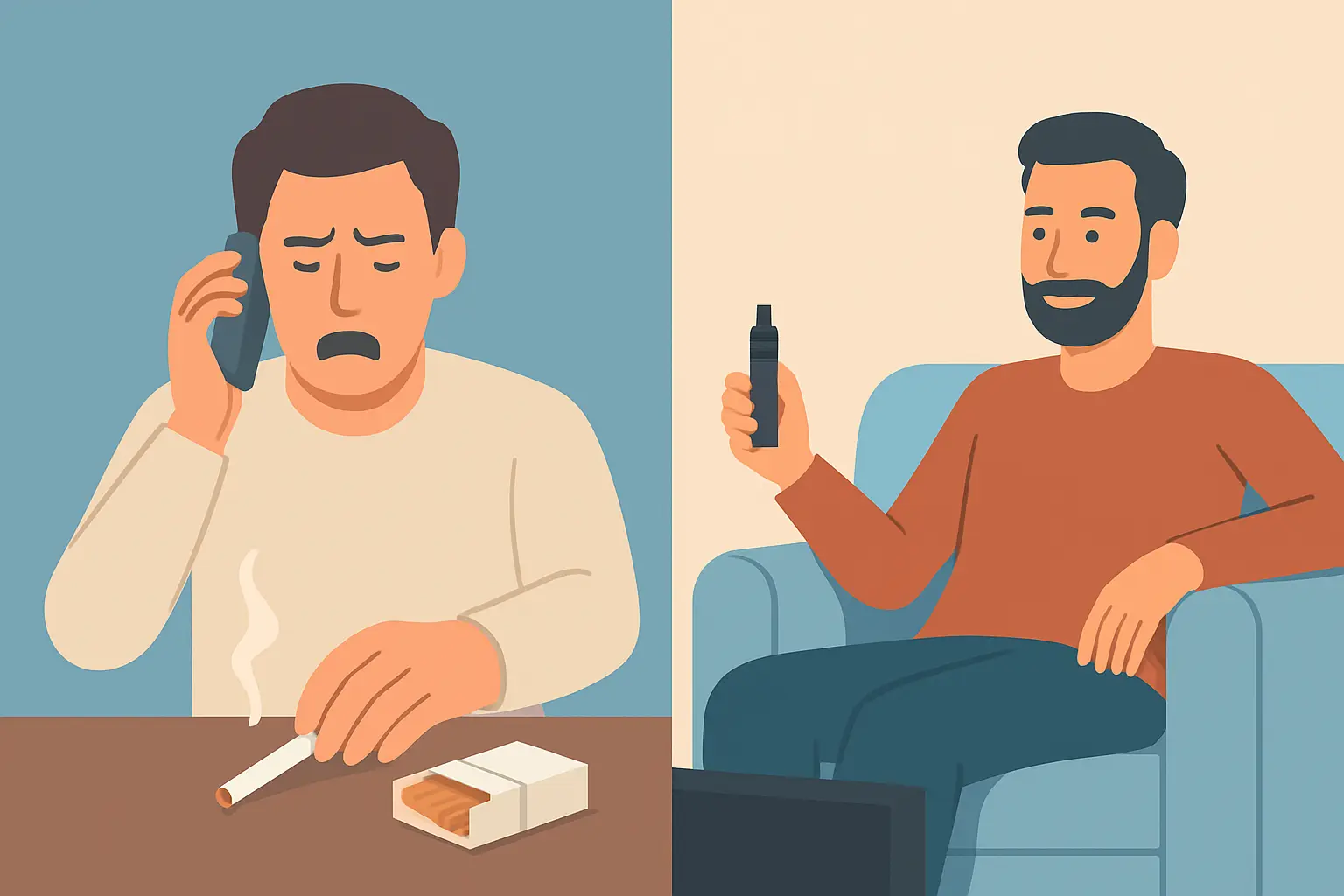
One reason dual use feels harder to plan around is that cigarettes and vapes rarely share the same triggers. A cigarette might be tied to your morning coffee or a work break outside; a vape might be tied to boredom on the sofa or stress at your desk, precisely because it is easier to use indoors and doesn’t require “going somewhere” to smoke. Treating these as one undifferentiated craving list will miss half your actual triggers.
| Situation | More often a cigarette trigger | More often a vape trigger |
|---|---|---|
| First thing in the morning | Yes, especially with coffee | Less common |
| Driving | Common, especially longer drives | Common if smoking isn’t practical in the car |
| Indoors, at a desk or on the sofa | Rare (has to go outside) | Very common — no need to step out |
| Stress or anxiety spikes | Common | Very common, especially discreet vaping |
| Social smoking/vaping breaks | Common with other smokers | Common with other vapers |
Your Week-by-Week Schedule
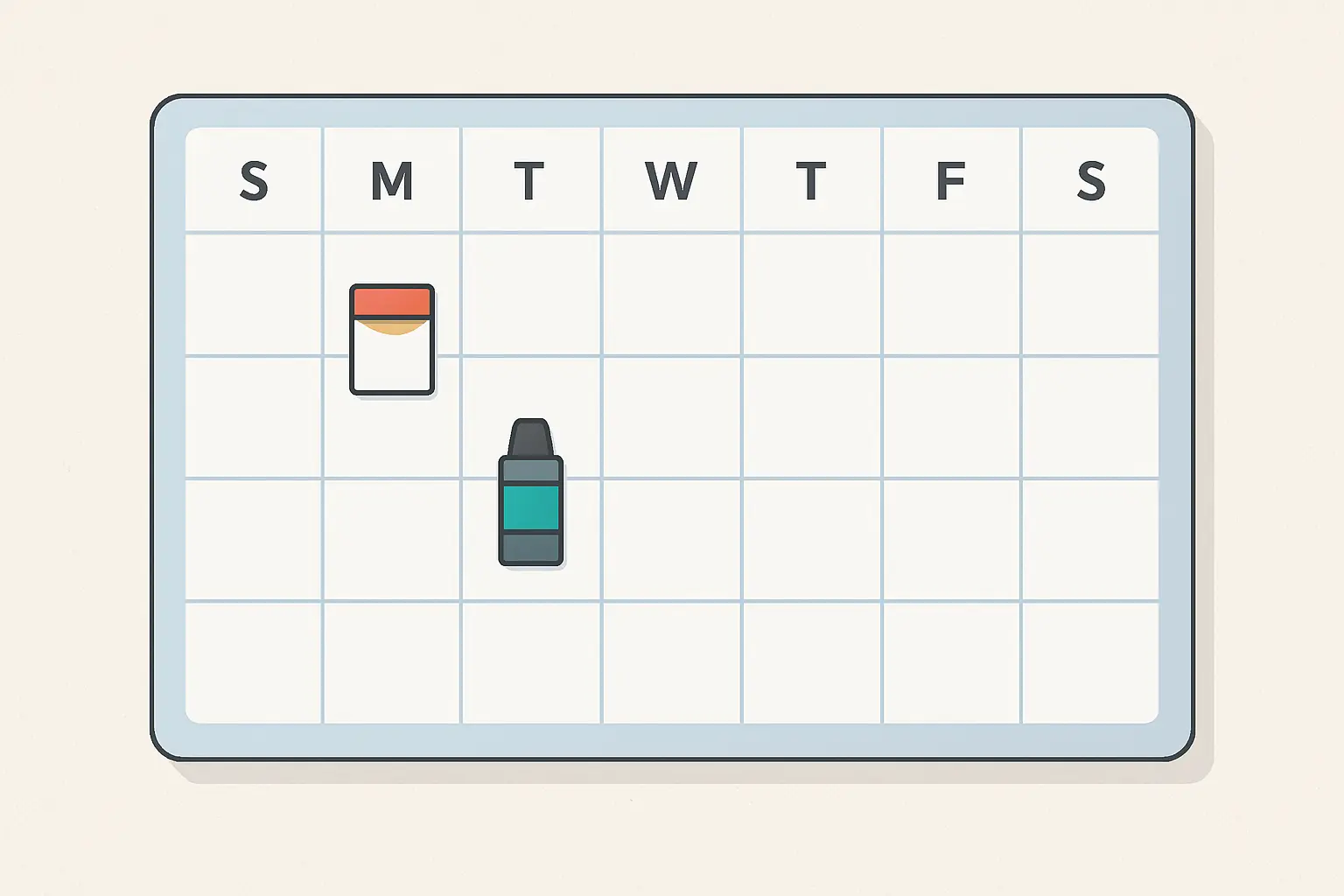
Whichever plan you choose, write it down as an actual calendar rather than a vague intention. A simple structure that works for most dual users:
- Days 1–3: Log every cigarette and every vape session separately, with time and trigger. Do not change anything yet — just measure.
- Day 4: Set your quit date (sequential or simultaneous) based on what the log shows.
- Week 1 of quitting: Lean hard on NRT and on substitutes for your top three logged triggers.
- Weeks 2–4: Taper the second habit if you chose the sequential route; hold the line on both if you chose simultaneous.
- Month 2: Step down NRT strength following the standard taper schedule for whichever product you used.
If money is part of your motivation, our breakdown of how much money you save quitting vaping shows how quickly the combined savings from dropping both habits add up, and our step-by-step plan for quitting disposable vapes is the right next read if disposables specifically are your vape of choice.
Track Both Habits in One Place
Part of what makes dual use confusing is trying to track two habits in your head. iQuit lets you log cravings by trigger and by product, so the cigarette pattern and the vape pattern show up as two separate, visible trends instead of one blurred picture — and the same streak shields and slip-recovery tools apply whichever one you are working on that week.
Frequently Asked Questions
Should I quit smoking or vaping first?
There is no single evidence-backed order — a 2022 UK government evidence review focuses on reaching complete cessation of both, not on sequencing (GOV.UK, 2022). If your cigarette habit is more automatic, quitting it first and using your vape briefly as a bridge often works. If the two habits are interchangeable for you, quitting both on one date can be simpler than managing a staggered plan.
Is it worse to smoke and vape than to just smoke?
Continuing to smoke at all keeps the combustion-related risks that vaping does not carry, so dual use does not remove those risks the way a full switch away from cigarettes would. Health authorities describe the benefit of vaping as applying when it is used as a “complete substitute” for smoking, not as an addition to it (CDC).
Can I use NRT if I already vape?
Yes. NRT targets nicotine dependence itself, not the specific product it came from. A nicotine patch can cover background cravings while you reduce vape sessions, and combination NRT (patch plus a fast-acting product) is commonly used when someone is dropping more than one nicotine source at once.
How common is smoking and vaping at the same time?
It has grown quickly. Among smokers in England, the proportion who also vaped rose from an average of 18.6% (July 2016–May 2021) to 34.2% by April 2024, with daily-cigarette-plus-daily-vape being the single most common pattern at 49.0% of dual users (Jackson et al., 2025).
Will I get worse cravings quitting both at once?
Many dual users find the first 72 hours harder when quitting both together, simply because both rituals disappear at once. Combination NRT, logging your specific triggers in advance, and having a same-day plan for your top three cravings all reduce how sharp that first stretch feels.
Does switching to vaping only, then quitting vaping, count as quitting?
Fully stopping cigarettes is a real health gain even before vaping is also stopped, since it removes combustion exposure. But it is an intermediate step, not the finish line — the sequential plan in this guide treats the vape-only phase as temporary and time-limited, with its own taper built in from the start.
One Plan, One App, Two Habits Down
iQuit tracks cigarettes and vaping separately, so you can see both habits shrink on their own timelines — with craving logs, streak shields and an AI coach that adapts to whichever habit you’re working on. Free on Google Play and the App Store.
Download iQuit Free on Google Play
Download on the App Store