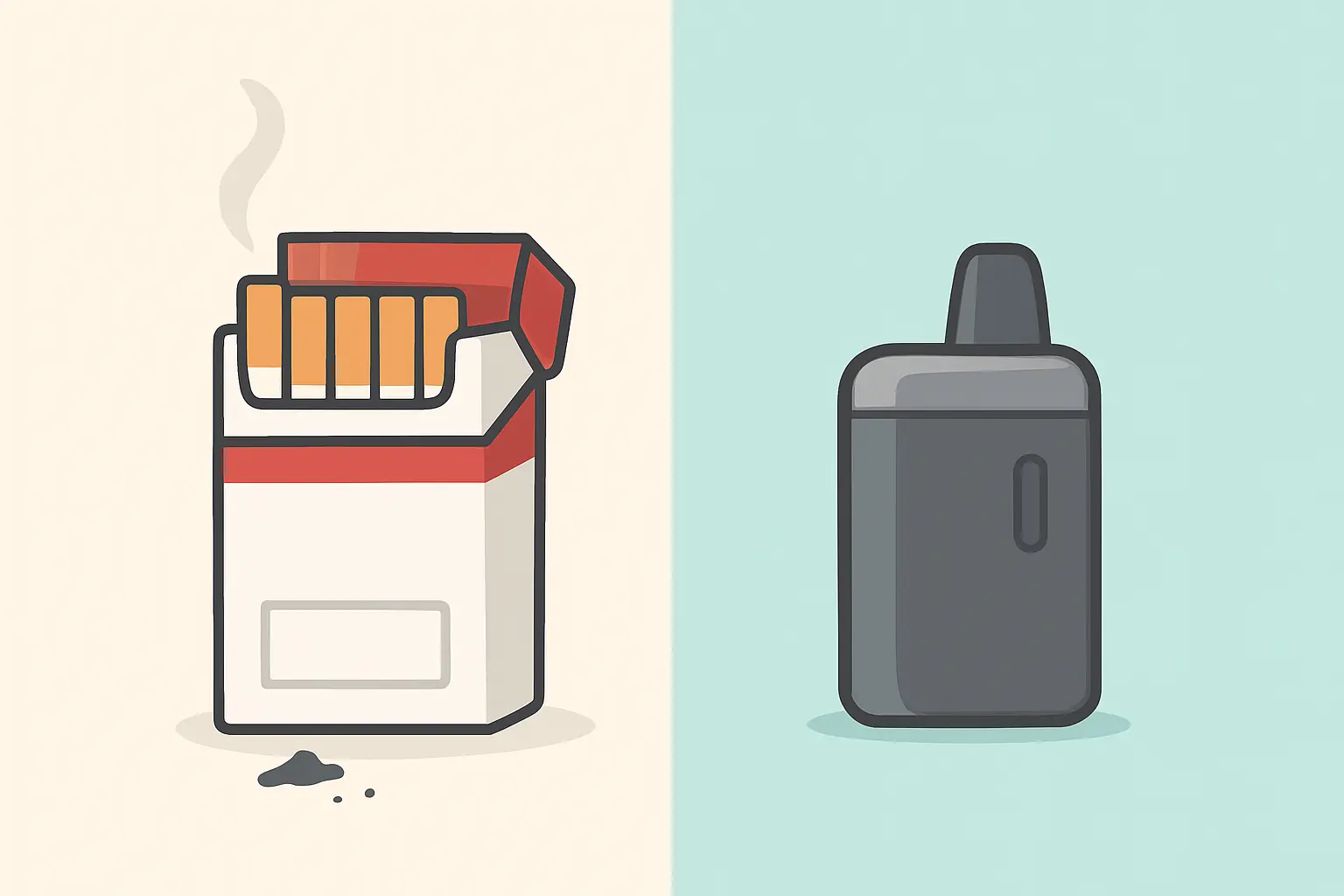
Is vaping harder to quit than smoking? For a meaningful share of former smokers who switched to vaping, yes — not because nicotine itself is different, but because vape design removes the natural stop cues a cigarette pack provides and delivers nicotine in a form (salt-based) that’s easy to absorb in large, frequent, almost unnoticed doses. This guide compares the two habits directly: dose delivery, cue structure, and what the quit-rate evidence actually shows for vapers versus smokers.
Is vaping harder to quit than smoking? The short answer
Comparing cigarettes and vapes side by side shows why the two habits, though both nicotine-driven, don’t behave the same way in practice. This is a different question from whether vaping is worse than smoking for your health — here we’re asking which habit is harder to walk away from, not which does more damage.
| Factor | Cigarettes | Vapes |
|---|---|---|
| Nicotine form | Freebase (combustion) | Often nicotine salt — smoother, higher-dose intake |
| Dosing pattern | ~20 discrete doses/day | Continuous “grazing,” dose count often unknown |
| Natural stop cues | Empty pack, ash, smell, cost per pack | None — device is always available, refillable |
| Social visibility | High (smell, smoke) | Lower — easier to use discreetly, more often |
| NRT effectiveness | Well-established | Same evidence base applies, less studied specifically |
Nicotine salts and how much you actually absorb
Most modern pod-based vapes use nicotine salts rather than freebase nicotine. Acidic additives form the salt, which makes the inhaled nicotine smoother — and that smoothness is exactly what removes the harshness that used to limit how much anyone could take in. A crossover randomized clinical trial in 72 young adults, published in JAMA Network Open in 2024, measured what that does in practice: salt-based e-liquids increased nicotine intake compared with freebase, with 5% salt-based liquid delivering mean plasma nicotine of 11.2 ng/mL at five minutes and 17.2 ng/mL after 35 minutes of vaping (crossover randomized clinical trial, JAMA Network Open 2024).
The same trial found salt-based nicotine scored higher on positive subjective ratings such as liking (42.8 versus 32.0 for freebase on a visual analog scale) and produced more intense puffing — about 25% more total puffs than freebase. In practice this means many vapers are absorbing more nicotine per session than they realize, and puffing more while they do it, without the built-in discomfort that historically capped intake. The UK’s move to restrict flavored, low-cost disposable vapes — covered in our disposable vape ban explainer — is partly a response to how easy high-nicotine salt devices have made frequent, high-dose use, especially for younger users.
Mayo Clinic’s nicotine dependence specialists discuss how e-cigarettes and nicotine dependence interact, and why switching devices does not settle the dependence itself.
Grazing vs. 20 discrete doses: why the habit is harder to see
A pack-a-day smoker takes roughly 20 distinct, countable doses across a day, each one a discrete decision to smoke. Vaping removes that structure: a device sits in a pocket or bag and gets puffed dozens or hundreds of times throughout the day in a pattern that resembles grazing more than distinct “cigarette breaks.” This matters for quitting because a countable habit is easier to taper — cutting from 20 cigarettes to 15 to 10 is a concrete, trackable reduction, while cutting “some vaping” is much harder to quantify and monitor without deliberate logging.
Fewer natural stop cues
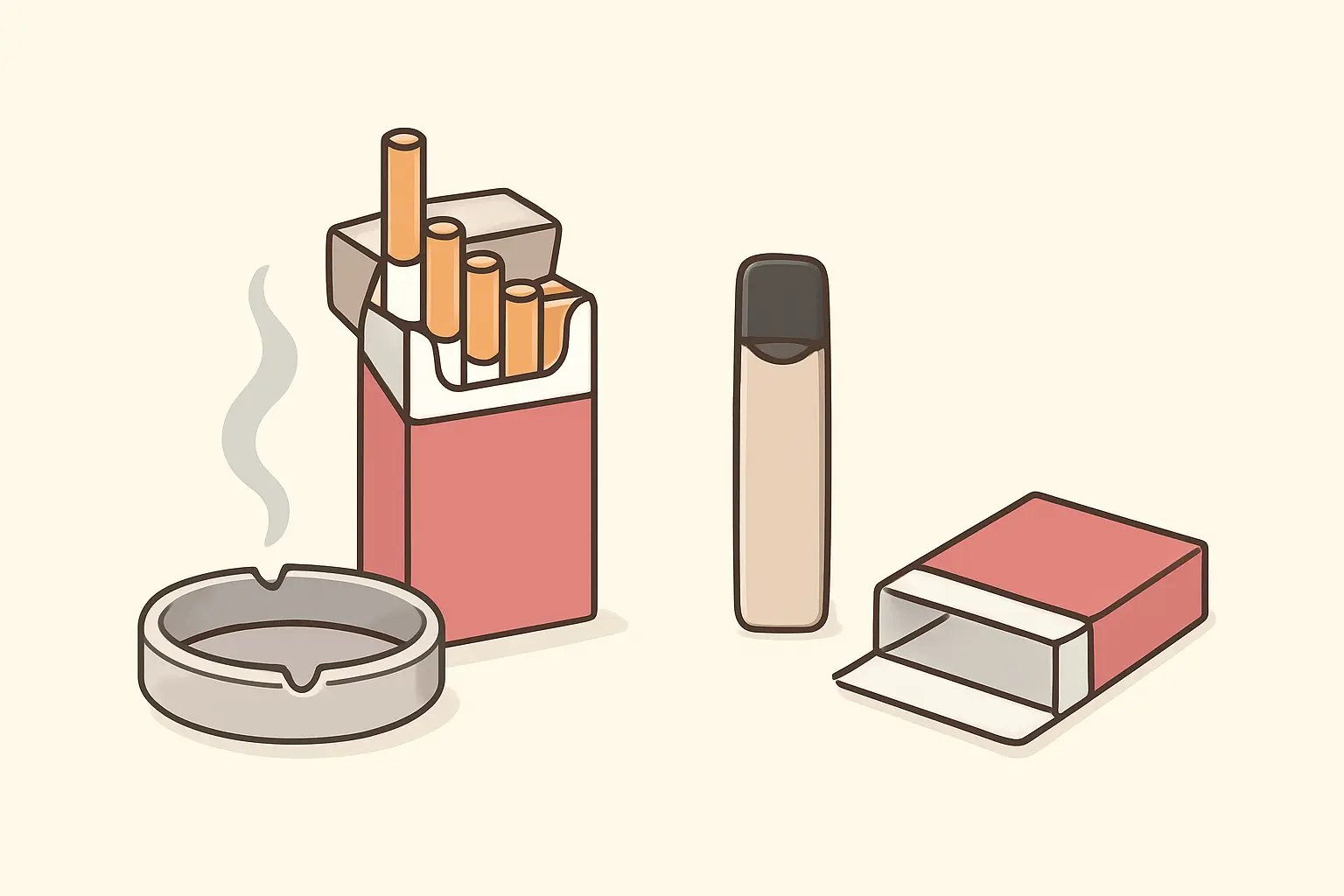
Cigarettes come with built-in stopping points: the pack empties, the ashtray fills, the smell lingers and announces the habit to everyone nearby, and the visible cost of a fresh pack every day or two creates friction. Vapes remove nearly all of these. A pod or tank refills quietly, there’s no ash to empty, the smell is faint and often flavored, and the device itself is small enough to use almost anywhere without drawing attention. Removing friction and social visibility doesn’t make nicotine more addictive chemically, but it does remove several of the natural moments that used to prompt a smoker to notice, question, or cut back on their use.
What quit rates look like: vapers vs. smokers
The evidence on vaping and cessation is genuinely mixed depending on what’s being measured. Cochrane’s review of e-cigarettes for smoking cessation puts it plainly: for every 100 people using nicotine e-cigarettes to stop smoking, 8 to 10 might successfully stop, compared with only 6 of 100 people using nicotine replacement therapy — 11 studies, 4,114 participants, rated high-certainty evidence (Cochrane review, e-cigarettes for smoking cessation). But that evidence is about quitting cigarettes by switching to vaping — it doesn’t answer how easy it is to then quit vaping itself, and separate survey data suggests a meaningful share of smokers who switch to vaping to quit end up using both products or continuing to vape long-term rather than becoming nicotine-free. In other words: vaping can be an effective off-ramp from cigarettes, and a genuinely difficult habit to then step down from. If you’re already past the switch and now facing vape withdrawal specifically, our vape withdrawal timeline maps out what to expect day by day.
What switching does and doesn’t solve
A lot of the frustration people feel at this stage comes from expectations that were never quite right in the first place. Sorting the claims from the evidence makes the next step clearer.
| What people expect | What the evidence supports |
|---|---|
| Switching to vaping means the nicotine problem is handled | Switching is well-evidenced for stopping cigarettes; it does not by itself end nicotine dependence, and many people continue vaping long-term |
| Vaping withdrawal must be milder because vaping is less harmful | Harm and dependence are separate questions — withdrawal is driven by nicotine, not by combustion, so symptoms follow the same pattern |
| A lower mg/mL bottle automatically means less nicotine | Only if puffing stays constant. Compensating by vaping more often at a lower strength can hold total intake flat or raise it |
| NRT is for smokers, not vapers | Nicotine withdrawal is the same process regardless of delivery route, so patches, gum and lozenges apply to vapers too |
| Willpower alone should be enough because vaping is “just a habit” | Pod devices using nicotine salts deliver more nicotine, more comfortably, than older freebase devices — this is a pharmacological dependence, not only a routine |
Does NRT work for vapers?
Yes — the pharmacology of nicotine withdrawal doesn’t change based on how the nicotine was delivered, so patches, gum, lozenges and other NRT forms work on the same basis for vapers as for smokers. The practical difference is dosing: a heavy vaper using high-mg/mL salt liquid may be taking in more daily nicotine than a moderate cigarette smoker, so NRT dosing sometimes needs adjusting upward rather than assuming a “one cigarette equals one dose” equivalence (the NHS guidance on vaping to quit smoking sets out how vaping and licensed NRT are meant to sit alongside each other). Our ranking of nicotine’s addictiveness covers how vaping’s delivery speed and salt formulation affect dependence more broadly, and the same behavioral techniques that work for cigarette quitting — cue avoidance, craving surfing, replacing hand-to-mouth habit — apply directly to vaping too. Our evidence-based guide to quitting vaping walks through the full plan, and vaping-specific app options if you want tools built around puff counts rather than cigarette counts.
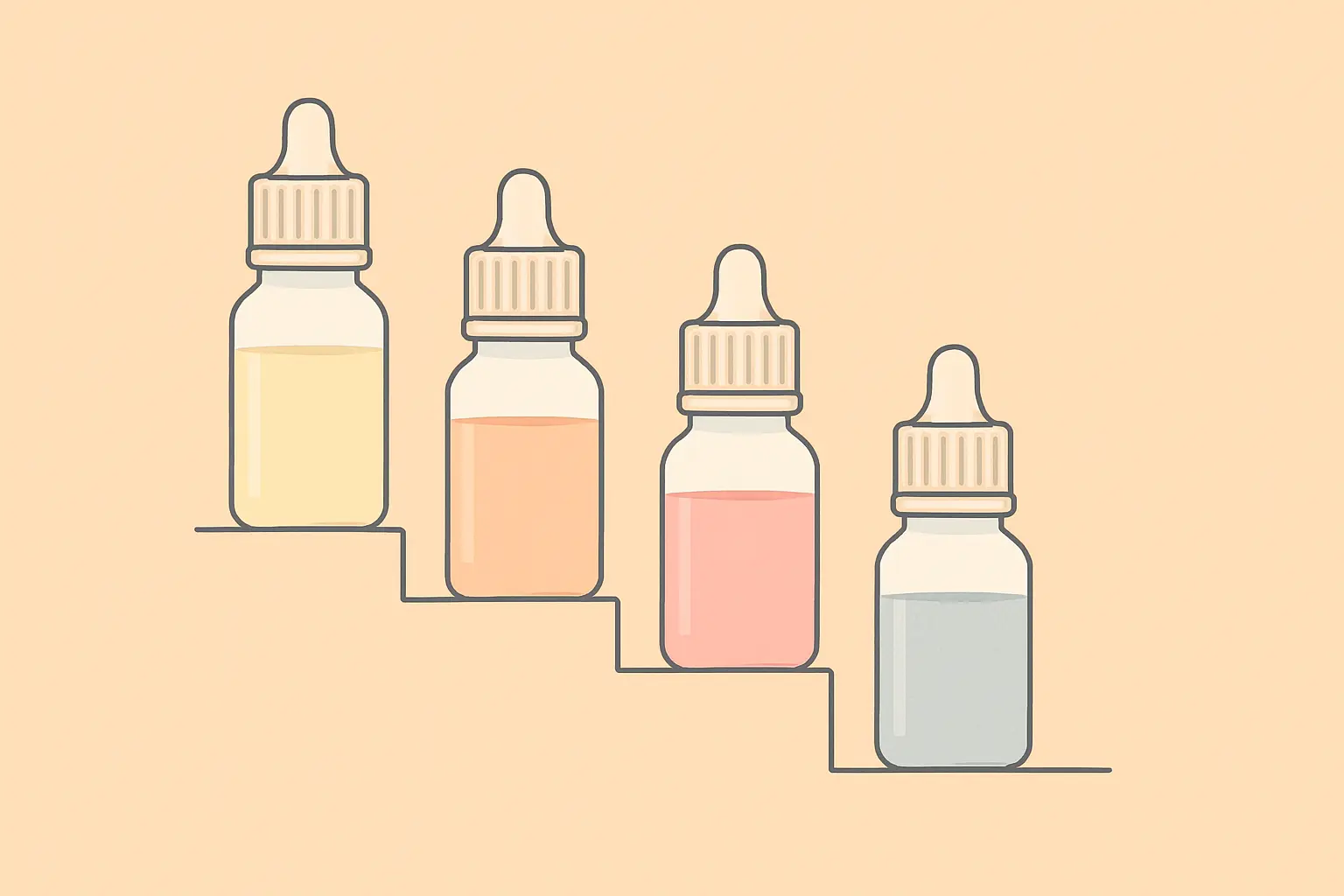
Tapering mg/mL vs. quitting outright
Vapers have an option cigarette smokers don’t: gradually reducing the nicotine strength of the e-liquid itself while keeping the same device and habit pattern, then quitting the device once strength is low. This can work well for people whose attachment is partly to the ritual and rhythm of puffing, but it requires genuine discipline to actually step down strength on schedule rather than compensating by vaping more often at each lower strength — which cancels out the taper. Quitting outright with NRT and behavioral support, similar to a cigarette quit plan, tends to produce a cleaner break for those who find gradual reduction turns into an open-ended plateau instead of a taper — and if withdrawal itself is the thing you’re worried about, nicotine withdrawal isn’t medically dangerous regardless of whether the nicotine came from cigarettes or vaping.
A four-week taper that actually steps down
If you choose the taper route, the single thing that makes or breaks it is measuring puffs or pod volume, not just strength. Otherwise the compensation happens invisibly. A workable structure looks like this — adjust the starting strength to whatever you currently use.
| Week | What changes | What stays fixed | The check that keeps you honest |
|---|---|---|---|
| Week 0 (baseline) | Nothing — you change nothing at all | Current strength and device | Log every session for seven days. This number is your baseline, and most people are surprised by it. |
| Week 1 | Drop one strength step (for example 20 to 12 mg/mL) | Session count capped at your baseline | If session count rises above baseline, you are compensating — hold the strength until it settles. |
| Week 2 | Hold the new strength | Strength and device | Cut the two easiest sessions of the day (usually the ones tied to a routine, not a craving). |
| Week 3 | Drop another strength step | The reduced session count from week 2 | Watch for longer or deeper puffs — the other compensation route, and the one a session count alone will miss. |
| Week 4 | Set a quit date for the device itself | Everything else | Have a fast-acting NRT form and a craving plan ready before the date, not after. |
The reason to end a taper with a fixed quit date rather than a further step down is that the last steps are where compensation is easiest and progress is hardest to feel. A date converts an open-ended reduction into a finite one.
Frequently Asked Questions
Is vaping actually harder to quit than smoking?
Not pharmacologically, but often behaviorally. Nicotine salts allow smoother, higher-dose intake, vaping happens in continuous “grazing” sessions rather than 20 discrete daily doses, and there are far fewer natural stop cues like an empty pack or lingering smell to prompt cutting back.
Why do nicotine salts matter for how much I’m actually vaping?
Acidic additives form nicotine salts, which make inhaled nicotine smoother than freebase nicotine and remove the harshness that used to limit intake. A 2024 crossover trial in JAMA Network Open found salt-based e-liquids increased nicotine intake, drew higher liking ratings, and produced about 25% more total puffs than freebase at the same concentration.
Does NRT work if I want to quit vaping instead of smoking?
Yes. Nicotine withdrawal works the same way regardless of delivery method, so patches, gum and lozenges are appropriate for vapers too. Heavy vapers using high-strength salt liquid sometimes need higher NRT dosing than a “one cigarette equals one puff” assumption would suggest. Discuss dosing with a pharmacist or your stop-smoking service.
Is tapering the mg/mL strength a good way to quit vaping?
It can work, but only if you actually reduce strength on a fixed schedule rather than compensating by vaping more at each lower strength, which cancels the taper out. Many people find a clean quit date with NRT support produces a more reliable result than an open-ended strength reduction.
Why did switching from cigarettes to vaping not “fix” my nicotine problem?
Switching from cigarettes to vaping is well-evidenced as a way to help smokers quit combustible cigarettes, but it isn’t automatically a path to being nicotine-free. Many people who switch continue vaping long-term or use both products, because the underlying nicotine dependence hasn’t been addressed, only the delivery method.
How do I count vaping when there are no cigarettes to count?
Count sessions rather than puffs, at least to begin with: every time you pick the device up and put it down again is one session. Pod or tank volume over a week is a useful second measure, because it catches longer, deeper puffs that a session count misses. A baseline week of honest logging before you change anything makes every later reduction measurable.
Is vape withdrawal shorter than cigarette withdrawal?
Not inherently. Withdrawal is driven by nicotine, so the broad pattern — irritability, poor concentration, low mood, disturbed sleep, appetite changes — is the same, and it is uncomfortable rather than medically dangerous. What differs is the trigger map: vaping cues are spread thinly through the whole day rather than clustered around 20 fixed breaks.
Can a quit-smoking app help if my problem is vaping?
The useful part transfers directly: craving logging with triggers and intensity, and in-the-moment tools for the urge itself. iQuit’s free tier includes both — a craving log with triggers and intensity, plus SOS breathing and grounding techniques — and the log doesn’t care which product the urge came from. It is available on Google Play and the App Store.
Turn invisible grazing into a number
iQuit’s free craving log records every urge with its trigger and intensity, so a grazing-style habit becomes countable and taperable instead of invisible — with SOS breathing and grounding tools for the moment an urge arrives. Available on Google Play and the App Store.