On average, yes, a little. Clinical trials and relapse studies suggest that it is harder for women to quit smoking and stay quit long term than it is for men, although population surveys give more mixed results. The gap is not about willpower. It seems to come from differences in how women respond to stress, to weight concerns, and to some stop smoking medicines. The encouraging part is that the right method, especially varenicline, appears to close much of that gap.
This guide explains what the research shows, why the difference exists, how nicotine replacement and varenicline compare for women, what pregnancy, periods and menopause mean for a quit attempt, and how to choose a method that fits.
Short answer: do women find quitting harder?
The most detailed look at this question is a 2016 review in Preventive Medicine that examined 214 tests of sex or gender differences from 190 studies. It found that women have more difficulty maintaining long-term abstinence than men in treatment trials and in studies that follow people who have already quit. Population surveys were mixed, which suggests the size of the gap depends on where and when people are studied.
So the honest answer is: in the settings where people get stop smoking treatment, women tend to relapse more. That does not mean any individual woman is less likely to succeed. It means the standard approach may not suit women as well, and it is worth choosing a method with that in mind.
It also helps to know that fewer women than men smoke in some countries. In the UK in 2023, the Office for National Statistics reported that 10.1% of women and 13.7% of men were current smokers. Our cessation statistics by demographic put quit rates for different groups side by side.
What quit-rate data shows by sex
The clearest differences show up in placebo-controlled trials, where researchers can see how well a treatment works on top of motivation and support alone.
| Study | What it looked at | Key finding for women |
|---|---|---|
| Smith et al., 2016 review | 214 tests from 190 studies | More difficulty staying abstinent long term in trials; population data mixed |
| Perkins and Scott, 2008 | 14 nicotine patch trials, 6,250 people | Patch benefit over placebo about half as large as in men |
| Cepeda-Benito et al., 2004 | 21 NRT trials | NRT clearly helped women at 3 and 6 months, less clear at 12 months; intensive support mattered more |
| McKee et al., 2016 | 16 varenicline trials, 6,710 people | Similar quit rates to men on varenicline; bigger benefit over placebo in the short term |
| Smith et al., 2017 | 28 trials, 14,389 people | For women, varenicline worked better than the patch or bupropion |
In the patch analysis, six-month quit rates were 20.1% on nicotine patches and 10.8% on placebo for men. For women they were 14.7% and 10.1%. Women on placebo did about as well as men on placebo, but the nicotine patch added much less for them.
Withdrawal, stress and cue reactivity
One reason for the gap may be what triggers cravings. Research suggests women and men respond similarly to smoking cues, such as seeing a cigarette or someone lighting up, but differently to stress.
- In a 2012 laboratory study, women reported more craving, stress and arousal than men after listening to a stressful script, while responses to smoking cues were similar.
- A 2020 study used phone prompts to test 177 smokers in daily life for two weeks. Women reported more negative mood, stress and craving after stressful cues, but not after smoking cues.
If this matches your experience, a quit plan built only around avoiding smoking triggers may miss the main danger zone. Plan for stressful moments specifically: a difficult conversation, a work deadline, a bad night’s sleep. Short breathing exercises, a walk, or a fast-acting nicotine product kept for those moments can help.
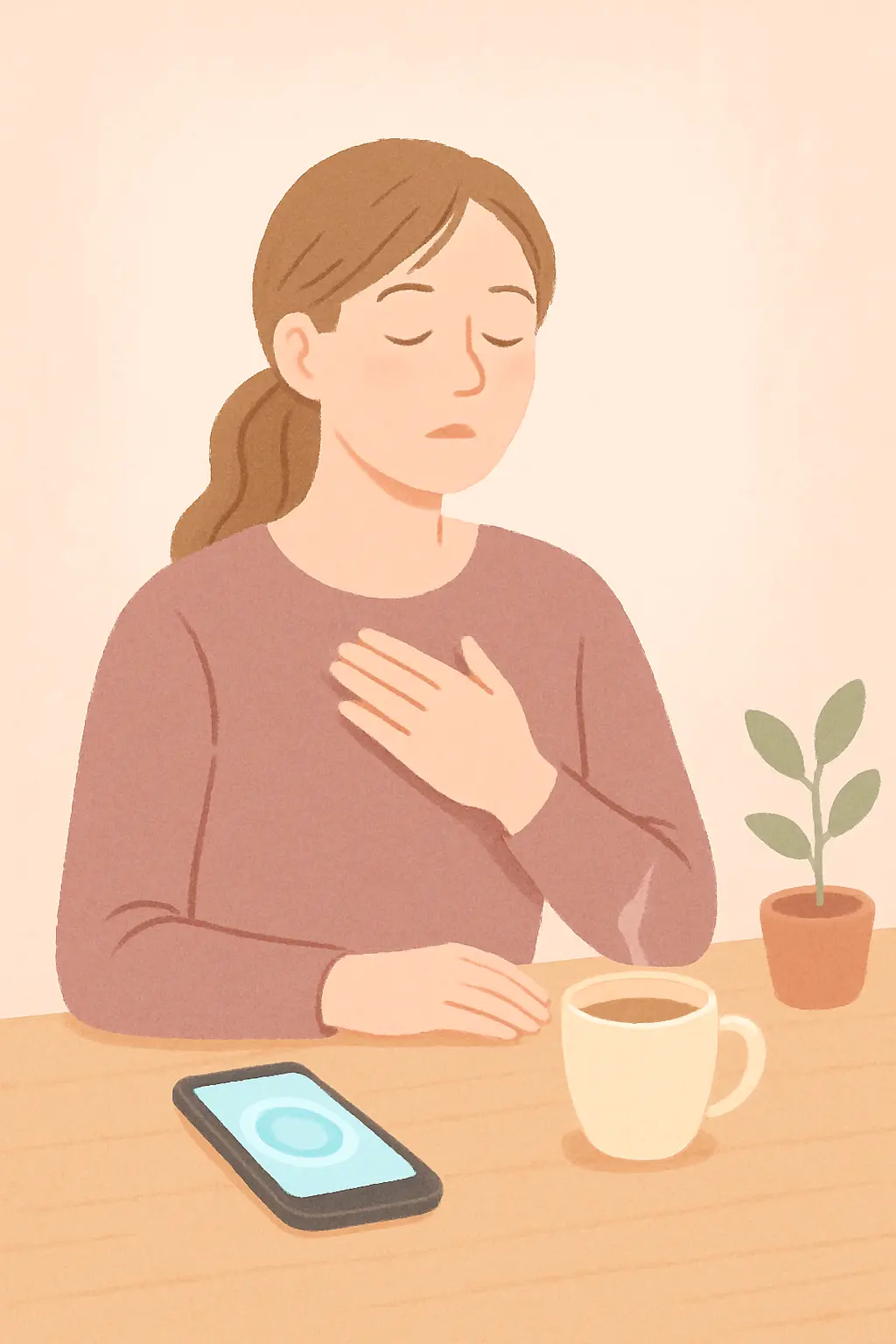
Keeping a record helps you see your own pattern. iQuit, free on Google Play and the App Store, lets you log each craving with its trigger and intensity alongside a mood journal, so you can check whether stress or low mood drives more of your urges than coffee or social situations. Its SOS craving tools include breathing exercises for those moments.
Weight concerns and quitting
Worry about gaining weight is a common reason to delay quitting or to go back to smoking. Researchers writing in Nicotine and Tobacco Research in 2020 noted that the majority of women who smoke report that concern about weight gain is a barrier to quitting, and they tested a program built around coping with distress, appetite awareness and mindful eating.
Some practical points:
- Name the worry early. If weight is a concern, say so to your doctor, pharmacist or stop smoking adviser at the start, so it becomes part of the plan rather than a reason to relapse.
- Plan food, not a diet. Regular meals and ready-made snacks are easier to manage than strict restriction while you are also dealing with withdrawal.
- Get help with the worry itself. The 2020 program focused on coping with distress and mindful eating rather than dieting, a sign that the concern can be worked on directly.
Do NRT and varenicline work differently for women?
This is the most practical part of the research, because it can change which treatment you choose.
Nicotine replacement therapy
Nicotine replacement still helps women quit. But the 2008 patch meta-analysis found the extra benefit over placebo was about half as large in women as in men, and the authors suggested women may need patch treatment supplemented or a different medicine. A 2004 meta-analysis found intensive behavioral support mattered more for women using NRT than for men.
One common way to boost NRT is to combine a patch with a fast-acting product such as gum, a lozenge or a mouth spray, which NHS Better Health recommends. Our guide to combination NRT explains how it works.
Varenicline
Varenicline is a prescription stop smoking tablet, sold in some countries as Champix or Chantix. A 2016 meta-analysis of 16 high-quality trials found that on placebo women were less likely than men to quit, but on varenicline quit rates were similar for women and men, for example 53% for both at the end of treatment. Compared with placebo, varenicline was more effective for women in the short and medium term, and equally effective at one year.
A 2017 network meta-analysis of 28 trials went a step further. For women, varenicline was more effective than the nicotine patch and more effective than bupropion. For men, the three treatments performed more similarly. The authors concluded that clinicians should strongly consider varenicline as the first option for women.
This short video from the CDC explains how varenicline is taken during a quit attempt.
Varenicline is not right for everyone. MedlinePlus advises telling your doctor if you are pregnant, planning a pregnancy or breastfeeding, and if you have ever had depression or another mental illness. It lists nausea and unusual dreams among possible side effects, and says to stop and call your doctor immediately for suicidal thoughts, new or worsening depression or anxiety, or sudden changes in behavior or mood. Our guide to varenicline side effects and how long to take it covers this in detail.
Cycle, pregnancy and menopause touchpoints
Your menstrual cycle
Some studies suggest hormone changes across the menstrual cycle affect cravings and quit outcomes. However, a 2023 trial protocol notes that these findings are limited by small sample sizes and inconsistent quit dates. A large randomized trial is now testing whether timing a quit date to a particular phase helps. Until results are in, there is no firm rule, but tracking how cravings change across your cycle can still help you plan. Our guide to quitting and your cycle goes into more detail.
Hormonal contraception
If you use the combined pill, smoking matters for your safety as well as your quit plan. Our article on smoking on the birth control pill explains the risks.
Pregnancy
The NHS advises that you can use nicotine replacement in pregnancy if it will help you stop and you cannot stop without it, while varenicline and bupropion are not recommended in pregnancy. Patches should be worn for no more than 16 hours in 24, so take them off at bedtime. Speak to a midwife, GP, pharmacist or stop smoking adviser first. Our guide to quitting safely while pregnant has more, and for planning ahead see fertility after quitting.
Menopause
We did not find good-quality studies on whether menopause makes quitting easier or harder, so there is no evidence-based advice specific to this stage. If menopause symptoms such as poor sleep or low mood are making a quit attempt harder, raise them with your doctor so they can be addressed as part of your quit plan.
Choosing a method that fits
Putting the research together, here is a practical way to decide:
- Talk to a doctor or pharmacist about varenicline. For women, it has the strongest evidence. If it is not suitable, ask about combining a patch with a fast-acting product.
- Get behavioral support, not just a product. Research suggests intensive support matters more for women using NRT. In the UK, NHS stop smoking services are free.
- Plan for stress, not just smoking cues. List your most stressful situations and decide in advance what you will do in each.
- Bring up weight early so it is part of the plan.
- If you are pregnant or trying to conceive, speak to your midwife or GP before choosing a product.

See a doctor promptly if you notice mood changes on any stop smoking medicine, or if low mood, anxiety or sleep problems are getting worse after you quit.
Women and Quitting FAQ
Is it harder for women to quit smoking than men?
On average, treatment trials and relapse studies show women have more difficulty staying abstinent long term, while population surveys are mixed. Researchers point to possible contributors such as stress-related cravings, weight concerns and response to some medicines, not willpower (Smith et al., Preventive Medicine 2016).
Do nicotine patches work for women?
Yes, but less than for men on average. In 14 trials, the extra benefit of a nicotine patch over placebo was about half as large in women. Combining the patch with a fast-acting product or adding strong behavioral support may help (Perkins and Scott, Nicotine and Tobacco Research 2008).
What is the best stop smoking medicine for women?
Varenicline has the strongest evidence. In a network meta-analysis, it worked better than the nicotine patch and bupropion for women, and the authors advised clinicians to strongly consider it first. It is prescription-only and not recommended in pregnancy, so talk to a doctor (Smith et al. 2017; NHS).
Why do women relapse more after quitting?
Research points to several factors. Women report more craving and stress after stressful situations, many women who smoke say worry about weight gain is a barrier, and nicotine patches add less benefit for women than men (Tomko et al. 2020; Bloom et al. 2020; Perkins and Scott 2008).
Should I time my quit date to my menstrual cycle?
There is no firm evidence yet. Some studies suggest cycle phase affects outcomes, but they were small and inconsistent, and a large trial is testing it now. Tracking cravings across your cycle can still help you plan for harder days (MC-NRT trial protocol, 2023).
Can I use nicotine replacement while pregnant?
The NHS says you can use NRT in pregnancy if it will help you stop and you cannot stop without it. Remove patches at bedtime so they are worn no more than 16 hours a day, and speak to a midwife, GP or pharmacist first. Varenicline is not recommended in pregnancy (NHS).
Does support matter more for women?
It may. A meta-analysis of 21 NRT trials found high-intensity behavioral support was more important for women than men using NRT. Free stop smoking services, counseling or structured programs are worth using alongside any medicine (Cepeda-Benito et al., 2004).
A quit plan that learns your triggers
Log cravings with their trigger and intensity, track your mood, use SOS breathing exercises when stress hits, and get guidance from an AI coach that adapts to your progress. iQuit is free on Google Play and the App Store.
Download iQuit Free on Google Play
Download on the App Store