If you smoke and use the pill, patch or ring, you have probably seen the warning on the leaflet. Smoking on birth control that contains estrogen raises your risk of blood clots, heart attack and stroke, and that risk climbs with age and with how much you smoke. Once you reach 35, US and UK guidance says combined hormonal contraception is generally not a safe choice if you still smoke.
The good news is that you have options. This guide explains what the FDA, the CDC and the NHS actually say, which methods are considered safe for people who smoke, how vaping and nicotine replacement fit in, and what changes when you quit. It is general information, so talk to a doctor, nurse or pharmacist before you change or stop any contraception.
Is it safe to smoke on the pill?
It depends on which pill you take, how old you are and how much you smoke. “The pill” usually means the combined pill, which contains two hormones: an estrogen and a progestogen. The progestogen-only pill, sometimes called the mini pill, contains no estrogen. The smoking warnings apply to estrogen-containing methods.
- Under 35 and smoking: the CDC’s 2024 US Medical Eligibility Criteria (US MEC) rate combined methods as category 2, meaning the benefits generally outweigh the risks.
- 35 or over, fewer than 15 cigarettes a day: category 3. The risks usually outweigh the benefits, so combined methods are not usually recommended unless other methods are not available or acceptable.
- 35 or over, 15 or more cigarettes a day: category 4. The CDC says these methods should not be used because of unacceptable health risks, mainly heart attack and stroke.
For context, the NHS describes the overall risk of a blood clot on combined hormonal contraception as very small, affecting up to 1 in 1,000 users. Smoking adds to that risk, which is why prescribers ask about it every time.
Why smoking and estrogen raise clot risk
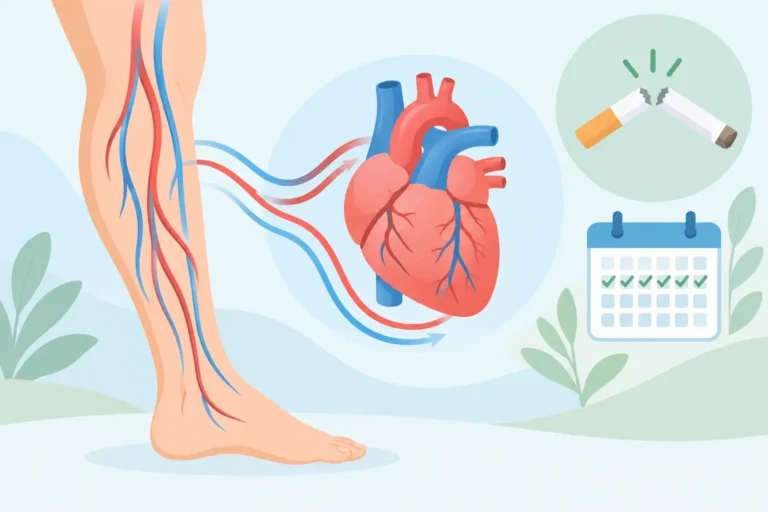
Smoking and estrogen-containing contraception are separate risk factors for the same problems. The NHS lists both smoking and the combined pill, patch or ring as factors that make deep vein thrombosis (DVT) more likely. Separately, it lists the combined pill as something that can increase stroke risk.
When risk factors stack up, the danger grows. The US MEC 2024 evidence summary reports that combined pill users who smoked had a higher risk of cardiovascular disease, especially heart attack, than users who did not smoke. The risk of heart attack rose with the number of cigarettes smoked per day.
That is why the boxed warning on US labels for these contraceptives focuses on smoking. For the three problems that matter most:
| Problem | What it is | What guidance says |
|---|---|---|
| Blood clot in a vein (DVT or pulmonary embolism) | A clot, usually in the leg, that can travel to the lungs | NHS lists both smoking and estrogen contraception as risk factors |
| Heart attack | A blocked blood supply to the heart | US MEC: risk higher in pill users who smoke, rising with cigarettes per day |
| Stroke | A blocked or burst blood vessel in the brain | NHS lists the combined pill as a stroke risk factor; CDC cites stroke for heavy smokers 35+ |
For more on how smoking affects stroke risk in general, see our stroke risk data.
NHS Greater Glasgow and Clyde walks through the main contraception methods in this video, which can help before you talk to a clinician:
The age 35 rule: US and UK guidance
United States
Combined hormonal contraceptives in the US carry an FDA boxed warning about cigarette smoking. A current combination pill label on DailyMed says smoking increases the risk of serious cardiovascular events, that the risk increases with age, particularly over 35, and with the number of cigarettes smoked. It concludes that combination pills should not be used by women who are over 35 and smoke.
The CDC’s US Medical Eligibility Criteria add detail by splitting people over 35 into lighter and heavier smokers, as shown above.
United Kingdom
The NHS page on who can take the combined pill says you may not be able to take it if you are aged 35 or over and smoke. NHS inform in Scotland goes further: it says you should not use the combined pill if you smoke and are 35 or over, or if you are 35 or over and stopped smoking less than a year ago.
UK clinicians use the UK Medical Eligibility Criteria (UKMEC) to make these decisions, so your nurse or GP will apply them to your own situation, including other risks such as weight, blood pressure and migraine.
Patch, ring and combined pill: same warning?
Yes. The patch and the vaginal ring contain an estrogen and a progestogen, just like the combined pill, so the same smoking rules apply.
| Method | FDA label | NHS |
|---|---|---|
| Combined pill | Should not be used by women over 35 who smoke | May not be suitable if 35+ and you smoke |
| Contraceptive patch | Contraindicated in women over 35 who smoke (and with a BMI of 30 or more) | May not be suitable if 35+ and you smoke |
| Vaginal ring | Should not be used by women over 35 who smoke | May not be suitable if 35+ and you smoke |
A vaginal ring label updated in September 2026 carries the same boxed warning as the pill. Switching from the pill to the patch or ring does not get around the smoking risk.
Safer contraception options for smokers
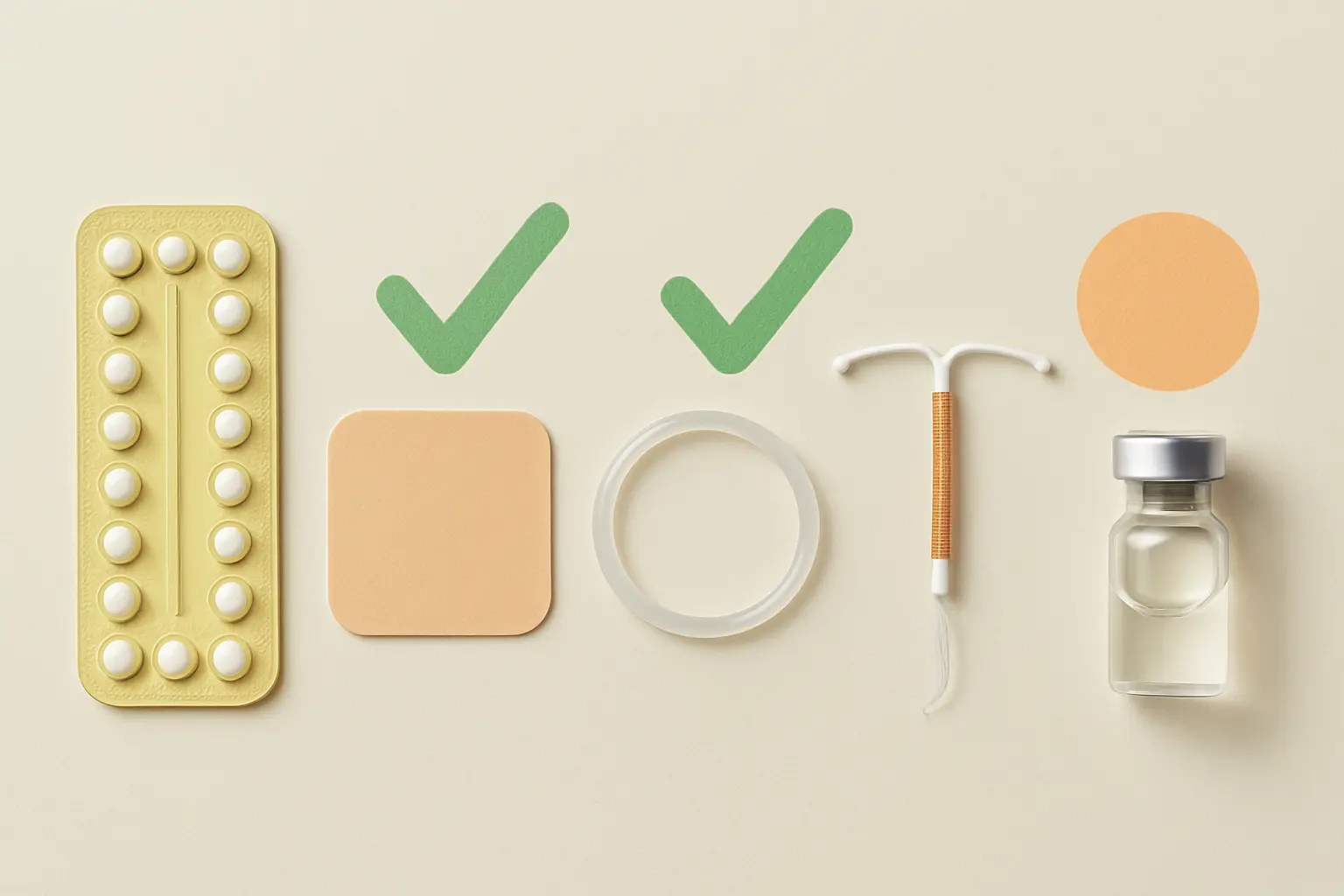
Methods without estrogen are the usual alternatives. In the US MEC 2024, smoking at any age and any amount is category 1, meaning no restriction, for all of these:
- Progestogen-only pill (mini pill): the NHS says it contains no estrogen and is suitable for many people who cannot take estrogen. Like the combined pill, it is over 99% effective when used correctly.
- Contraceptive implant: a small rod under the skin of the arm.
- Hormonal coil (IUS): a small T-shaped device releasing a progestogen.
- Copper coil (IUD): hormone-free, and the NHS notes it is not affected by other medicines.
- Contraceptive injection: no smoking restriction on its own, but the NHS says it may not be recommended if more than one of these applies: you smoke, have diabetes, high blood pressure, high cholesterol or obesity.
Each of these still has its own eligibility checks. For example, the NHS says the mini pill and implant may not be suitable if you have had heart disease or a stroke. A clinician will go through your history before recommending one.
If you are thinking about pregnancy instead, smoking matters there too. Read about smoking and fertility and, if you are planning treatment, quitting before IVF.
Does vaping or NRT count as smoking?
This is one of the most common questions, and the honest answer is that guidance does not give a clear rule. The FDA boxed warnings and the US MEC categories are written about cigarette smoking and cigarettes per day. The full 2024 US MEC does not set separate categories for e-cigarettes or nicotine replacement therapy (NRT).
So what should you do?
- Tell your prescriber exactly what you use: cigarettes, vapes, pouches, patches or gum, and how much.
- Do not assume a vape makes estrogen contraception safe if you are 35 or over. Let your clinician decide with the full picture.
- Do not avoid stop smoking treatment because of your contraception. Using NRT or other medicines to quit cigarettes is a step toward lower risk, and a clinician can plan both together.
Hormones and cravings can interact too. Our guide to quitting and your menstrual cycle explains how to time a quit attempt around your cycle.
How long after quitting are you treated as a non-smoker?
Quitting changes your options, but not overnight. NHS inform in Scotland says you should not use the combined pill, patch or ring if you are 35 or over and stopped smoking less than a year ago. In other words, for estrogen methods you are still treated with caution for the first year after you stop.
The US MEC 2024 does not include a separate category for people who recently quit, so US prescribers use their judgment. Either way, the direction is clear: every smoke-free month lowers your cardiovascular risk. Our heart recovery timeline shows how your heart and blood vessels recover after you stop, and if you have already had a stroke, see quitting smoking after a stroke.
If you want structured help, free services can support you. In the UK, our guide to NHS stop smoking services explains how to self-refer. iQuit’s disease-risk insights also show how your risk for conditions such as stroke and heart disease changes the longer you stay smoke-free.

Smoking on Birth Control FAQ
Can I smoke on birth control if I’m under 35?
Most people under 35 who smoke can use combined hormonal contraception. The CDC rates it category 2, meaning benefits generally outweigh risks. Your risk of clots, heart attack and stroke is still higher than a non-smoker’s, so quitting is the safest choice (CDC US MEC 2024).
What happens if I smoke on the pill over 35?
Your risk of serious cardiovascular events such as heart attack and stroke rises. The FDA says combination pills should not be used by women over 35 who smoke, and the CDC rates it category 3 under 15 cigarettes a day and category 4 at 15 or more. Speak to a clinician about switching (FDA label, CDC).
Is the mini pill safe for smokers?
The progestogen-only pill contains no estrogen. In the US MEC 2024 it has no restriction for smoking at any age (category 1). It may still be unsuitable if you have had heart disease, stroke, liver disease or breast cancer, so a clinician will check your history (CDC, NHS).
Is the patch or ring safer than the pill for smokers?
No. The patch and ring contain estrogen like the combined pill and carry the same FDA boxed warning. The NHS says each may not be suitable if you are 35 or over and smoke. The patch label also lists a BMI of 30 or more as a contraindication (FDA labels, NHS).
Does vaping count as smoking for the pill?
Official warnings and the US MEC 2024 categories are based on cigarette smoking, and the US MEC does not give separate categories for vaping or nicotine replacement. Tell your prescriber exactly what you use so they can judge your risk, especially if you are 35 or over (CDC US MEC 2024).
How long after quitting smoking can I use the combined pill over 35?
NHS inform says people aged 35 or over should not use the combined pill if they stopped smoking less than a year ago. After that, a clinician will review your other risk factors before prescribing. Stay smoke-free and ask at your next contraception review (NHS inform).
Should I stop my pill right away if I smoke and I’m over 35?
Do not simply stop, because you could become pregnant. Book a contraception review with your GP, nurse, pharmacist or sexual health clinic soon and use condoms if you do stop. They can switch you to a method without estrogen, such as the mini pill, implant or a coil (NHS, CDC).
What are the warning signs of a blood clot?
The NHS lists throbbing pain and swelling in one leg, usually the calf or thigh, sometimes with red or darkened skin. Get medical help as soon as possible if you think you have a DVT, and call 999 (or your local emergency number) if you also feel short of breath or have chest pain (NHS).
Lower your risk by quitting for good
iQuit’s disease-risk insights show how your stroke and heart risk changes as you stay smoke-free, while craving logging, SOS support and a daily dashboard keep you on track. Free on Google Play and the App Store.
Download iQuit Free on Google Play
Download on the App Store