
Nicotine gum vs lozenge: both are FDA-approved, come in 2mg and 4mg, and help with cravings about equally well. The right choice depends on your mouth and lifestyle. Pick lozenges if you have dentures, dental work, jaw pain or need total discretion. Pick gum if you like controlling your dose and want something to chew.
Most NRT guides compare four or five products at once. This one is a focused two-way decision guide: we compare gum and lozenges on dental issues, jaw comfort, discretion, speed, side effects and cost, flag the mistakes that make NRT fail, then show you how to taper whichever one you choose.
Nicotine Gum vs Lozenge: Comparison Table
| Factor | Nicotine gum | Nicotine lozenge | Edge |
|---|---|---|---|
| Strengths | 2mg, 4mg | 2mg, 4mg (regular and mini) | Tie |
| How you use it | Chew until tingle, park between cheek and gum, repeat | Let it dissolve slowly; do not chew or swallow | Lozenge (simpler) |
| Dentures, bridges, braces | Can stick or damage work | Suitable for most | Lozenge |
| Jaw pain or TMJ | Chewing can aggravate | No chewing needed | Lozenge |
| Discretion | Visible chewing | Looks like a mint | Lozenge |
| Dose control | Chew more or less to adjust | Fixed release | Gum |
| Oral fixation / stress relief | Chewing gives something to do | Passive | Gum |
| Max per day (MedlinePlus) | 24 pieces | 20 lozenges | N/A |
| Common side effects | Jaw soreness, hiccups, mouth irritation | Hiccups, heartburn, nausea | Depends on you |
| Cost | Similar per piece | Similar per piece | Tie |
Quick verdict: if any dental or jaw issue applies to you, choose lozenges. Otherwise, choose the one you will actually use 9 or more times a day in the first weeks. Consistent use matters far more than the format.
How Nicotine Gum and Lozenges Deliver Nicotine
Both products release nicotine that is absorbed through the lining of your mouth, not swallowed. Swallowed nicotine is poorly absorbed and can cause hiccups and an upset stomach, which is why technique matters for both.
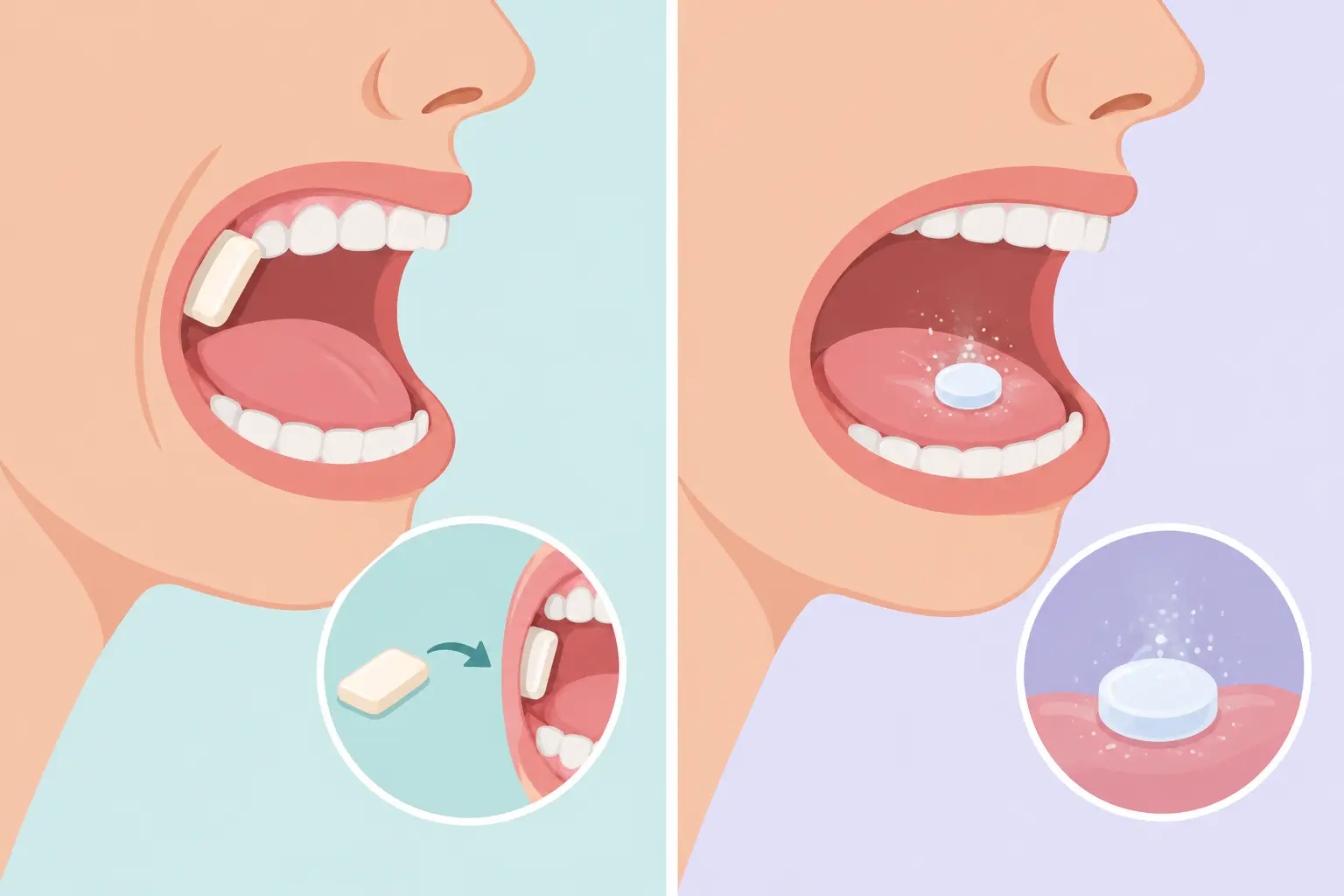
Nicotine gum: chew and park
Chew slowly until you notice a peppery taste or tingle, then park the gum between your cheek and gum. When the tingle fades, chew a few more times and park it in a different spot. Repeat for about 30 minutes. According to MedlinePlus, the gum is used alongside a quit program, typically for up to 12 weeks, and you should not exceed 24 pieces a day.
Nicotine lozenge: let it dissolve
Place the lozenge in your mouth and let it dissolve slowly, moving it from side to side occasionally. Do not chew or swallow it. Regular lozenges take longer to dissolve than mini lozenges. MedlinePlus lozenge guidance sets a maximum of 20 lozenges a day and a 12-week program.
Which is faster?
Both work over several minutes, much slower than a cigarette. Gum gives you some control because chewing more often releases nicotine faster. Mini lozenges dissolve more quickly than standard ones. If speed is your top priority, read our breakdown of the fastest acting nicotine replacement, where mouth spray comes out ahead.
The Decision Guide: 6 Questions to Pick Gum or Lozenge
Answer these six questions. If most of your answers point one way, that is your best fit.
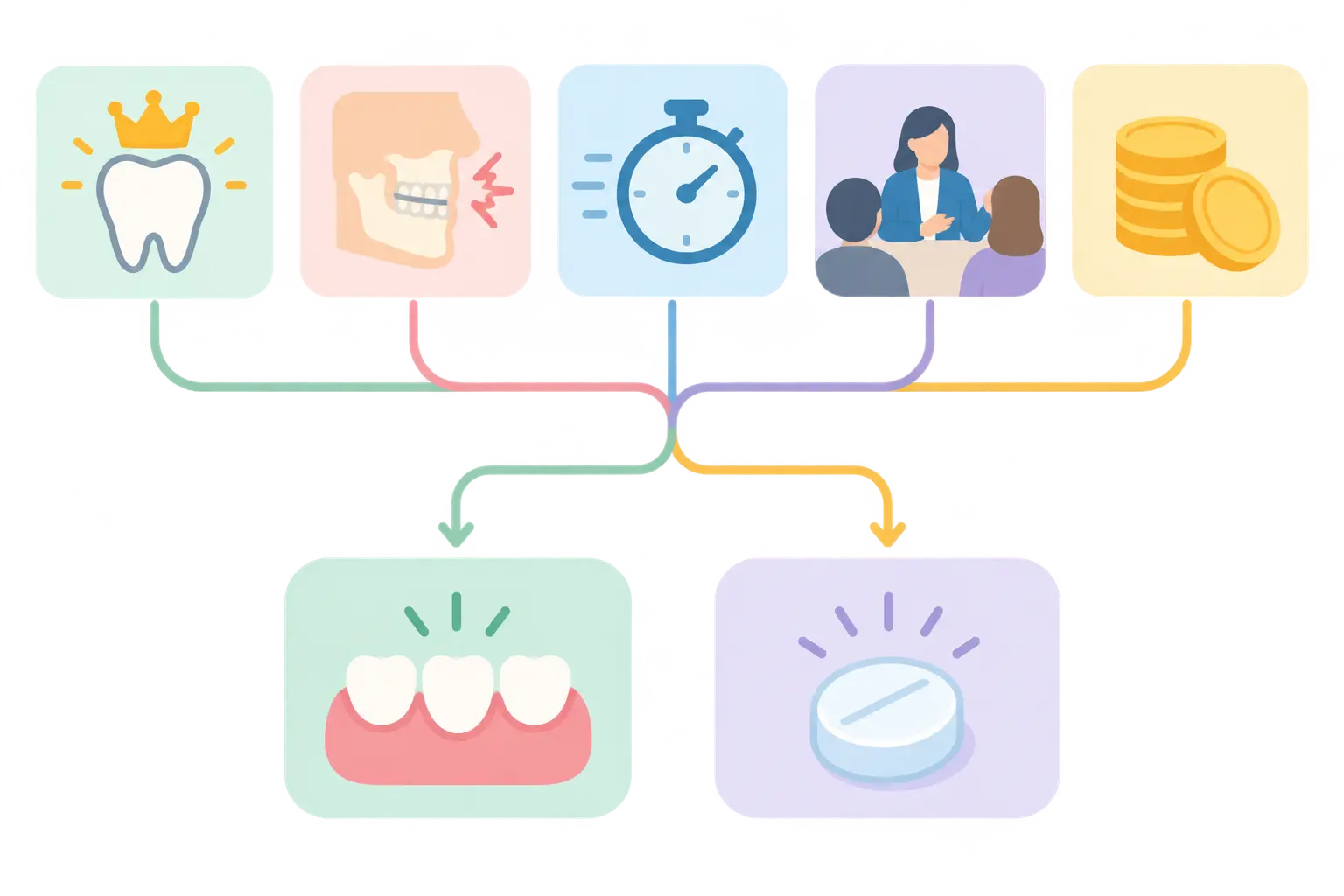
1. Do you have dentures, bridges, crowns or braces?
Yes: lozenge. Nicotine gum can stick to dentures and some dental work. Lozenges avoid that problem entirely.
2. Do you have jaw pain, TMJ or a clicking jaw?
Yes: lozenge. Repeated chewing can make jaw problems worse.
3. Do you need to use it in meetings, classes or on calls?
Yes: lozenge. A lozenge looks like a mint and lets you talk normally. Gum chewing is more noticeable.
4. Do you smoke to relieve stress or keep your mouth busy?
Yes: gum. Chewing gives you an active ritual to replace the hand-to-mouth habit and can help you channel stress.
5. Do you want to fine-tune each dose?
Yes: gum. You can chew faster when a craving is strong and park longer when it is mild.
6. Do you get heartburn or hiccups easily?
Maybe gum. Lozenges can trigger heartburn and hiccups in some people, though gum can too if you chew too fast. Correct technique matters most.
Still unsure? Many people buy a small pack of each and use whichever they reach for more often in the first week. For a wider view that includes patches, sprays and inhalers, see our guide to the best nicotine replacement therapy options compared.
2mg vs 4mg: Choosing Your Strength
The strength rule is the same for gum and lozenges and is based on how soon you smoke after waking, which is a good marker of dependence.
| First cigarette of the day | Strength |
|---|---|
| Within 30 minutes of waking | 4mg |
| More than 30 minutes after waking | 2mg |
Under-dosing is one of the most common reasons people say NRT “did not work.” Use enough pieces: package directions typically suggest at least 9 a day during the first six weeks, used on a schedule rather than only when cravings are already intense.
Avoid acidic drinks like coffee, soda and juice for 15 minutes before and while using a piece, because they reduce how much nicotine your mouth absorbs.
Side Effects: Nicotine Gum vs Lozenge
| Side effect | Gum | Lozenge | How to reduce it |
|---|---|---|---|
| Hiccups | Common if chewed too fast | Common if sucked or swallowed quickly | Slow down; park or let it rest |
| Jaw soreness | Possible | Rare | Switch to lozenges |
| Mouth or throat irritation | Possible | Possible | Rotate placement |
| Heartburn or nausea | Possible | More often reported | Avoid swallowing nicotine-rich saliva |
| Dental work problems | Can stick | No | Choose lozenges |
Do not smoke or use other nicotine products while using gum or lozenges unless a clinician has advised combination therapy, and talk to a doctor first if you are pregnant or have heart disease.
Common Mistakes That Make Nicotine Gum and Lozenges Fail
When people say gum or lozenges “did not work,” the cause is usually how they were used rather than the product itself. Watch out for these:
- Chewing gum like regular gum. Constant chewing releases nicotine too fast, much of it gets swallowed, and you get hiccups and heartburn with little craving relief. Chew and park instead.
- Chewing or swallowing a lozenge. Crunching a lozenge sends nicotine to your stomach instead of the lining of your mouth.
- Using too few pieces. Waiting until a craving is overwhelming means the slower-acting nicotine arrives too late. Use pieces on a schedule in the early weeks.
- Picking the wrong strength. If you smoke soon after waking, 2mg is often too weak.
- Drinking coffee or soda at the same time. Acidic drinks blunt absorption.
- Stopping too early. Finishing the full taper protects against relapse when stress hits in month two or three.
- Using NRT without support. Pairing gum or lozenges with a quitline, counselor or app improves your chances.
Cost per Week: Gum vs Lozenge
Gum and lozenges usually cost about the same per piece, and store brands are typically cheaper than Nicorette. What drives your cost is how many pieces you use. As an illustrative example at $0.50 per piece (an example figure, not a national average):
| Pieces per day | Cost per week | Typical stage |
|---|---|---|
| 10 | $35 | Weeks 1–6 |
| 6 | $21 | Weeks 7–9 |
| 3 | $10.50 | Weeks 10–12 |
For brand-by-brand gum prices and flavors, see our guide to the best nicotine gum. Many insurance plans, Medicaid programs and state quitlines provide NRT free or at low cost, so check before you buy.
How to Taper Nicotine Gum or Lozenges
Both products follow a similar 12-week schedule in their package directions. Here is a simple version:
| Weeks | How often | Goal |
|---|---|---|
| 1–6 | 1 piece every 1–2 hours | Stay smoke-free; at least 9 a day |
| 7–9 | 1 piece every 2–4 hours | Start stretching gaps |
| 10–12 | 1 piece every 4–8 hours | Use only for strong cravings, then stop |
Tips for a smoother taper
- Drop the easy pieces first, like the ones you use out of habit rather than craving.
- Use half-time: keep a piece in for a shorter time before discarding it.
- Switch strength: some people move from 4mg to 2mg before cutting frequency.
- Have a substitute ready, such as sugar-free gum or mints, for the habit itself.
Our guide on using a quit smoking app with nicotine patches and gum shows how tracking keeps the taper honest.
Combining Gum or Lozenges With a Patch
You do not have to choose only one product. A 2019 Cochrane review found that combining a patch with a fast-acting form such as gum or lozenges led to higher long-term quit rates than one form alone: just over 17% versus about 14% in the trials reviewed. See the University of Oxford summary.
In combination therapy, the patch provides steady background nicotine and the gum or lozenge handles breakthrough cravings. A pharmacist can help you set doses. For the full four-way picture, compare nicotine gum vs patch vs lozenge vs inhaler, and for what to expect realistically, read our nicotine patch success rate statistics.
The iQuit – Quit Smoking App works with any of these combinations: log your patch step and each piece of gum or lozenge, and the app keeps your smoke-free streak, savings and health milestones in one place.
Nicotine Gum vs Lozenge FAQ
Is nicotine gum or lozenge better?
Neither is more effective overall. Choose lozenges if you have dentures, dental work, jaw pain or need discretion. Choose gum if you like controlling the dose or want something to chew.
Which works faster, nicotine gum or lozenge?
Both work over several minutes. Gum lets you speed release by chewing; mini lozenges dissolve faster than regular ones. Mouth spray is the fastest NRT.
Should I use 2mg or 4mg?
Use 4mg if you smoke within 30 minutes of waking, and 2mg if your first cigarette comes later.
How many nicotine gums or lozenges can I have a day?
MedlinePlus lists a maximum of 24 pieces of gum or 20 lozenges a day. Most people need at least 9 a day in the first six weeks.
Can I use nicotine gum with dentures?
Gum can stick to dentures and some dental work. Lozenges are usually the better choice.
Can I use gum or lozenges with a nicotine patch?
Yes. Cochrane research shows combining a patch with gum or lozenges works better than one form alone. Ask a pharmacist about doses.
Why avoid coffee or soda with nicotine gum or lozenges?
Acidic drinks reduce nicotine absorption. Avoid eating or drinking for 15 minutes before and during use.
How long should I use nicotine gum or lozenges?
Standard programs last about 12 weeks, reducing frequency over time. Talk to a clinician if you need longer.