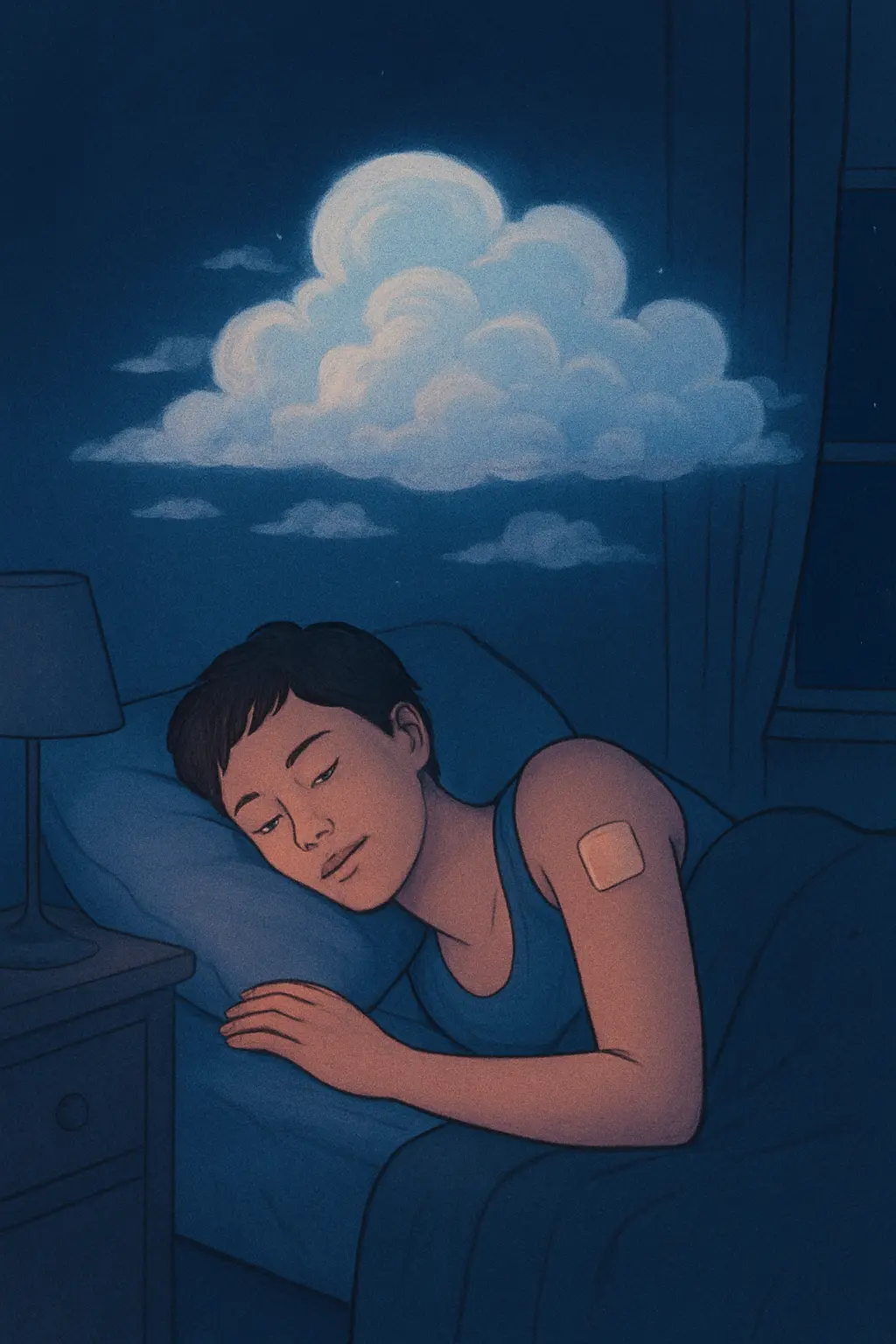
You put on a nicotine patch a few days ago, and now you’re waking up from dreams so vivid and strange you’re questioning whether the patch is doing something to your brain. It is a known effect — and it’s important enough that the patch’s own label tells you exactly what to do about it.
Why nicotine patches cause vivid dreams
This isn’t an internet rumor — it’s printed directly on the Drug Facts label of OTC nicotine patches. The FDA-approved label states plainly: “if you have vivid dreams or other sleep disturbances remove this patch at bedtime.” A second manufacturer’s label carries the identical wording, confirming it’s a recognized, class-wide effect of the medication rather than one brand’s quirk.
What the label does not do is explain the biological mechanism. It lists vivid dreams as something to watch for and gives you an action to take, but it doesn’t say why continuous overnight nicotine delivery produces this effect in some people. Rather than guess at a mechanism no fetched source confirms, it’s more honest to say: this is a documented, common effect with a documented fix, and the “why” at a cellular level isn’t spelled out in the consumer-facing labeling.
Is it the patch or the withdrawal?
This is worth untangling, because the answer changes what you do about it. Nicotine withdrawal itself is well known to disrupt sleep — restlessness, trouble falling asleep, and waking up during the night are all part of the standard stages of nicotine withdrawal, independent of whether you’re using a patch. So if you’ve just quit cold turkey with no NRT at all, disrupted sleep and unusual dreams can still happen.
What’s specific to the patch is the mechanism of continuous, 24-hour nicotine delivery, including through the hours you’re normally asleep and not consuming nicotine at all if you were still smoking. As a smoker, your body went hours overnight without any nicotine, every single night, for as long as you smoked. A 24-hour patch removes that nightly gap entirely, which is part of the point — it’s designed to prevent the morning craving spike that comes from waking up after eight hours with none. But it also means your brain is getting a steady dose of nicotine through sleep stages that, as a smoker, it never used to get one during.
The label’s own guidance — remove it at bedtime if this happens — is effectively an acknowledgment that continuous overnight delivery is the variable worth testing first, before assuming it’s simply generic withdrawal you have to wait out. If removing the patch at night resolves the dreams, that’s reasonably strong evidence it was the patch’s overnight coverage specifically, not withdrawal in general, since withdrawal-related sleep disruption wouldn’t be expected to disappear just because the patch comes off for a few hours.
Removing the patch at night: what you trade away
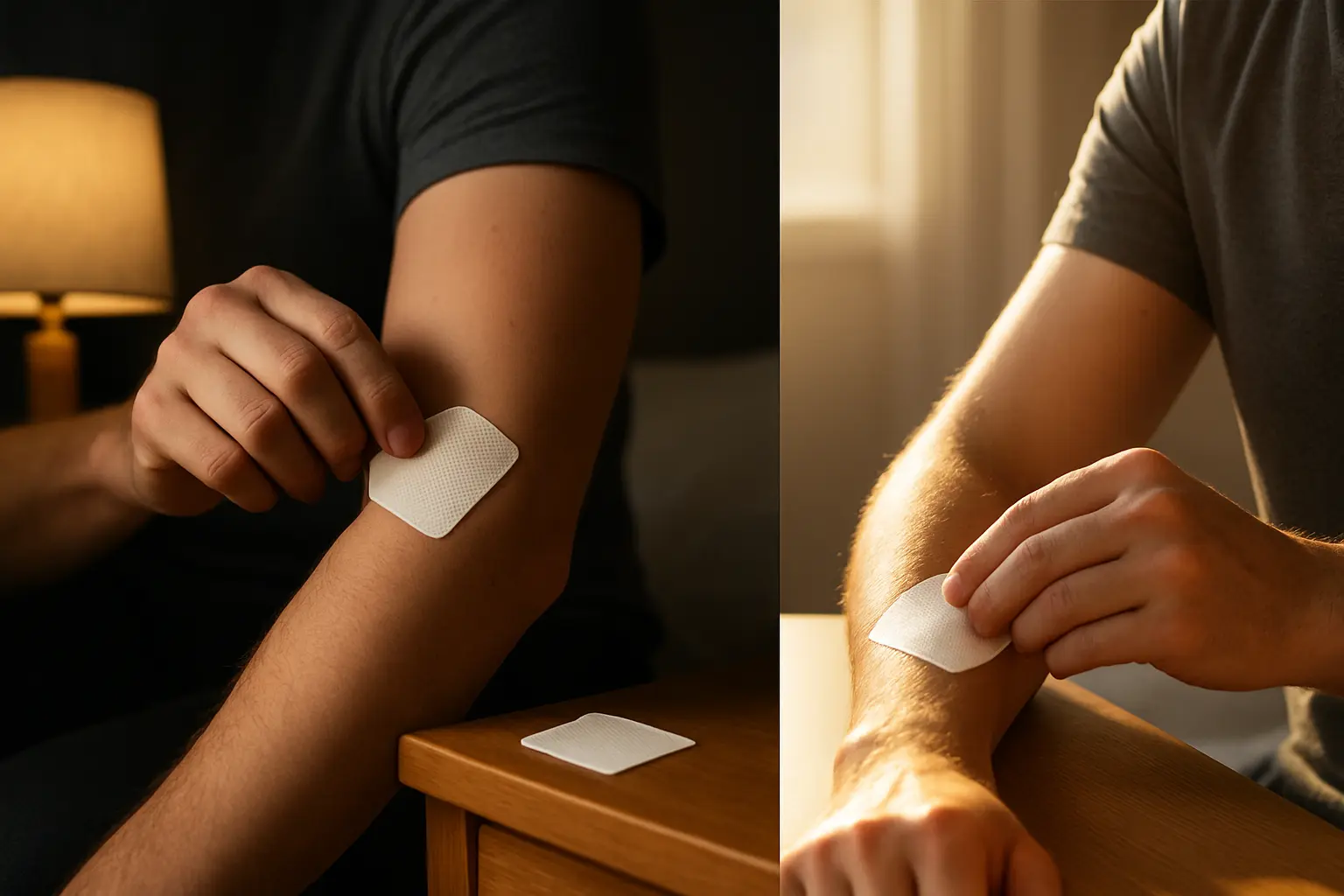
The label’s fix is direct: “if you have vivid dreams, you may remove the patch at bedtime and apply a new one in the morning.” This is a sanctioned, on-label modification, not an off-label workaround — you’re not doing anything the manufacturer didn’t anticipate.
The trade-off is straightforward: for the hours the patch is off, you’re not receiving background nicotine. For most people already several days into treatment, this is a manageable gap, especially since it happens during sleep when cravings are naturally quieter. It is not the same as skipping a day of treatment entirely — you’re still using the same patch, same strength, just on a schedule that excludes your sleeping hours.
Morning cravings if you take it off
Some people worry that removing the patch overnight means waking up to stronger cravings than usual. If you notice this, the fix is simple and still on-label: apply your morning patch as soon as you wake up rather than waiting. The label describes the same daily routine either way — “the used patch should be removed and a new one applied to a different skin site at the same time each day” — so shifting that “same time each day” to first thing in the morning, rather than at night, is a small routine change, not a departure from how the product is meant to be used.
If mornings are consistently rough regardless of when you apply the patch, tracking exactly when cravings hit — using a craving log or an app’s mood journal — can help you tell whether it’s genuinely the overnight gap or a separate, unrelated pattern in your withdrawal.
It’s also worth giving the change a fair trial rather than judging it after one night. Your body has to adjust to any new schedule, and a single rough morning after switching your routine doesn’t necessarily mean the trade-off isn’t worth it overall. Give it three or four nights before deciding whether the morning cravings outweigh the benefit of better sleep, and if they consistently do, that’s useful information to bring to a pharmacist conversation about whether a different NRT format might suit you better.
Other patch sleep problems
Vivid dreams aren’t the only sleep-related item on the label. It groups vivid dreams together with “other sleep disturbances” as a single category to watch for and address the same way — by removing the patch at bedtime if it’s disruptive. If you’re also dealing with insomnia, restlessness, or waking at odd hours and you’re unsure whether it’s the patch, nicotine withdrawal generally, or something else entirely, the fuller rundown of normal versus concerning nicotine patch side effects covers skin reactions, nausea, and other effects beyond sleep specifically.
The label is also specific about symptoms that go beyond ordinary side effects and warrant stopping use and calling a doctor: irregular heartbeat or palpitations, or signs of nicotine overdose such as nausea, vomiting, dizziness, weakness, and rapid heartbeat. Vivid dreams alone don’t fall into that category — but any of those additional symptoms do.
How long the dreams last
No fetched source for this article gives a specific duration — days, weeks, or the full course — for how long vivid dreams typically last on the patch, and it isn’t stated on the label either. What the label design does suggest is that this is meant to be managed for as long as it occurs, not something you’re expected to simply outlast: the remove-at-bedtime instruction has no expiration date attached to it. If dreams are still disruptive well into your course and the bedtime-removal fix isn’t helping enough, that’s a reasonable point to raise with a pharmacist or doctor rather than assuming you have to push through it.
When to switch strength or format
Vivid dreams alone usually aren’t a reason to change your patch strength — the label’s fix targets the timing of nicotine delivery, not the dose. But if you’re finding the whole patch format difficult for reasons beyond sleep, it’s worth knowing what else is available. Comparing the 21mg, 14mg, and 7mg patch strengths can help if cravings feel mismatched to your current step, and the full comparison of NRT options covers gum, lozenges, and other formats that don’t involve overnight wear at all, if switching away from a patch altogether turns out to be the better fit for you.
Whatever you decide, don’t stop nicotine replacement therapy outright over disrupted sleep without a plan — vivid dreams specifically about smoking are also common during any quit attempt, patch or not, and are generally considered a normal part of the process rather than a sign something has gone wrong. Disrupted sleep, whatever its cause, is one of the more common reasons people abandon NRT in the first couple of weeks — and it’s also one of the most fixable, since the label’s own remedy costs nothing and requires no conversation with anyone before trying it tonight.
Frequently Asked Questions
Why do nicotine patches cause vivid dreams?
Vivid dreams and other sleep disturbances are a recognized, labeled effect of nicotine patches, listed on the FDA-approved Drug Facts label across multiple manufacturers. The label does not explain the underlying biological mechanism, only that it’s a known effect with a suggested fix.
What should I do if a nicotine patch gives me vivid dreams?
The patch’s own label instructs: if you have vivid dreams, you may remove the patch at bedtime and apply a new one in the morning. This is a sanctioned, on-label way to manage the effect (DailyMed nicotine transdermal system label).
Is it the patch or nicotine withdrawal causing my sleep problems?
Both can disrupt sleep independently. Nicotine withdrawal itself commonly causes restlessness and disrupted sleep, while the patch’s specific mechanism is continuous 24-hour nicotine delivery through the night. The label’s fix — removing the patch at bedtime — specifically targets the patch’s overnight delivery as the first thing to test.
Will removing my patch at night cause worse morning cravings?
It can for some people, since you go several hours without nicotine coverage. If this happens, apply your next patch as soon as you wake up rather than waiting, keeping the same “one patch per day, same time” routine the label describes, just shifted to the morning.
How long do nicotine patch vivid dreams last?
No fetched source for this article specifies a typical duration. The label’s remove-at-bedtime instruction has no time limit attached, meaning it’s designed to be used for as long as the effect occurs, not just in the first few days.
Should I switch nicotine patch strength because of vivid dreams?
Not specifically for dreams alone — the label’s suggested fix is about timing (removing the patch at bedtime), not dose. A strength change is a separate decision based on craving control, best discussed with a pharmacist or doctor if dreams persist alongside other concerns.
When should I call a doctor about nicotine patch side effects?
The label instructs stopping use and asking a doctor if skin redness doesn’t go away after four days, your skin swells or you get a rash, you notice irregular heartbeat or palpitations, or you experience symptoms of nicotine overdose such as nausea, vomiting, dizziness, weakness, and rapid heartbeat. Vivid dreams alone are not on this more serious list.
Track how you’re actually sleeping and craving
iQuit’s craving and mood journal helps you spot whether mornings are genuinely worse after adjusting your patch routine — free on Google Play and the App Store.
Download iQuit Free on Google Play
Download on the App Store