If you are looking at smoking and mouth cancer statistics, you probably want one thing: a straight answer on how much smoking raises the risk and what changes if you stop. This guide pulls together the latest figures from the National Cancer Institute, the American Cancer Society, Cancer Research UK and the NHS, and labels exactly what each number does and does not measure.
The short version is that tobacco is one of the biggest preventable causes of cancers of the mouth, and the risk falls steadily after quitting. The longer version has some nuance, because alcohol, HPV and smokeless tobacco all play a part too. We will go through each, and we will flag where the data groups the mouth together with the throat so you do not double count.
Key Findings: The Numbers at a Glance
- 60,480 estimated new US cases of oral cavity and pharynx cancer in 2026, and 13,150 estimated deaths (NCI SEER Cancer Stat Facts, which counts the mouth and the pharynx together).
- 69.9% five-year relative survival for 2016 to 2022 diagnoses, per SEER.
- 17% of UK mouth cancers are caused by smoking, around 35% by alcohol (Cancer Research UK).
- 91% higher oral cavity cancer risk in current smokers than never-smokers, from a cohort study summarized by Cancer Research UK.
- About 30 times the risk for people who both drink and smoke heavily, compared with people who do neither (American Cancer Society).
- Risk in people who quit 20 or more years ago is no higher than in never-smokers, based on a pooled analysis summarized by Cancer Research UK.
Each figure above comes from a different organization and a different population, so treat them as separate pieces of evidence rather than numbers you can add together.
How Many People Get Mouth Cancer Each Year
In the United States, National Cancer Institute SEER Cancer Stat Facts lists 60,480 estimated new cases of oral cavity and pharynx cancer for 2026, which is 2.9 percent of all new cancer cases, plus 13,150 estimated deaths (2.1 percent of cancer deaths). The age-adjusted rate of new cases was 11.7 per 100,000 men and women per year (2019 to 2023 cases), and the death rate was 2.7 per 100,000 (2020 to 2024 deaths). About 1.2 percent of men and women will be diagnosed at some point in their lives, based on 2021 to 2023 data.
The American Cancer Society key statistics repeats the 60,480 and 13,150 estimates and adds useful context. The average age at diagnosis is 64, but just over 1 in 5 cases (20 percent) occur in people younger than 55. The lifetime risk is about 1 in 59 for men and 1 in 139 for women, and the cancers are more than twice as common in men.
In the UK, the statistics are published for head and neck cancers as a group. Cancer Research UK head and neck statistics report 13,812 new head and neck cancer cases per year (2019 and 2021 to 2022 data) and 4,900 deaths (2022 to 2024). That grouping includes the larynx and other sites, so it is wider than the mouth alone. For the throat specifically, see our companion guide to smoking and throat cancer statistics.
| Source | What it counts | Headline figure |
|---|---|---|
| NCI SEER (2026 estimate) | US oral cavity and pharynx | 60,480 new cases; 13,150 deaths |
| American Cancer Society (2026) | US oral cavity and oropharynx | 60,480 new cases; 13,150 deaths |
| Cancer Research UK | UK head and neck (wider than mouth) | 13,812 new cases per year; 4,900 deaths |
How Much of Mouth Cancer Is Caused by Smoking
The cleanest UK figure comes from Cancer Research UK: research suggests around 17 out of 100 mouth cancers in the UK are caused by smoking, and drinking alcohol causes around 35 out of 100. Those shares overlap, because many people do both and the effects combine. Cancer Research UK also notes that people who smoke are more at risk if they also drink alcohol and chew betel quid with tobacco.
The risk is not a switch. It scales with how much and how long a person smokes. According to Cancer Research UK risk factor statistics (pages last reviewed in 2018 and 2019), oral cavity cancer risk is 91 percent higher in current smokers than in never-smokers, based on a cohort study. A pooled analysis found the risk almost 3 times higher in men who smoked the most cigarettes for the most years than in men who smoked the least for the fewest years, and more than 4 times higher for women in the heaviest and longest smoking group.
Cigars and pipes are not a safe alternative. The same Cancer Research UK page reports head and neck cancer risk 3.5 times higher in cigar-only smokers and nearly 4 times higher in pipe-only smokers than in never-smokers. The American Cancer Society risk factor page says smoke from cigarettes, pipes and cigars increases the risk, that many chemicals in tobacco damage DNA directly, and that the more you smoke, the greater the risk. The National Institute of Dental and Craniofacial Research adds that tobacco of any kind, including electronic cigarette smoking, chewing tobacco and snuff, puts you at risk of oral cancers.
For a wider view of the cancers tobacco causes, see our overview of what cancers smoking causes and the broader smoking and cancer statistics.
Smoking vs Smokeless Tobacco
If you have been told that chew or snuff is the “safer” habit for your mouth, the cancer data says otherwise. The American Cancer Society states that oral tobacco products (snuff, dip, spit, chew or dissolvable tobacco) are linked with cancers of the cheek, gums and inner surface of the lips, and that using them for a long time is linked to a very high risk. Cancer Research UK says smokeless tobacco is linked with causing mouth cancer and is not a safe alternative to cigarettes.
Global numbers vary a lot by product. A meta-analysis summarized by Cancer Research UK found oral cancer risk around four and a half times higher in smokeless tobacco users in the South East Asia region and 28 percent higher in the Eastern Mediterranean region than in never users. The pages note that the association varies by country, probably because the composition and format of the products differ. In plain terms, no single multiplier applies to every product, but none of these figures suggests smokeless tobacco is safe.
We cover this comparison in more depth in our article on whether chewing tobacco is worse than smoking.
Alcohol and HPV: The Other Drivers
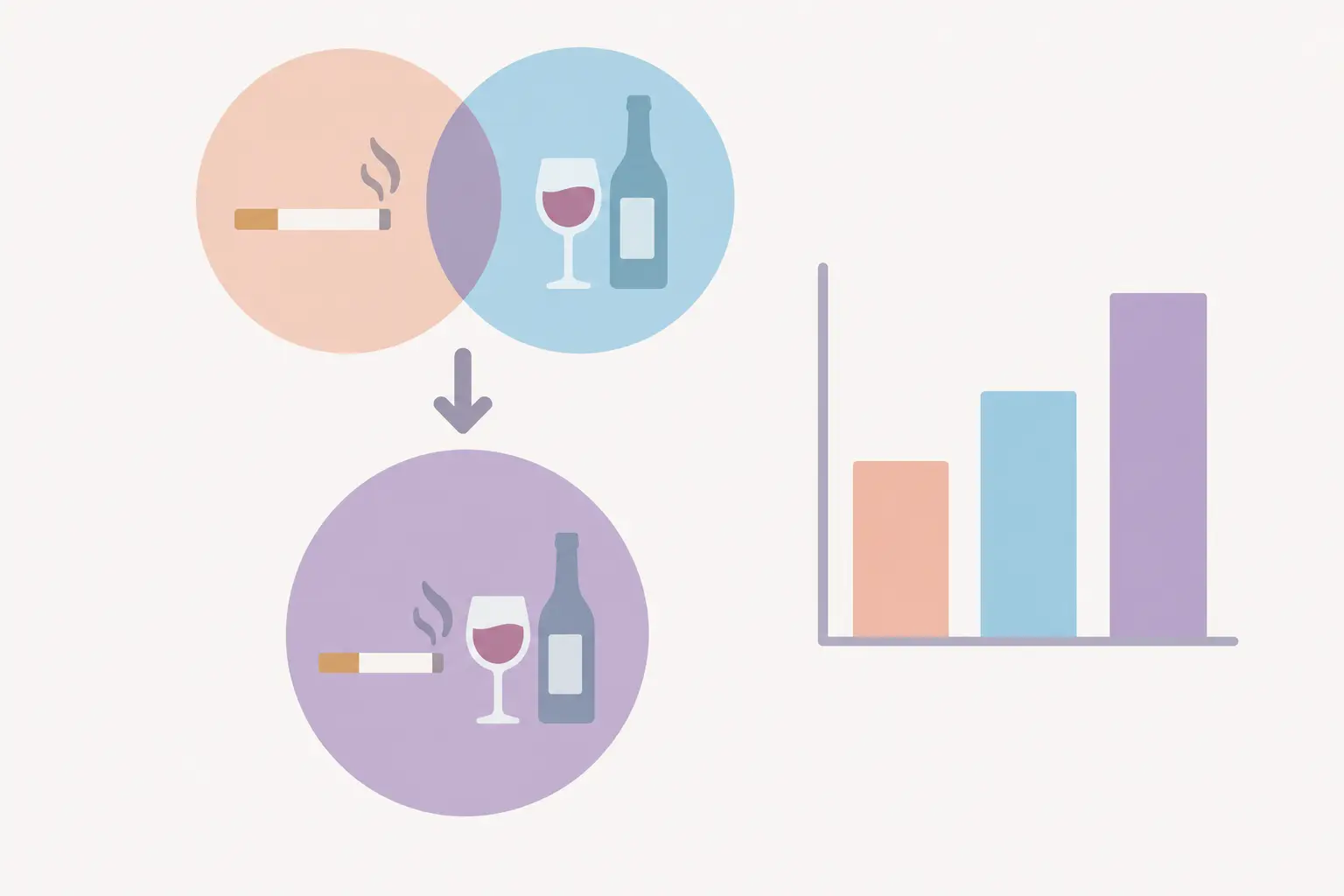
Alcohol. Alcohol is a risk factor on its own, and it greatly increases tobacco’s effect. The American Cancer Society says the risk in people who drink and smoke heavily is about 30 times higher than in people who do not smoke or drink.
HPV. Human papillomavirus is a different story. According to the American Cancer Society, HPV DNA is found in about 2 out of 3 oropharyngeal cancers (the part of the throat behind the mouth) and in a much smaller portion of oral cavity cancers. Cancer Research UK estimates that HPV causes around 50 percent of oropharyngeal cancers in the UK. The ACS also reports that incidence of oral cavity and oropharyngeal cancer has risen by about 1 percent per year since the mid-2000s, mostly because of HPV-linked cancers.
HPV-related oropharyngeal cancers tend to have better outcomes because chemotherapy and radiation work better on them, but the ACS notes that this improvement is not seen in people with HPV-related oropharyngeal cancers who also smoke. It also says HPV infections of the mouth and throat are more common in people who smoke.
The takeaway for mouth cancer specifically is that smoking and alcohol are the main modifiable causes these sources cite for the oral cavity, while HPV matters most further back in the throat. Smoking can still make the HPV picture worse.
Risk After Quitting Smoking
The good news in the data is the shape of the curve after quitting. The Cancer Research UK risk factor statistics reports, from a pooled analysis, that oral cavity cancer risk is 35 percent lower in ex-smokers who quit 1 to 4 years earlier than in current smokers, and no higher in ex-smokers who quit 20 or more years earlier than in never-smokers. For the oropharynx and hypopharynx, risk was 49 percent lower in people who quit 5 to 9 years earlier. The American Cancer Society adds that quitting tobacco greatly lowers the risk, even after many years of use.
These are group averages from studies completed years ago, not a personal forecast. Your own risk depends on how long and how heavily you smoked, how much you drink, and your other health factors. What the evidence does support is that stopping helps at every stage, and earlier is better.

If you are weighing up how hard quitting is, our guide to quit smoking success rates shows what the numbers say about the methods that work. You may also notice improvements in your mouth sooner than the cancer data covers: see what happens to your teeth and gums after quitting.
Early Signs and Why Dental Checks Matter
The NHS mouth cancer symptoms page lists the main symptoms of mouth cancer. They can affect the gums, tongue, inside of the cheeks or lips, and include a mouth ulcer that lasts more than 3 weeks, a red or white patch inside the mouth, a lump in the mouth or on the lip, mouth pain, difficulty swallowing or speaking, a hoarse voice, a lump in the neck or throat, and unexplained weight loss. The NHS advises seeing a GP if any of these last or do not go away, and notes that a dentist can also help with ulcers, lumps, patches or pain in the mouth.
These symptoms are very common and usually have other causes, as the NHS points out. Having one does not mean you have cancer, but it is worth getting checked. This article is statistics, not medical advice, and iQuit cannot diagnose anything. If you see something that lasts, book a dentist or doctor appointment.
This short NHS hospital video explains the symptoms of mouth cancer and what to look out for.
Methodology and Limits of These Numbers
- Grouping: SEER counts the oral cavity and pharynx together; ACS counts the oral cavity and oropharynx; Cancer Research UK reports head and neck cancers as a group. These are not interchangeable and are not added together here.
- Estimates vs counts: US 2026 figures are projections, not final registry counts.
- Study dates: the Cancer Research UK risk multipliers were last reviewed in 2018 or 2019 and come from studies that began earlier.
- Risks overlap: the 17 percent (smoking) and 35 percent (alcohol) shares for UK mouth cancers are separate attributions and should not be read as a complete breakdown.
All figures were checked against the sources linked in the text on the date this article was prepared.
What This Means for Your Own Risk and Quit Plan
The statistics are a reason to act, not a reason to panic. Most of the numbers above describe groups of people over decades. For one person, the practical points are simple: tobacco in any form raises the risk, alcohol multiplies it, and the risk falls after quitting. If you also drink heavily, cutting back matters as much as stopping smoking.
The iQuit app is free on Google Play and the App Store and is built for the moment cravings hit. It tracks days smoke-free, cigarettes avoided and money saved, logs cravings with triggers, and includes SOS support such as breathing exercises and craving surfing. It also has a health-recovery timeline and disease-risk insights for 11 conditions. iQuit does not diagnose, screen for or treat any condition, so keep your regular dental checks.
If you have tried before, see how success rates compare across methods and read the data on how many people die from smoking each year for the bigger picture.
Frequently Asked Questions
Does smoking cause mouth cancer?
Yes. Cancer Research UK estimates that around 17 percent of UK mouth cancers are caused by smoking, and the American Cancer Society says tobacco chemicals damage DNA and that the more you smoke the greater your risk. Smoking is one of several causes, alongside alcohol and HPV (Cancer Research UK; American Cancer Society).
How much does smoking increase mouth cancer risk?
A cohort study summarized by Cancer Research UK found oral cavity cancer risk 91 percent higher in current smokers than in never-smokers. A pooled analysis found risk almost 3 times higher in men and more than 4 times higher in women in the heaviest and longest smoking groups (Cancer Research UK risk factor statistics).
How many people get mouth cancer each year?
In the US, the NCI SEER program estimates 60,480 new cases of oral cavity and pharynx cancer in 2026 and 13,150 deaths. In the UK, Cancer Research UK reports about 13,800 new head and neck cancer cases a year, a wider group than the mouth alone (NCI SEER; Cancer Research UK).
Is chewing tobacco or snuff safer for the mouth than cigarettes?
No. The American Cancer Society links oral tobacco products with cancers of the cheek, gums and inner lips and a very high risk with long use. Cancer Research UK says smokeless tobacco is linked with causing mouth cancer and is not a safe alternative to cigarettes (American Cancer Society; Cancer Research UK).
What happens if you smoke and drink alcohol together?
The risks multiply. The American Cancer Society says the risk of mouth and throat cancers in people who drink and smoke heavily is about 30 times higher than in people who do not smoke or drink. Alcohol also helps many DNA-damaging chemicals get into cells more easily (American Cancer Society).
Does mouth cancer risk go down after you quit smoking?
Yes. A pooled analysis summarized by Cancer Research UK found oral cavity cancer risk 35 percent lower in people who quit 1 to 4 years earlier than in current smokers, and no higher than never-smokers after 20 or more years. The American Cancer Society says quitting greatly lowers risk (Cancer Research UK; American Cancer Society).
What are the first signs of mouth cancer?
The NHS lists a mouth ulcer lasting more than 3 weeks, a red or white patch, a lump in the mouth or neck, pain, and trouble swallowing or speaking. These are common and often not cancer, but see a GP or dentist if they last (NHS).
Does HPV cause mouth cancer too?
HPV is found in about 2 out of 3 oropharyngeal cancers but in a much smaller portion of oral cavity cancers, according to the American Cancer Society. Cancer Research UK estimates HPV causes around 50 percent of UK oropharyngeal cancers (American Cancer Society; Cancer Research UK).
Take the Next Step With iQuit
iQuit is free on Google Play and the App Store. Track your smoke-free days, log cravings and get SOS support when you need it. It does not diagnose or treat any condition, so keep up your regular dental and medical checks.
Download iQuit Free on Google Play Download on the App Store