Does smoking cause migraines? Not in the way a switch causes a light. Migraine is a neurological condition with a strong genetic component, and the NHS states plainly that what causes it is not known. What the evidence supports is narrower and still worth acting on: people who smoke develop migraine somewhat more often, some people with migraine find that smoking sets off an attack, and quitting removes one variable you can control.
The Short Answer, With the Caveats Attached
Three claims get flattened into one online, and separating them is most of the work.
| The question | What the evidence supports | How confident |
|---|---|---|
| Does smoking cause migraine as a condition? | Smoking is linked to a modestly higher chance of developing migraine, and genetic studies point the same way | Association, with some causal support |
| Can a cigarette trigger an attack? | Some people with migraine report it; smoking is not on the main headache-charity trigger lists | Individual and self-reported |
| Does quitting cure migraine? | No. The NHS states migraine cannot be cured, only managed | Settled |
The NHS page on migraine anchors the third row. It says migraine cannot be cured but treatment can help manage and prevent attacks, and that you are more likely to get migraine if a close family member has it. Quitting smoking changes neither fact.
Smoking as a Migraine Trigger
Here is a detail that surprises people. The Migraine Trust’s list of common triggers covers routine changes, hormones, stress, sleep, missed meals, caffeine, alcohol, dehydration, weather, light and noise, screens and exercise. Smoking is not on it.
That does not mean smoking never sets off an attack for anyone. It means the evidence for it as a general trigger is weaker than for the items on that list.
Two ideas from the same charity are more useful than a trigger list anyway. The first is the threshold theory: only a few factors make a real difference on their own, and it is usually a combination that pushes you over the line. A late night plus a missed lunch plus a stressful afternoon does what none of them would do alone. The second is that what looks like a trigger is often an early symptom. If you crave a cigarette during the warning stage of an attack that has already started, smoking looks like the cause when it is closer to a consequence.
How Much Smoking Before It Matters
The best evidence on quantity comes from a nationwide South Korean cohort published in JMIR Public Health and Surveillance in 2024, which followed 1,827,129 women aged 40 and over to the end of 2019.
| Group | Adjusted hazard ratio vs never-smokers | 95% confidence interval |
|---|---|---|
| Past smokers | 1.044 | 1.000 to 1.089 |
| Current smokers | 1.050 | 1.023 to 1.079 |
| Current smokers, premenopausal | 1.140 | 1.108 to 1.172 |
| Current smokers, postmenopausal | 1.045 | 1.018 to 1.073 |
Read the size of those numbers before the direction. A hazard ratio of 1.05 is a five percent relative increase, not a doubling, and the past-smoker interval touches 1.000 exactly, the statistical edge of no effect at all. The authors concluded that smoking increases migraine risk in women with a dose-dependent relationship, larger before menopause. The study covers women aged 40 and over in one country, so do not stretch it to men or teenagers.
Causation is a separate question. Yuan and colleagues, writing in Pain in 2022, used Mendelian randomization, which treats inherited genetic variants as a natural experiment to sidestep the confounding that plagues observational work. They reported genetic evidence supporting a detrimental role of cigarette smoking in the cause of migraine, and found that genetic liability to migraine was not associated with smoking initiation in the reverse direction. That last part argues against the alternative explanation, that having migraine makes people take up smoking.
Secondhand Smoke and Never-Smokers
If you do not smoke but live or work around it, one study is relevant. An analysis of 4,560 never-smoking adults in the US National Health and Nutrition Examination Survey, published in Headache in 2023, measured exposure with serum cotinine rather than self-report. Heavy exposure was associated with roughly twice the odds of reporting severe headache or migraine; low exposure showed no significant association.
Treat that as a signal rather than a verdict. It is cross-sectional, photographing exposure and symptoms at the same moment, so it cannot tell you which came first. It is still a reason to take secondhand smoke seriously if someone in your household has migraine.
Withdrawal Headache Versus Migraine
This is the confusion that sends most people searching in the first fortnight after quitting. Headache after quitting is widely reported, yet it does not appear on either main official list. The NHS names cravings, irritability and feeling anxious, tense or low in mood among common nicotine withdrawal symptoms. The CDC’s seven are cravings, irritability, restlessness, trouble concentrating, trouble sleeping, increased hunger, and feeling anxious, sad or depressed. Headache is on neither. The Mental Health Foundation does include headaches. So: commonly described, not officially listed, and no reliable figure exists for how long it lasts.
What you can do is tell the two apart by their shape, using the NHS description of a migraine attack.
| Feature | Typical withdrawal headache | Migraine attack (NHS description) |
|---|---|---|
| Location | Often dull and generalized, both sides | Throbbing, often on one side of the head |
| Movement | Usually unchanged | Often worse when you move around |
| Other symptoms | Irritability, restlessness, poor concentration | Nausea or vomiting, strong sensitivity to light and sound |
| Warning signs | None specific | Aura in some people: zigzag lines, flashing lights, pins and needles |
| Duration | Comes and goes with the early weeks | Usually 4 hours to 3 days per attack |
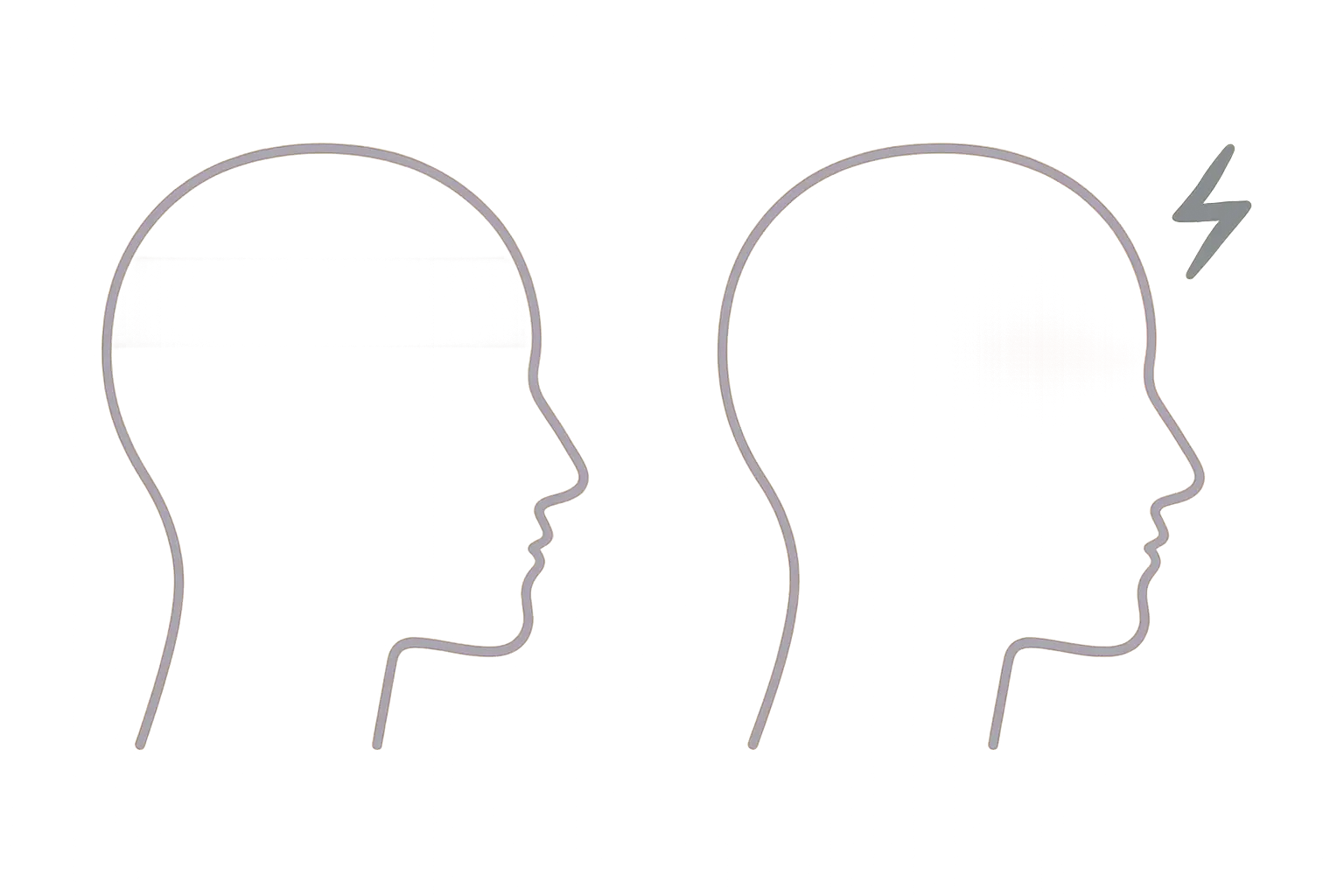
One NHS warning applies to both and is easy to walk into while quitting: try not to take painkillers on more than two days a week, because that can give you more headaches and make migraine harder to treat. If you are reaching for tablets most days in your first fortnight, speak to a pharmacist rather than keep going. Our breakdown of the withdrawal stages covers what else to expect.
The First Two Weeks After You Quit
Withdrawal starts within a few hours of your last cigarette, peaks in the first week and especially the first three days, and runs three to four weeks on average, sometimes longer. That is the NHS timeline, and the window in which new head pain is most likely withdrawal rather than a change in your migraine. The hour-by-hour timeline sets out the rest.
Two indirect effects are worth planning around, because both are on the Migraine Trust’s actual trigger list. Sleep changes are common in early withdrawal, and both too little sleep and a disrupted pattern can trigger attacks. Caffeine is the other. Many people change their coffee intake when they stop smoking, and the charity warns that cutting caffeine suddenly can trigger migraine just as having too much can. Taper it rather than stopping dead, and not in the week you quit smoking.
What is happening underneath all this is covered in what happens in your brain, and the longer arc in the first 12 weeks. If the early weeks are what worries you most, our guide to choosing a quit app when anxiety is the problem covers the same fortnight from a different angle.
Migraine With Aura, Smoking and Stroke Risk
This section changes what you should do, and it applies to one group: people whose migraine comes with aura. The NHS describes aura as problems with sight such as zigzag lines or flashing lights, or numbness and a tingling like pins and needles, and says it should not last longer than an hour. This Mayo Clinic explainer shows what it looks like.
A review in the Journal of Neurology, Neurosurgery and Psychiatry in 2020 summarized where the risk concentrates. It found that ischemic stroke in people with migraine is strongly associated with migraine with aura, young age, female sex, use of oral contraceptives and smoking habits. The authors are also clear that the mechanism behind the migraine and stroke association is unknown, and that there is no direct evidence that preventive migraine treatment reduces future stroke.
Their practical conclusion is the one to take away. Because stroke risk is higher in people who have migraine with aura, it is important to identify and change any vascular risk factor. Smoking is the most changeable one on that list. Nobody can quote you a personal number, and this article will not invent one, but if you have aura, quitting is doing more than removing a possible trigger. You can see where smoking sits across other conditions in your risk profile.
The Combined Pill, Aura and Smoking
Two factors in that list often appear together, and UK guidance treats each as a reason to review your contraception. The NHS page on the combined contraceptive pill states that you may not be able to take it if you are living with obesity, or you are aged 35 or over and you smoke. It also lists migraines with warning signs called aura among the conditions that may make the pill unsuitable, alongside a history of blood clots, narrowed or blocked arteries, or stroke.
Read that as a prompt to talk to a doctor, nurse or pharmacist, which is what the NHS itself advises. Do not stop prescribed contraception on the strength of a web page. Do tell whoever prescribes it that you have aura, or that you smoke, or that you are about to stop, because all three change the conversation.
Tracking Whether Quitting Helps You
Population studies tell you about averages. They cannot tell you whether quitting changes anything for you, and a fortnight of vague impressions will not either. Migraine frequency varies a lot month to month, so an honest answer needs a record from before you quit as well as after.
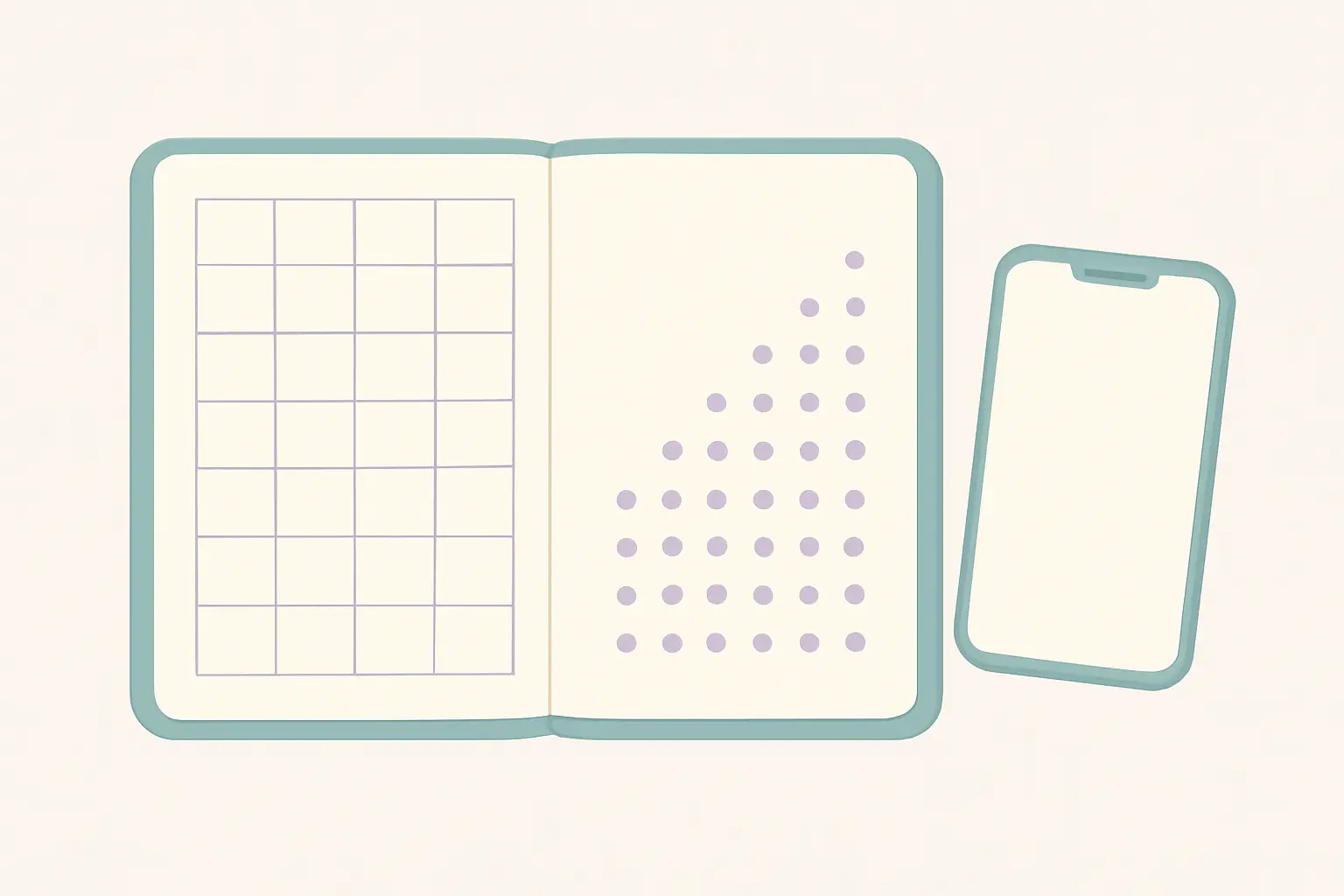
A migraine diary is the standard tool, and the Migraine Trust suggests recording sleep and wake times, mealtimes and what you ate, caffeine and alcohol, mood and stress, your menstrual cycle if you have one, and where you were that day. Keep it for a couple of months before your quit date if you can, and the same afterwards.
Be straightforward about where an app fits. iQuit has no migraine or headache tracking, and it is not a symptom diary. It logs cravings with the trigger and how strong the urge was, alongside a mood journal, plus days smoke-free, cigarettes avoided and money saved. Kept next to a separate migraine diary, that gives you the smoking side of the record on the same dates, which is the part hardest to reconstruct from memory later. It is free on Google Play and the App Store, and works offline.
One more note. Skin, sleep and headaches all shift in the first weeks after quitting, and it is easy to attribute every change to the quit. We wrote about the same reasoning problem in whether quitting causes acne.
Frequently Asked Questions
Does smoking cause migraines?
Not on its own. The NHS says what causes migraine is not known, and that family history matters. Large studies link smoking to a modestly higher chance of developing migraine, and a 2022 Mendelian randomization study in Pain found genetic evidence supporting a detrimental role for smoking in migraine. That is a contributing factor, not a cause you can point at.
Will quitting smoking stop my migraines?
No. The NHS states that migraine cannot be cured, only managed, and quitting does not change that. What quitting does is remove one factor you can control, which matters most if you have migraine with aura. Some people notice fewer or milder attacks, some notice nothing. A diary kept before and after is the only way to know which you are.
How many cigarettes a day affects migraine?
There is no threshold you can rely on. The largest study, a South Korean cohort of 1,827,129 women published in 2024, reported a dose-dependent relationship, with an adjusted hazard ratio of 1.050 for current smokers against never-smokers, rising to 1.140 in premenopausal women. Those are small relative increases, and the study covers women aged 40 and over.
Is the headache I get after quitting a migraine?
Usually not. A migraine attack is typically a throbbing pain on one side, worse with movement, with nausea and strong sensitivity to light and sound, lasting 4 hours to 3 days. Early quitting headache tends to be duller and more generalized. Notably, headache is not on the NHS or CDC lists of common nicotine withdrawal symptoms, though the Mental Health Foundation does include it.
Does smoking raise stroke risk if I get migraine with aura?
A 2020 review in the Journal of Neurology, Neurosurgery and Psychiatry found ischemic stroke in people with migraine is strongly associated with migraine with aura, young age, female sex, oral contraceptive use and smoking. The mechanism is unknown and no personal risk figure exists, but the authors advise identifying and changing modifiable vascular risk factors. Smoking is the most changeable one.
Can I take the combined pill if I have aura and smoke?
That is a clinician’s decision, not a web page’s. The NHS states you may not be able to take the combined pill if you are aged 35 or over and you smoke, and lists migraines with aura among conditions that may make it unsuitable. Tell your doctor, nurse or pharmacist about the aura and the smoking, and never stop prescribed contraception on your own.
Can secondhand smoke trigger migraines?
Possibly. A 2023 analysis in Headache of 4,560 never-smoking US adults, using serum cotinine to measure exposure rather than self-report, found heavy secondhand smoke exposure was associated with roughly twice the odds of severe headache or migraine. Low exposure showed no significant association. The study is cross-sectional, so it cannot establish which came first.
Does iQuit track migraines?
No. iQuit has no migraine or headache tracking and is not a symptom diary. It logs cravings with their triggers and intensity, along with a mood journal and your days smoke-free, cigarettes avoided and money saved. Keep a separate migraine diary and read the two side by side. The app is free on Google Play and the App Store.
Take One Variable Off the Board
Quitting will not cure migraine, and nothing here says it will. It removes one factor you can control, and it is the factor that matters most if your attacks come with aura. iQuit tracks your cravings, their triggers and your smoke-free days, so you have the smoking side of the record on the same dates as your migraine diary. Free on Google Play and the App Store.
Download iQuit Free on Google Play
Download on the App Store