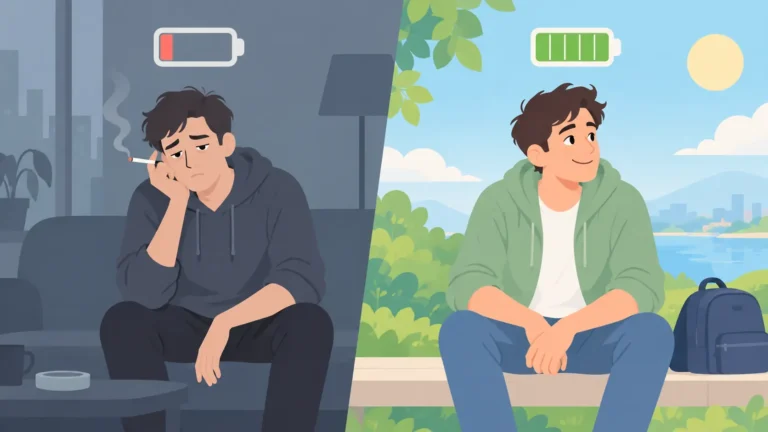
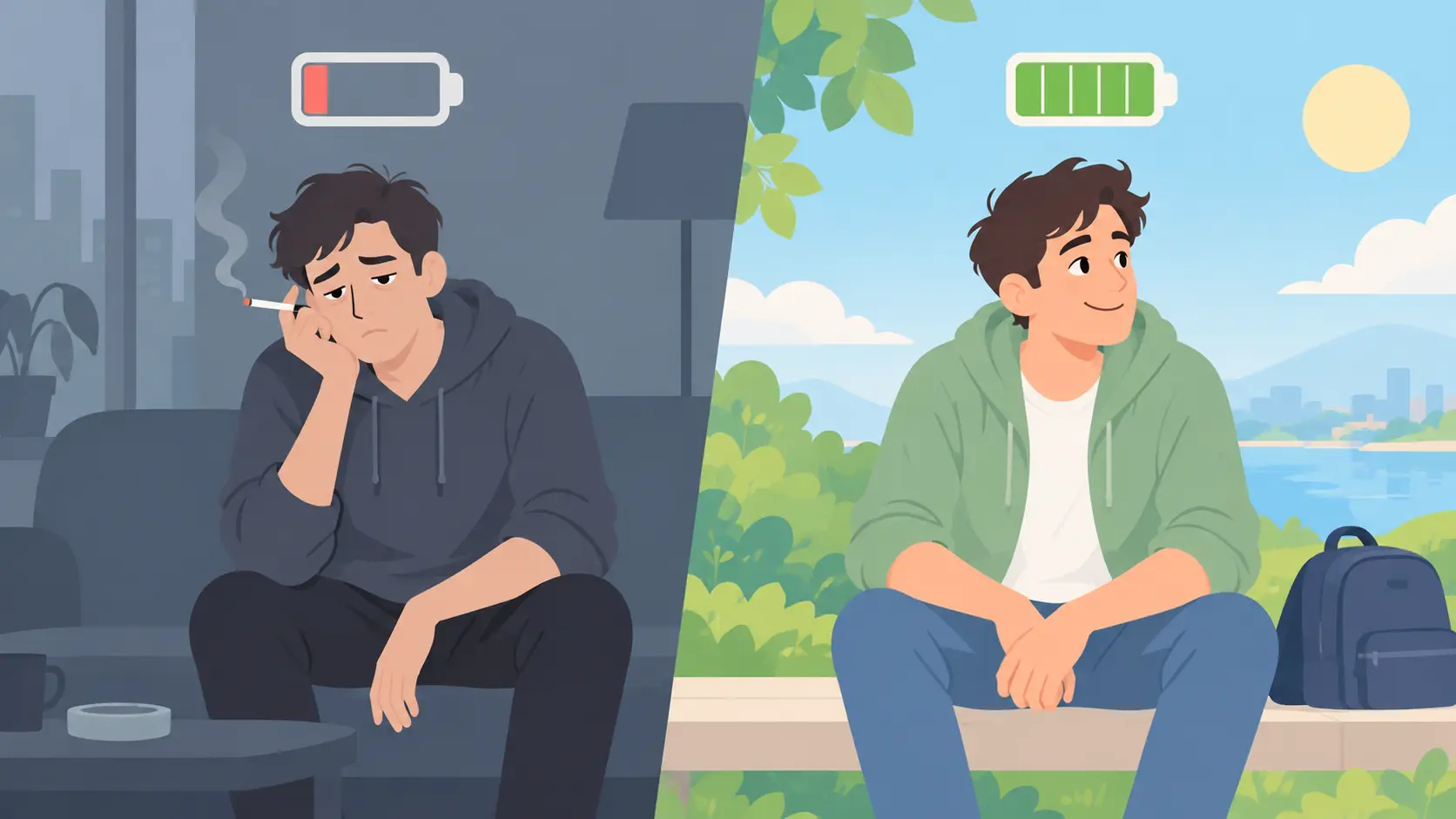
Does smoking make you tired? Yes, for most smokers it does. Carbon monoxide from cigarette smoke lowers the amount of oxygen your blood can carry, nicotine disrupts deep sleep, and the constant cycle of nicotine highs and withdrawal dips leaves you running on empty. Many smokers feel a brief lift from each cigarette, but over the day their overall energy is lower.
This article explains why smoking drains your energy while you are still smoking. If you have already quit and feel tired, that is a different, temporary process, and we cover it briefly below. The good news is that once withdrawal settles, most people find they have more energy than they did as smokers.
Why does smoking make you tired?
Smoking makes you tired through several overlapping effects. Each cigarette delivers carbon monoxide that starves your tissues of oxygen, nicotine that interferes with restful sleep, and a short burst of stimulation followed by a drop. Over months and years, lung and heart damage add to the burden.
Think of it as a body that is always working harder than it should. Your heart pumps more to compensate for lower oxygen, your brain never gets fully restorative sleep, and your mood and alertness swing with your nicotine levels.
Many smokers do not realize how tired they are until they quit and feel the difference. Fatigue becomes “normal” when it builds slowly over years.
| Cause | How it drains energy | How fast it improves after quitting |
|---|---|---|
| Carbon monoxide | Less oxygen reaches muscles and brain | Clears within a day or two |
| Poor sleep | Less deep, restorative sleep | Often improves after the first few weeks |
| Nicotine highs and crashes | Energy and focus swing all day | Settles as withdrawal ends, usually 2 to 4 weeks |
| Lung and heart strain | Breathlessness and lower fitness | Improves over weeks to months |
How does carbon monoxide from smoking cause fatigue?
Carbon monoxide takes the place of oxygen in your blood. It binds to hemoglobin, the protein in red blood cells that carries oxygen, far more tightly than oxygen does, around 200 times more strongly according to clinical references on carbon monoxide toxicity. That leaves less capacity to deliver oxygen to your muscles and brain.
Smokers carry noticeably higher levels of carbon monoxide in their blood than non-smokers. It is not enough to cause poisoning in most people, but it is enough to make the heart work harder and to reduce stamina. Low-level carbon monoxide exposure is associated with headaches, poor concentration and tiredness.
Stop smoking services often measure this with a simple breath test. Our guide to the carbon monoxide breath test explains what the numbers mean.
The encouraging part is how quickly this reverses. Carbon monoxide leaves the body within a day or two of your last cigarette. Read more about carbon monoxide after quitting smoking and what happens to your blood oxygen in the first 48 hours.
Does smoking ruin your sleep?
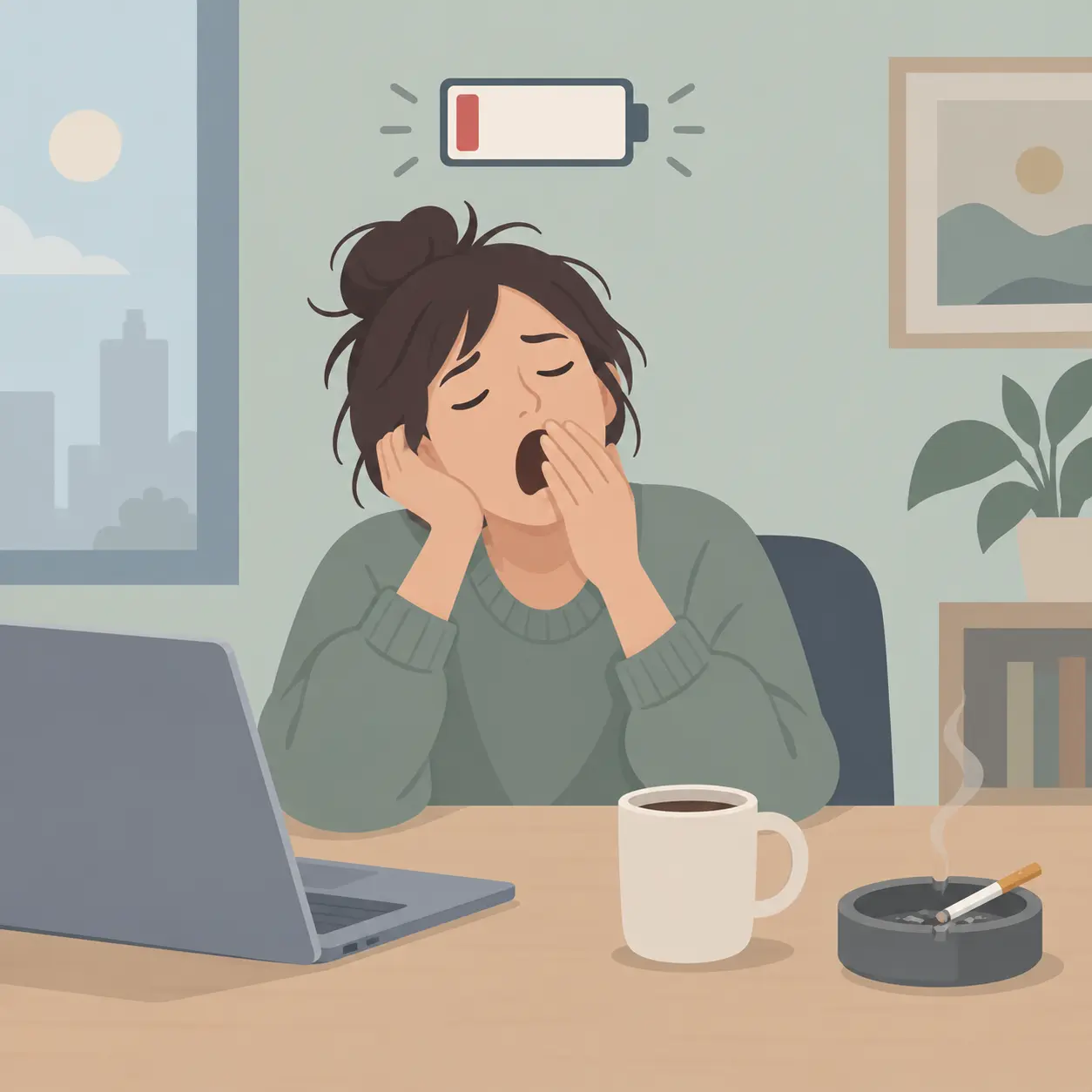
Yes. Smokers tend to sleep more lightly and wake up less refreshed. In a Johns Hopkins study published in the journal Chest and reported by ScienceDaily, researchers compared home sleep recordings of 40 smokers with 40 matched non-smokers. Smokers spent less time in deep sleep and were about four times as likely to say they did not feel rested.
In that study, 22.5% of smokers reported unrefreshing sleep compared with 5% of non-smokers. The researchers suggested that nicotine’s stimulating effect at bedtime, followed by mild withdrawal as levels drop overnight, may disturb sleep.
Other ways smoking affects sleep include:
- Stimulation at bedtime. A cigarette before bed raises heart rate and alertness, making it harder to fall asleep.
- Night-time withdrawal. Nicotine levels fall during the night, which may cause lighter sleep and early waking.
- Breathing problems. Smoking irritates and inflames the airways, contributing to snoring and worsening sleep apnea.
- Coughing. A smoker’s cough can wake you during the night or early morning.
Poor sleep feeds directly into daytime fatigue, low mood and reduced concentration, which can make cravings stronger and create a vicious circle.
Why does nicotine make you crash?
Nicotine gives a brief lift, then leaves you lower than before. Within seconds of inhaling, nicotine triggers the release of adrenaline and dopamine, which can make you feel more alert. But nicotine levels drop quickly, and as they fall, withdrawal symptoms such as tiredness, irritability and poor concentration set in.
Over time the brain adapts to nicotine and starts to need it just to feel normal. That means much of the “energy” a cigarette seems to provide is actually relief from withdrawal. Between cigarettes, you dip below your natural baseline.
This pattern explains why many smokers reach for a cigarette when they feel sluggish, then feel tired again an hour or two later. It also explains why the first weeks after quitting can bring temporary fatigue while the brain readjusts.
Does caffeine make it worse?
Many smokers pair cigarettes with coffee. Smoking speeds up how fast the body clears caffeine, so smokers often drink more coffee to get the same effect. Combined, they can create sharp energy swings and disturb sleep further, especially when consumed in the afternoon or evening.
How do lung damage and fitness affect your energy?
Smoking gradually reduces lung function and fitness, which makes everyday tasks more tiring. Inflamed airways, extra mucus and damaged air sacs all make it harder to move oxygen into your blood. Climbing stairs, carrying shopping or playing with children can leave you breathless sooner.
Smoking also affects your heart and blood vessels. Narrowed arteries reduce blood flow to muscles, so they tire more quickly during exercise. Over time, many smokers become less active, which lowers fitness further and adds to fatigue.
Long-term smokers may develop COPD, where breathlessness and tiredness are major symptoms. If you are often short of breath or tired after light activity, it is worth talking to a doctor.
What other smoking habits drain your energy?
Several habits that often go with smoking also sap energy. They are not caused by cigarettes directly, but they tend to travel together.
- Skipping meals. Nicotine suppresses appetite, so some smokers eat irregularly, which leads to energy dips.
- Dehydration. Smoking can dry the mouth, and coffee or alcohol alongside cigarettes can add to fluid loss.
- Less exercise. Breathlessness can make physical activity feel harder, so smokers may move less.
- Stress. Many people smoke to cope with stress, but the withdrawal cycle can actually raise baseline anxiety, which is tiring in itself.
Addressing these habits alongside quitting can speed up how quickly you feel your energy return.
When does energy come back after quitting smoking?
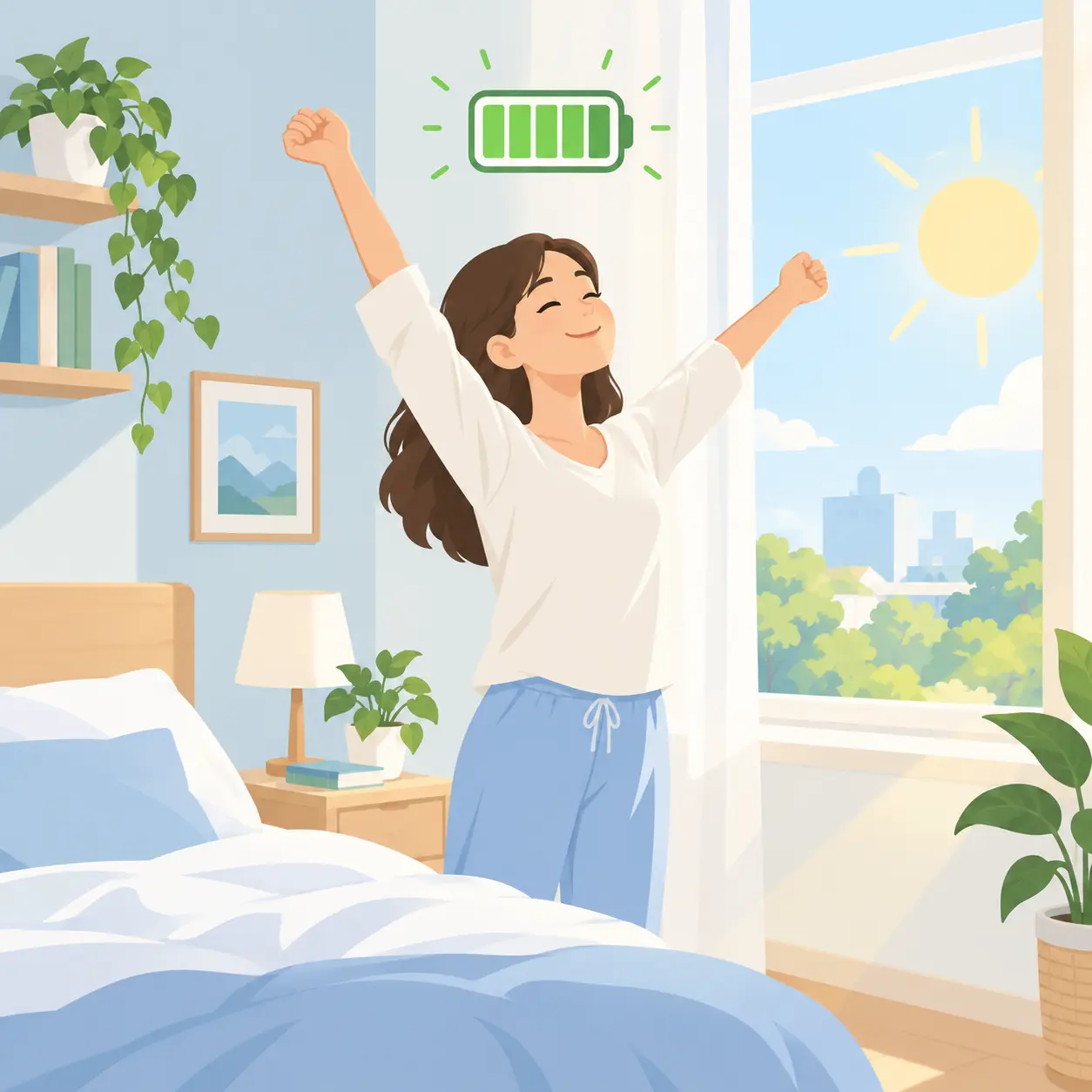
Energy usually improves within a few weeks of quitting. Carbon monoxide clears from your blood within a day or two, breathing becomes easier within weeks and sleep often improves once the first phase of withdrawal passes. The NHS lists having more energy among the benefits people notice within days or weeks of stopping.
Some people feel more tired in the first one to three weeks. This is withdrawal fatigue, as your brain adjusts to working without nicotine. It is temporary. Sleep can also be disrupted at first; our guide on why you can’t sleep after quitting smoking explains how long this lasts and what helps.
If you use a nicotine patch, you may notice vivid dreams or disrupted sleep. Our article on nicotine patch vivid dreams covers simple fixes, such as removing the patch before bed if your pharmacist agrees.
For the full recovery timeline, from the first hour to the first year, see what happens when you stop smoking.
Tips to boost energy while you quit
- Go to bed and wake up at the same times every day.
- Avoid caffeine after early afternoon, since your body processes it more slowly once you stop smoking.
- Take a brisk 10-minute walk when energy dips or a craving hits.
- Eat regular meals with protein and fiber to keep blood sugar steady.
- Drink water through the day.
- Be patient with yourself in the first few weeks. The fatigue passes.
Frequently Asked Questions
Does smoking make you tired?
Yes. Carbon monoxide reduces the oxygen your blood carries, nicotine disrupts deep sleep, and the cycle of nicotine highs and withdrawal dips leaves many smokers feeling drained.
Why do I feel tired right after smoking a cigarette?
Nicotine gives a short lift, then levels fall within an hour or two. Carbon monoxide from the smoke also lowers oxygen delivery, so many people feel flat once the brief stimulation wears off.
Do smokers sleep worse than non-smokers?
Yes. A Johns Hopkins study found smokers spent less time in deep sleep and were about four times as likely as non-smokers to report not feeling rested after a night’s sleep.
Isn’t nicotine a stimulant? Why would it cause fatigue?
Nicotine stimulates you briefly, but the body quickly adapts. Between cigarettes, falling nicotine levels cause withdrawal symptoms such as low energy, poor concentration and irritability.
How long after quitting smoking will I have more energy?
Carbon monoxide clears within a day or two. Many people feel more energetic within two to four weeks, once withdrawal fatigue settles, and the NHS lists more energy among the early benefits of quitting.
Why am I more tired after I quit smoking?
Temporary fatigue is a common withdrawal symptom as your brain adjusts to life without nicotine. It usually improves within a few weeks.
Can smoking cause chronic fatigue?
Smoking contributes to ongoing tiredness through poor sleep, reduced oxygen and lung disease. Persistent fatigue can have many causes, so see a doctor if it lasts.
Does vaping make you tired too?
Vaping avoids carbon monoxide but still delivers nicotine, so the high-and-crash cycle and sleep disruption can still leave you tired.
The bottom line: does smoking make you tired?
Smoking makes you tired by cutting oxygen delivery, disrupting sleep and trapping you in a cycle of nicotine highs and crashes. Once you get through the first few weeks of withdrawal, most people find their energy is better than it has been in years.
Ready to feel the difference? Download the iQuit app to track your smoke-free days and watch your energy milestones arrive week by week.