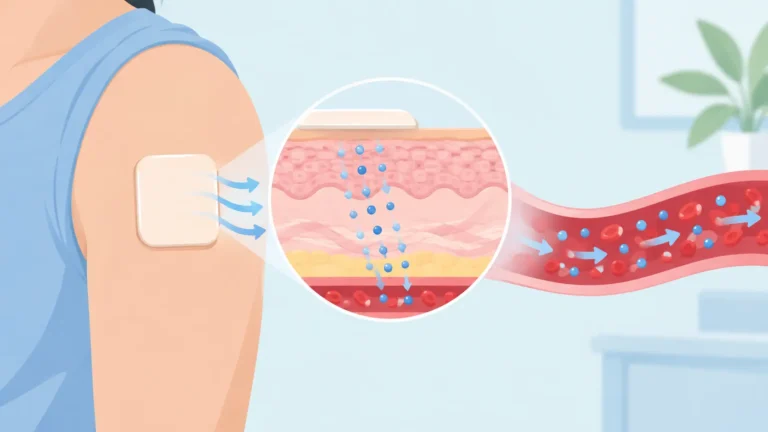
If you vape every day and you are ready to stop, you have probably wondered whether a patch would help. Can you use nicotine patches to quit vaping? Quit-smoking services say yes, and the NHS lists patches among the products people use, but there is an important catch: the patch label was written for cigarettes, not vapes, so nobody can hand you an exact “vape-to-patch” conversion. This guide sets out what the sources do and do not say.
The short answer: yes, with a catch
Many people who want to stop vaping use nicotine replacement therapy, or NRT, to handle the withdrawal. The NHS Better Health guide on how to quit vaping says that if you prefer to stop in one step, “you can ask your pharmacist or stop smoking adviser about switching to a suitable nicotine replacement therapy (NRT) product.”
The catch is about approval and evidence. A 2026 systematic review published in Tobacco Control states plainly that “there are no currently approved vaping-cessation aids.” In the United States, nicotine patches are approved over the counter as a stop-smoking aid, so using one to stop vaping is off-label: it is a use the label does not cover. In the UK, the NHS says: “Right now, Nicorette® QuickMist is the only approved NRT for quitting vaping.” That product is a fast-acting mouth spray, not a patch.
None of that means patches are dangerous or useless for vapers. It means you should treat the decision as one to make with a pharmacist, doctor or quitline rather than from a chart on the internet. This article is general information, not medical advice.
Why dosing is uncertain for vapers
Patch strength is easy to choose when you smoke cigarettes, because a cigarette count gives a rough measure of how much nicotine you are used to. Vaping is much harder to measure. The American Cancer Society notes that “nicotine levels aren’t the same in all types of e-cigarettes. Sometimes, product labels don’t list the true nicotine content.” Devices, e-liquid strengths and the way people puff all differ, and a person can take in a lot of nicotine in small, frequent hits through the day without noticing.
That is why this article does not print a table that turns puffs, pods or milliliters of e-liquid into a patch strength. None of the sources we fetched provides one, and an invented conversion could leave you under-dosed (so cravings return) or over-dosed (nausea, a racing heart). Instead, use the evidence on how services approach it, and let a professional help you pick a starting strength.
If you want to understand your own intake first, look at your e-liquid. The NHS guide tells people to “check your e-liquid’s nicotine content (mg/ml)” when planning a gradual reduction. Noting the strength, how fast you go through a pod or bottle, and when your cravings hit gives a pharmacist something concrete to work with.
Matching patch strength to your vaping
Here is what the official label says. The US over-the-counter label for NicoDerm CQ patches (DailyMed) is written around cigarettes: “if you smoke more than 10 cigarettes per day, use according to the following 10-week schedule,” with one 21 mg patch a day in weeks 1 to 6, one 14 mg patch in weeks 7 to 8, and one 7 mg patch in weeks 9 to 10. For people who smoke 10 or fewer cigarettes a day, the label says to start with the 14 mg step. There is no vaping line in that schedule.
The label also makes this point about the product itself: “Unlike the sudden jolts of nicotine delivered by cigarettes, the amount of nicotine you receive remains relatively smooth throughout the 16 or 24 hour period you wear the NicoDerm CQ patch.” A steady background dose is what the patch is for, and it is why services pair it with something fast.
For a clearer picture of what each patch strength means in practice, read our guide to nicotine patch strength: 21 mg vs 14 mg vs 7 mg. Then take your own vaping pattern to a pharmacist or quitline, who can decide whether a higher or lower starting step makes sense for you.
| Question | What the sources say | Source |
|---|---|---|
| Is a patch approved for quitting vaping? | No approved vaping-cessation aids per the 2026 review; the NHS names one fast-acting spray as approved in the UK | Tobacco Control 2026; NHS Better Health |
| How is patch strength chosen on the label? | By cigarettes per day (more than 10 starts at 21 mg) | DailyMed NicoDerm CQ label |
| Is there a vape-to-patch conversion? | None found in the sources checked; e-cigarette nicotine content varies | American Cancer Society |
| Patch plus a fast-acting product? | Recommended for steady plus on-demand coverage | NHS Better Health |

Adding a fast-acting form
A patch gives a steady trickle. Vaping gives quick hits whenever you want them, so the cravings you feel when you stop are often sudden. That is why the NHS says: “One of the most effective ways to stop vaping is to switch to another fast-acting nicotine product, which can help ease cravings as you quit.”
It goes on to describe the combination: “Right now, Nicorette® QuickMist is the only approved NRT for quitting vaping. It provides quick relief when you have a craving. Combine it with a nicotine patch for steady, long-lasting coverage.” Other fast-acting forms include gum, lozenges and inhalers, which our guide to the best NRT options compared explains side by side.
If you vape in order to stay off cigarettes, the NHS is also clear that patches have a place there: “You can use patches with a vape if you need to, as these give ongoing support by releasing nicotine slowly. You can top up with your vape to deal with immediate cravings.” That is advice for people who are using a vape as a stop-smoking tool, not for stopping the vape itself, but it shows how services think about slow plus fast nicotine.
How long to use the patch
The US label for a 21 mg start is a 10-week program, and it adds: “If you feel you need to use the patch for a longer period to keep from smoking, talk to your health care provider.” The NHS says NRT is recommended “for about 12 weeks or for as long as they’re needed to stop you from smoking again.”
Those durations come from smoking cessation. No source we fetched sets a separate patch course for stopping vaping, so a sensible plan is to follow the product label, use the same time frame as the NHS for NRT in general, and check in with your pharmacist or quitline if cravings come back when you step down.
The NHS also advises thinking about the step you are taking. Its quit-vaping page says: “You should only quit vaping if you are confident you can do it without smoking cigarettes.” If you are a former smoker, the point is worth keeping in mind, because the aim of this whole exercise is to stay nicotine-free, not to swap one habit for a worse one.
What the trials show for vapers
The evidence is early. A 2026 systematic review and meta-analysis in Tobacco Control found seven randomized trials of vaping cessation interventions, which included drug treatments, digital programs and educational content. Together, they showed a statistically significant increase in the odds of seven-day abstinence (odds ratio 1.52, 95% confidence interval 1.15 to 2.01, 3,244 participants, moderate certainty). The authors concluded: “More high-quality studies with reproducible findings are needed to enhance the certainty of the evidence and guide clinical interventions.”
That figure covers all kinds of interventions, not patches alone. For patches specifically, we found one small randomized pilot, published in Addictive Behaviors in 2023. It randomized 30 adult daily e-cigarette users to a 28-day supply of 21 mg patches plus 4 mg lozenges (with a booklet) or to a quitline referral. At the end of treatment, 6 of 18 people in the NRT group reported no vaping, compared with none in the control group, a difference the authors reported as p = .057. They described it as a preliminary study and called for a larger trial.
In plain terms: the signal is encouraging, but it is a handful of people, not a guarantee. If you are looking for a plan that has been proven specifically for vapers, one does not exist yet, which is why a pharmacist or quitline conversation matters more than any number in this article.
If you also smoke cigarettes
Dual use changes the picture. The American Cancer Society says that “people should not use both products at the same time and are strongly encouraged to completely stop using all tobacco products.” In the NRT pilot above, the vaping-abstinence results were in people who only vaped: the six who stopped were all mono-users and none were dual users.
If you smoke and vape, stopping the cigarettes is the priority, and the patch label’s cigarette-based schedule applies most directly to you. We cover the evidence on smoking and vaping together in does vaping cause cancer. When you are ready to stop the vape too, our step-by-step plan to quit vaping walks through it, and how to quit disposable vapes covers that specific habit.
Teens: different rules
If you are under 18, the patch label says to “ask a doctor before use.” The research base is thin: a 2026 systematic review of NRT for vaping cessation in people aged 17 or younger found only two records and eight guidelines, and while most guidelines supported NRT for smoking cessation in young people aged 12 and older, “none mentioned vaping cessation.” The review called for urgent research.
That makes a clinician, school nurse or youth quitline the right first stop for a teen, not a pharmacy shelf. A parent or carer who wants to help should offer support and help book the appointment, rather than buying patches without advice.
Whatever your age, expect withdrawal. Our guide to the vape withdrawal timeline describes what the first days and weeks can feel like, so a rough patch does not feel like failure.

Tracking the first weeks off the vape
Whatever you choose, the first weeks are about getting through cravings and keeping a record of what works. iQuit supports quit-your-way plans, including gradual reduction, and lets you log each craving with its trigger and intensity, so you can see which times of day a patch or fast-acting form is covering and which are still hard. Its craving forecasts also point to the hours when you are most at risk.
iQuit is not a medical product and does not choose a patch strength for you. It is a place to keep your plan and your notes, which makes the appointment with your pharmacist or quitline more useful. For wider context on what happens after you stop nicotine, read what happens to your body when you stop smoking.
Plan your step-down and log every craving
iQuit’s gradual-reduction plans and craving forecasts support the first weeks off the vape. Free on Google Play and the App Store.
Download iQuit Free on Google Play
Download on the App Store
Frequently Asked Questions
Can you use nicotine patches to quit vaping?
Services support using NRT, including patches combined with a fast-acting form, but it is not an approved use of patches. A 2026 review found no approved vaping-cessation aids, so ask a pharmacist or quitline to help pick a strength (Tobacco Control, 2026; NHS Better Health).
What patch strength should a vaper start on?
There is no official vape-to-patch conversion. The US label sets strength by cigarettes per day, with more than 10 a day starting at 21 mg, and e-cigarette nicotine content varies, so a pharmacist or quitline adviser should choose with you (DailyMed; American Cancer Society).
Is Nicorette QuickMist approved for quitting vaping?
In the UK, the NHS says that right now Nicorette QuickMist is the only approved NRT for quitting vaping and suggests combining it with a nicotine patch. Approval can differ by country, so check what applies where you live (NHS Better Health).
Do nicotine patches work to quit vaping?
The evidence is early. A 2026 meta-analysis of seven trials found vaping cessation interventions raised seven-day abstinence (odds ratio 1.52), and a small 2023 pilot found 6 of 18 people given patches and lozenges had stopped vaping versus none in the control group (Tobacco Control, 2026; Addictive Behaviors, 2023).
How long should I use a patch to stop vaping?
No source sets a vaping-specific course. The US label describes a 10-week program and says to talk to a health care provider if you need longer, and the NHS recommends NRT for about 12 weeks or as long as needed (DailyMed; NHS Better Health).
Can I use a patch if I vape and smoke?
Yes, and stopping cigarettes is the priority. The NHS says you can use patches with a vape if you need to, while the American Cancer Society urges people not to use both products and to stop all tobacco products (NHS Better Health; American Cancer Society).
Can teenagers use nicotine patches to quit vaping?
Only with medical advice. The US patch label says people under 18 should ask a doctor first, and a 2026 review found none of eight guidelines mentioned NRT for vaping cessation in young people (DailyMed; systematic review, 2026).