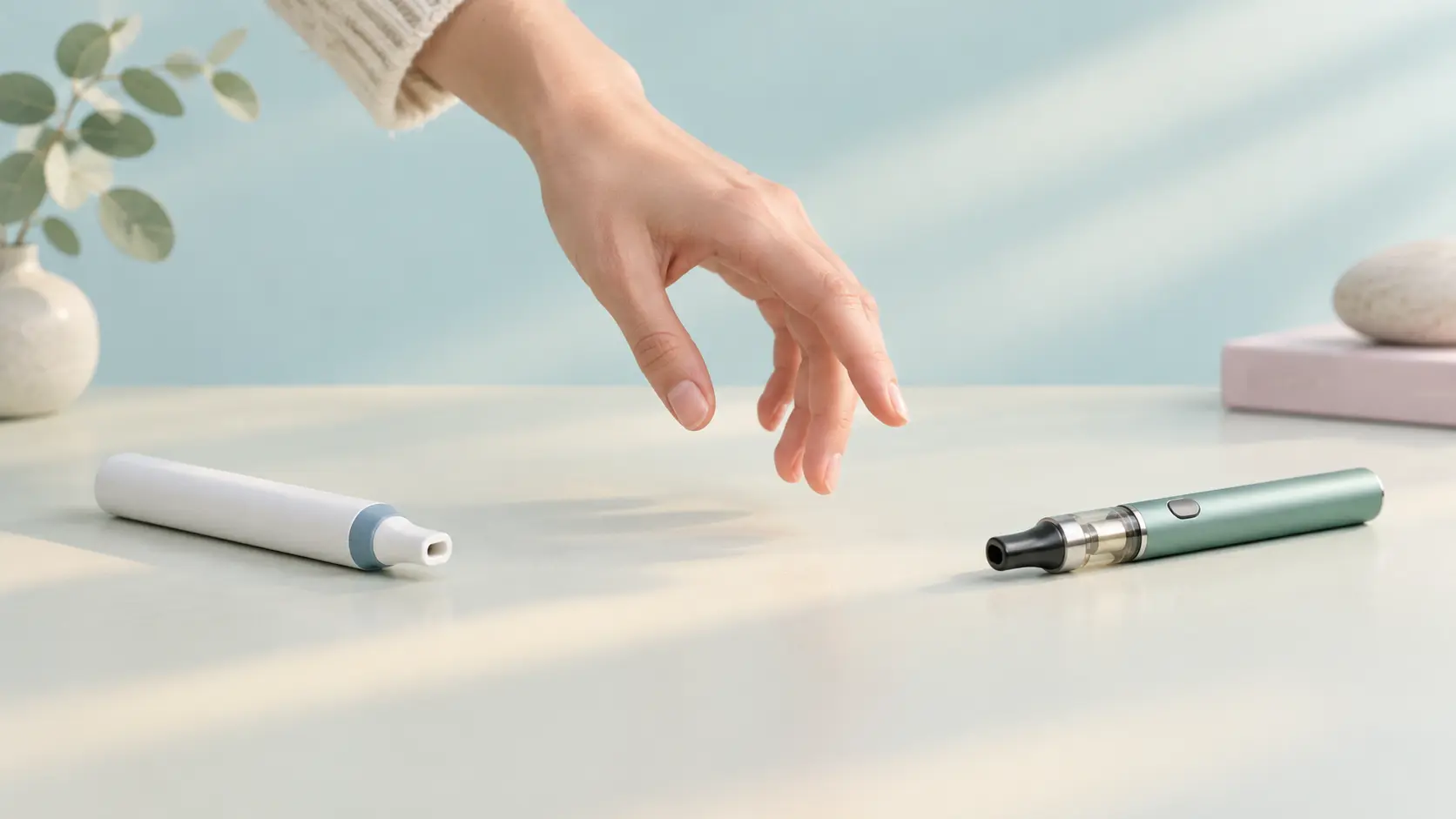
Many smokers say the hardest thing to lose is not the nicotine but the motion: lifting something to your mouth, drawing in, breathing out. That is why the nicotine inhalator vs vape question comes up so often. Both give your hand something to do, but they are very different products: one is a licensed medicine with a fixed dose and a label, the other is a consumer device with a wide range of liquids. This guide compares them using the NHS, the FDA, the label of the Nicotrol inhaler and a 2026 Cochrane review, and flags what no source could tell us.
Nicotine Inhalator vs Vape: The Short Answer
If you want the lowest-risk, most standard option, the inhalator is a licensed NRT with a dosing schedule. If you want the product with the strongest recent evidence for quitting, the Cochrane review favors nicotine vapes over NRT as a group. Neither answer is complete, because the review pooled all NRT forms rather than the inhalator alone, and because the NHS says plainly that “vaping is not completely harmless and we don’t know yet what the long-term effects may be.” The table lays out the main differences.
| Point | Nicotine inhalator | Vape |
|---|---|---|
| Status | Licensed NRT; prescription in the US (FDA) | Consumer product; NHS says it is not risk-free |
| Hand-to-mouth habit | NHS: “mimics” it | NHS: hand-to-mouth action “is like smoking” |
| Nicotine delivery | Absorbed through mouth and throat; slow rise | Varies by device and liquid strength |
| Quit evidence | Label trials vs placebo; no head-to-head with vapes | Cochrane 2026: higher quit rates than NRT as a group |
| Carbon monoxide and tar | None from burning | NHS: most tobacco smoke chemicals, including tar and carbon monoxide, “are not contained in vape aerosol” |
Nicotine Inhalator vs Vape: How Each Delivers Nicotine
The Nicotrol Inhaler label on DailyMed describes a mouthpiece and a plastic cartridge “delivering 4 mg of nicotine from a porous plug containing 10 mg nicotine.” On average, it says, about 2 mg is systemically absorbed, and “as you inhale or puff through the mouthpiece, nicotine turns into a vapor and is absorbed into your mouth and throat.” The NHS describes the product type the same way: “This delivers nicotine through the lining of your mouth and throat.”
A vape is different. The NHS explains that vapes “are electronic devices that let you inhale nicotine in an aerosol, or vapour, instead of smoke. This is done by heating a solution (e-liquid) that typically contains propylene glycol, vegetable glycerine, flavourings and nicotine.” The strength depends on what you put in it: “E-liquids come in different nicotine strengths, so you control how much nicotine you need.”
One caveat on the inhaler label: the only Nicotrol Inhaler label on DailyMed is a repackager’s copy (Physicians Total Care) published in May 2011, and its text is dated December 2008. DailyMed lists no newer Nicotrol Inhaler label. This guide uses it for how the product works and makes no claim about current US sales. Check current prescribing information with a pharmacist.

Speed and Satisfaction
People often assume an inhaler hits like a cigarette. The label says otherwise: “the high and rapid rise followed by the decline in nicotine arterial plasma concentrations seen with cigarette smoking are not achieved with the inhaler.” After use, “arterial nicotine concentrations rise slowly to an average of 6 ng/mL in contrast to those of a cigarette, which increase rapidly and reach a mean C max of approximately 49 ng/mL within 5 minutes.” Still, the NHS says the inhaler “works faster than gum and lozenges,” and the label recommends frequent puffing: nicotine in a cartridge “is used up after about 20 minutes of active puffing.”
The label is candid about the ritual. It says the inhaler “may provide some degree of comfort by providing a hand-to-mouth ritual similar to smoking, although the importance of such an effect in smoking cessation is, as yet, unknown.” So the ritual helps some people, but nobody has shown that it is what drives success. For the habit side of this, see the hand-to-mouth habit and what to do with your hands.
The NHS notes that vaping appeals for similar reasons: “Some people find vaping helps them because the hand-to-mouth action is like smoking, plus you get similar sensations, like throat hit.” This short CDC video shows how to use a nicotine oral inhaler.
If you want step-by-step technique, our guide to how to use a nicotine inhaler correctly covers it.
Quit Evidence
Vapes
A 2026 Cochrane living review (80 randomized trials, 29,861 participants) concluded that “there is high-certainty evidence that nicotine EC increase quit rates compared to NRT.” It reports a risk ratio of 1.61 (95% CI 1.23 to 2.12) from 11 studies, which “might translate to an additional four quitters per 100.” The NHS puts the comparison this way: “You’re roughly twice as likely to quit smoking if you use a nicotine vape compared with other nicotine replacement products, like patches or gum.”
The review also says serious adverse events were “probably similar” between nicotine vapes and NRT and that longer, larger trials are needed. It warns that “illicit products and/or products containing other active substances (e.g. tetrahydrocannabinol (THC)) may have different harm profiles.”
The inhalator
The Nicotrol label reports two trials with 445 patients in which quit rates at 6 months were 20 to 21% with the inhaler against 6 to 11% with placebo, and at 12 months (patients not on treatment) 11 to 13% against 5 to 10%. Those are trial numbers from the label, not a comparison with vapes. Neither the Cochrane review nor the label includes a head-to-head trial of inhalator versus vape, so neither can say which would work better for you. Our guide to vaping vs nicotine patches covers the vape-versus-NRT evidence in more depth.
Side Effects and Safety
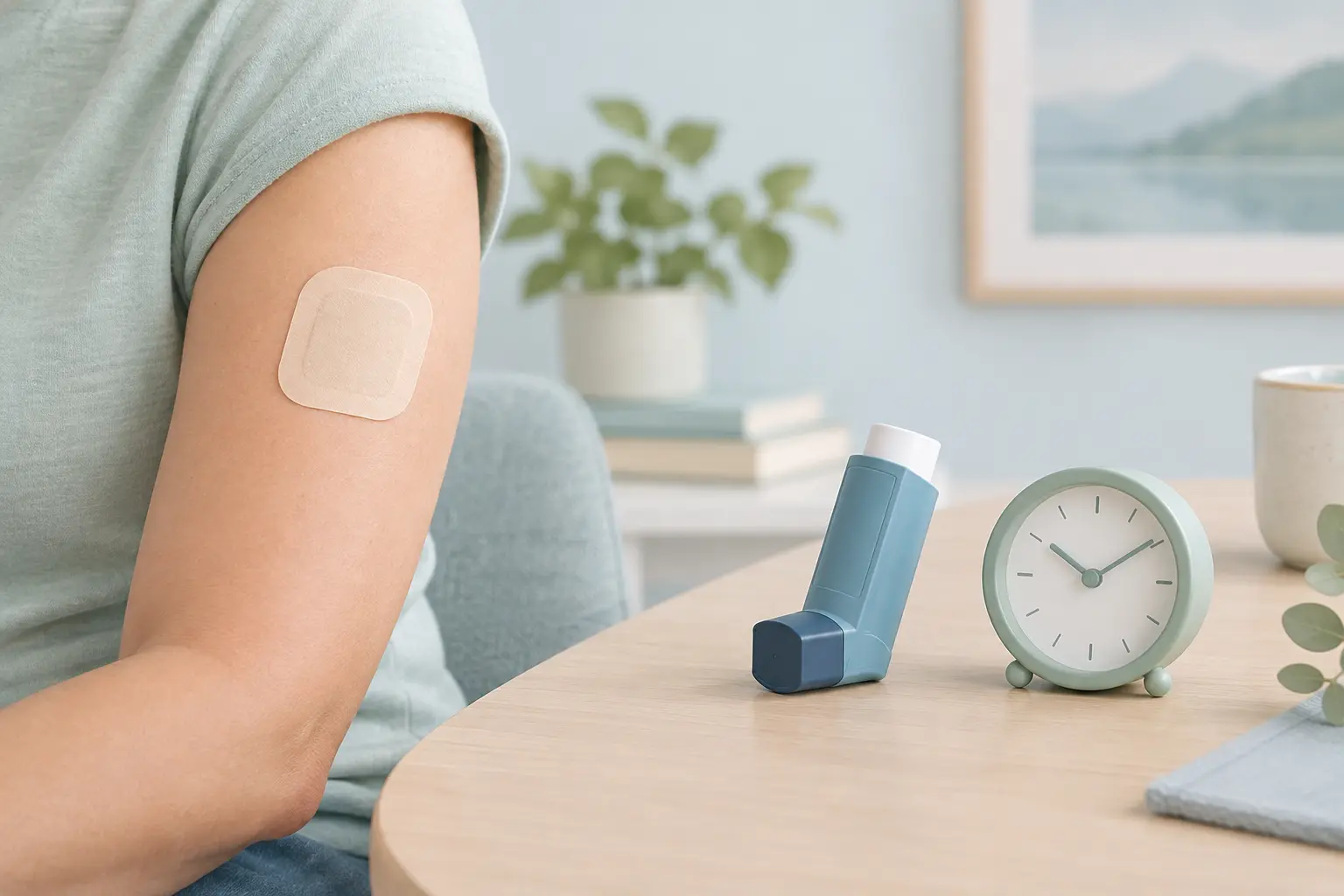
For the inhaler, the label says the most common effects were local: “cough, and mouth and throat irritation” that declined with continued use, plus the most common nicotine-related event, dyspepsia (indigestion), reported by 18% of patients on the active drug versus 9% on placebo. It also warns about dependence: “Dependence might occur from transference of tobacco-related nicotine dependence to the NICOTROL Inhaler,” and says use beyond 6 months has not been studied and is not recommended.
For vapes, the NHS says “evidence shows that vaping is less harmful than smoking” and that vaping “exposes users to fewer toxins and at lower levels than smoking cigarettes,” but that it “is not risk-free.” In its words, “The healthiest option is not to smoke or vape. So, if you are vaping to quit smoking, you should aim to eventually stop vaping too.” The NHS also notes that “it’s now illegal for disposable vapes to be sold or supplied in the UK.” For the US legal picture, see our guide to FDA authorized vapes.
Check with a doctor before using either if you have heart disease, are pregnant, or take other medicines.
Cost per Day
The NHS estimates that once you have bought the kit, “vaping costs about a third as much as smoking.” Cartridge prices vary by country and pharmacy, so this guide gives no per-day figure. What the label does tell you is the volume: it says “most successful patients in the clinical trials used between 6 and 16 cartridges a day,” so what you pay per day depends on the cartridge price multiplied by a number that can be large. Ask your pharmacist for the price of a pack and divide by the cartridges you expect to use.
Availability: UK Versus US
In the UK, the NHS lists the inhaler among NRTs sold in “pharmacies, supermarkets and some other shops,” and says they may also be prescribed by a doctor or your free local Stop Smoking Service. In the US, the FDA’s consumer page on quit-smoking products lists the nicotine inhaler under “Prescription Smoking Cessation Products That Contain Nicotine,” alongside nicotine spray, and lists skin patches, gum and lozenges as the over-the-counter NRTs. In other words, you generally cannot walk into a US store and buy one without a prescription, whereas a vape is sold over the counter to adults. If you are in the UK and comparing all your options, read our best stop smoking aids in the UK.
Combining With a Patch
The NHS advises that “using a combination of slow-acting and fast-acting products can give you the best results.” In practice, a patch gives steady background nicotine and an inhaler handles sudden cravings. Its vaping page also says you “can use patches with a vape if you need to, as these give ongoing support by releasing nicotine slowly.” For a side-by-side of every NRT form, see gum vs patch vs lozenge vs inhaler. The NHS recommends using NRTs “for about 12 weeks or for as long as they’re needed to stop you from smoking again,” and then reducing the dose gradually.
Frequently Asked Questions
Is a nicotine inhalator better than a vape for quitting?
Direct comparisons are lacking. A 2026 Cochrane review found nicotine vapes raise quit rates versus NRT as a group (RR 1.61, high-certainty evidence), but it did not test inhalators separately. The NHS says the inhaler mimics the hand-to-mouth habit (Cochrane, 2026; NHS).
Is the nicotine inhaler available without a prescription?
It depends on the country. The FDA lists the nicotine inhaler among prescription smoking cessation products in the US. The NHS says NRTs, which include inhalers, can be bought from pharmacies, supermarkets and some other shops in the UK (FDA; NHS).
Does an inhaler feel like a cigarette?
It copies the motion but not the hit. The NHS says the inhaler mimics the hand-to-mouth habit and works faster than gum and lozenges. The label says nicotine rises slowly, unlike the rapid rise from a cigarette (NHS; DailyMed label).
How many inhaler cartridges can I use a day?
The Nicotrol label on DailyMed (a 2011 copy of 2008 text) says most successful trial patients used 6 to 16 cartridges a day, with at least 6 a day for the first 3 to 6 weeks and a maximum of 16 daily for up to 12 weeks. Follow your own product’s current label (DailyMed label).
Is vaping safe for quitting smoking?
The NHS says vaping is less harmful than smoking and can help you quit, but it is not risk-free, long-term effects are unknown, and the healthiest option is not to smoke or vape. Non-smokers and under-18s should not take it up (NHS).
Can I use a patch with an inhaler or vape?
Yes. The NHS recommends combining slow-acting products such as patches with fast-acting ones such as inhalers, and says you can use patches with a vape for extra support. Ask a pharmacist or your Stop Smoking Service for advice (NHS).
How long should I use a nicotine inhaler?
The Nicotrol label recommends 3 months of treatment followed by gradual reduction over 6 to 12 weeks, and says use beyond 6 months has not been studied and is not recommended. The NHS says NRTs are generally used for about 12 weeks or as long as needed (DailyMed label; NHS).
Cover the Hand-to-Mouth Gap With iQuit
Whichever product you pick, the ritual does not disappear overnight. iQuit offers a virtual cigarette for the moments your hands want something to do, SOS support for strong urges, a craving log with triggers and intensity, and a real-time dashboard of days smoke-free and money saved. It supports cold turkey or gradual reduction and is free on Google Play and the App Store.
Download iQuit Free on Google Play Download on the App Store
Sources: NHS: vaping to quit smoking, NHS: quit smoking with NRTs, DailyMed: Nicotrol Inhaler label (2011 repackager copy), Cochrane review: electronic cigarettes for smoking cessation (2026); also cited: the FDA consumer update “Want to Quit Smoking? FDA-Approved and FDA-Cleared Cessation Products Can Help.”