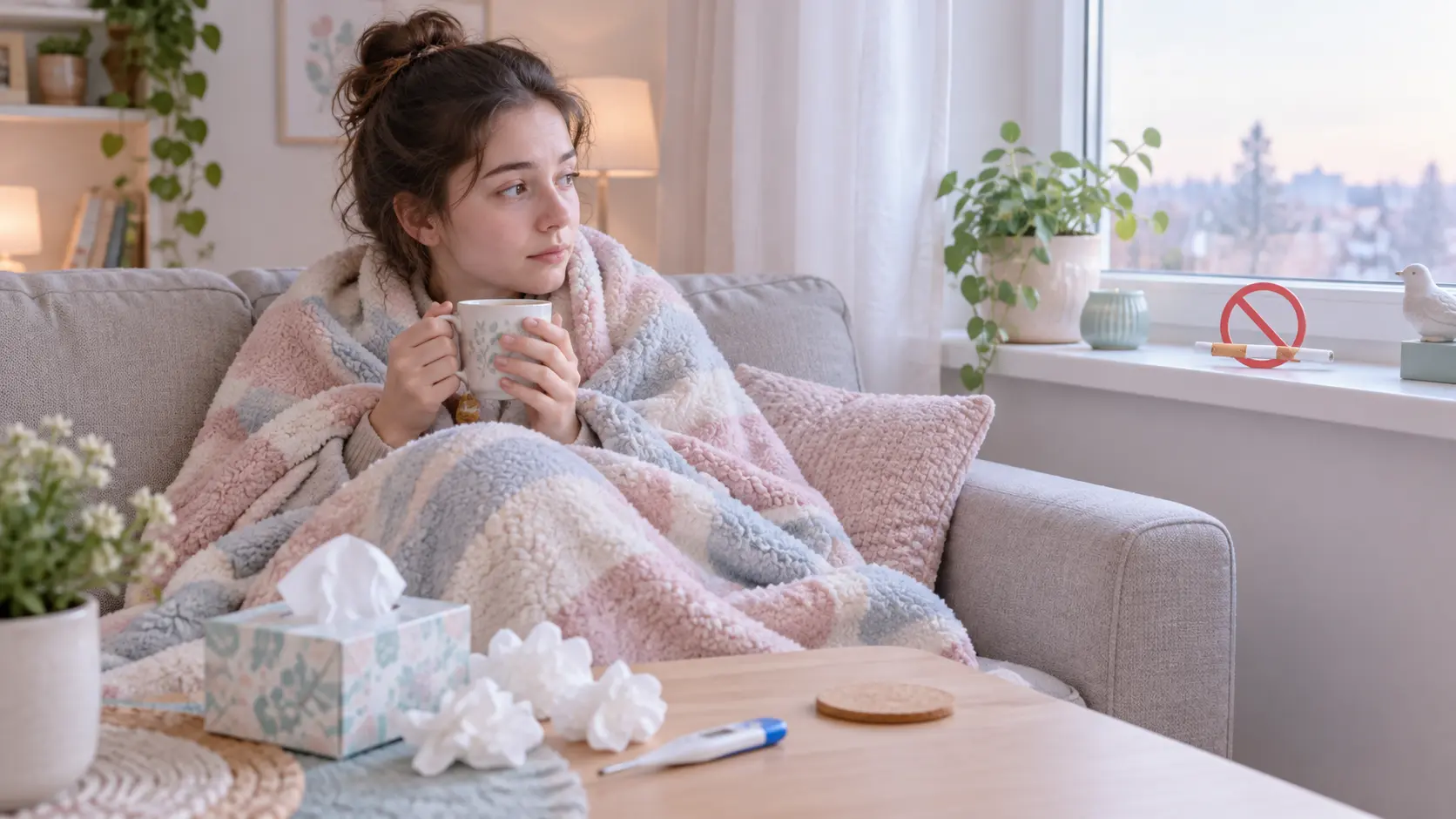
If you are asking can you smoke with a cold or the flu, the short answer from the NHS is that you should not: its common cold page lists “do not smoke as it can make your symptoms worse” under what not to do. Nobody can stop you, and nobody here is going to lecture you. But being ill is also one of the few times when smoking tends to feel worse and some people are already cutting down. This guide explains what the evidence says, what we cannot tell you, when a cough needs a doctor, and how to use a sick week to start quitting.
Can you smoke with a cold? Short answer: it makes things worse
The NHS: common cold says you can usually treat a cold at home and should begin to feel better in about 1 to 2 weeks. Its “do” list is rest, plenty of fluids, healthy food, a salt-water gargle and a hot lemon and honey drink. Its “don’t” list includes one line aimed at us: “do not smoke as it can make your symptoms worse.” The NHS: bronchitis page gives the same instruction for bronchitis.
That is a short, plain statement. A reliable figure for how many more colds smokers get is hard to pin down, so this guide does not give one. What is well described is the mechanism and a key published review, covered next.
If you are here because you smoked through your last cold and want to know whether it did any harm, the honest answer is that it probably made the cold feel worse, and the better question is what to do from today. There is a practical plan near the end of this article.
Smoke, your airways and your immune response
A cold is a virus that infects the lining of your nose and throat. Cigarette smoke irritates that same lining. The Arcavi and Benowitz review in Archives of Internal Medicine (2004) looked at how smoking affects infection and reported: “Mechanisms by which smoking increases the risk of infections include structural changes in the respiratory tract and a decrease in immune response.” In other words, smoke changes the airway’s physical defenses and also dampens the body’s response to germs.
That review is from 2004, so treat it as a foundation, not the last word. It is also a review of earlier studies, not a new trial. Within it, the authors write that cigarette smoking “is a substantial risk factor for important bacterial and viral infections.”
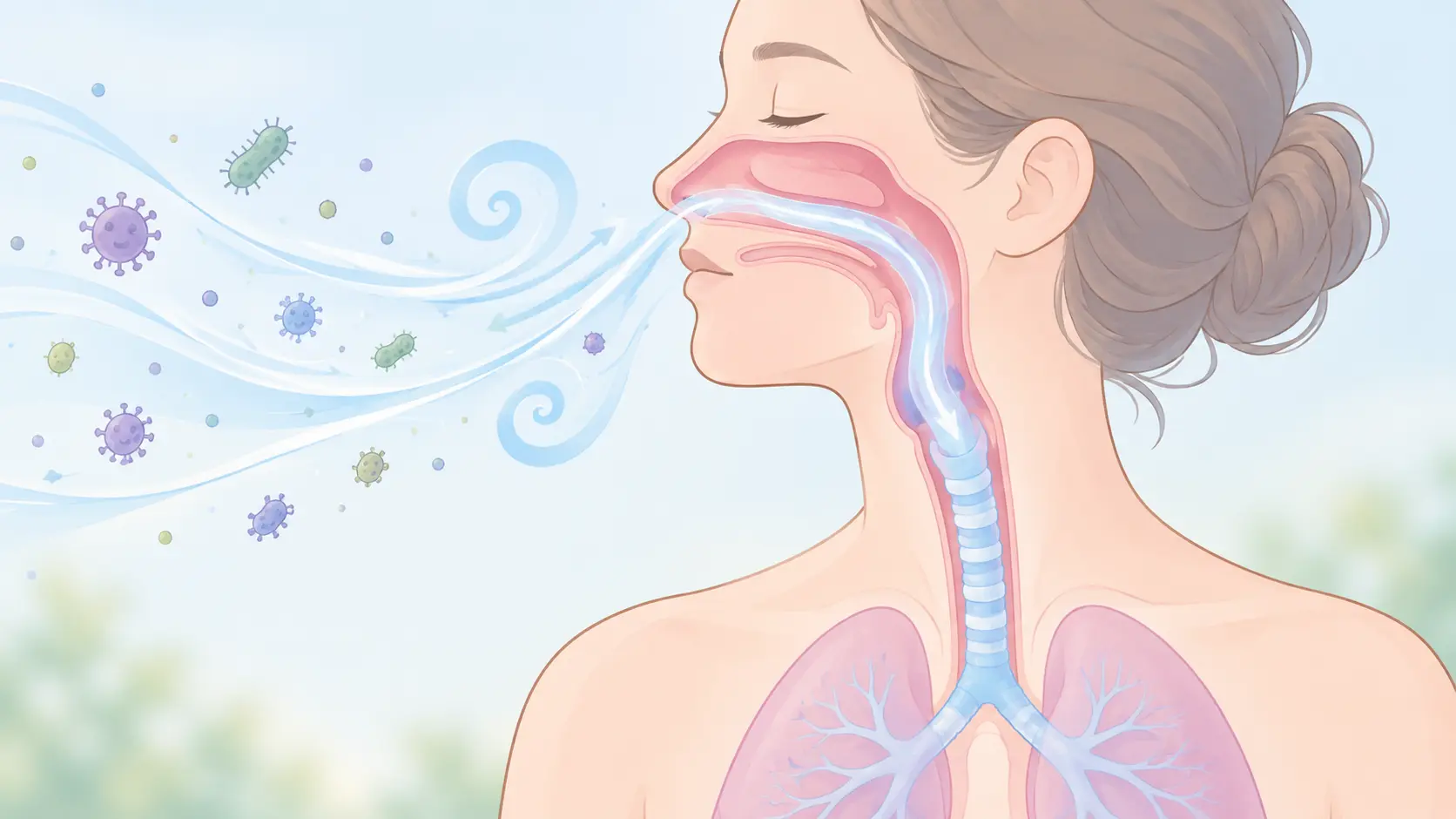
For a smoker with a cold, the practical meaning is the one the NHS gives: your symptoms, such as a cough and a sore throat, can be worse when you smoke. The NHS cough page also lists smoking itself among the causes of a cough, next to colds and flu, heartburn and allergies. If you cannot tell whether your cough is the virus or the cigarettes, it is worth knowing both are possible.
Colds versus flu in smokers
The NHS says cold and flu symptoms are similar but flu tends to be more severe. A cold comes on gradually, over 2 to 3 days, and mainly affects the nose and throat. Flu appears quickly, within a few hours, affects more than the nose and throat, and leaves you too exhausted to carry on as normal.
| Cold | Flu | |
|---|---|---|
| Onset | Appears gradually | Appears quickly within a few hours |
| Where | Mainly nose and throat | More than just nose and throat |
| How you feel | Unwell, but OK to carry on as normal | Exhausted and too unwell to carry on as normal |
On the flu specifically, the 2004 review is blunt: “Influenza risk is severalfold higher and is much more severe in smokers than nonsmokers.” It also lists pneumococcal and influenza vaccination among its recommendations for all smokers. We cannot give you vaccination advice here, since eligibility rules differ by country and age. Ask your doctor or pharmacist whether a flu vaccine is right for you this season.
This guide does not cover COVID-19, which has its own body of evidence.
Why cigarettes often feel bad when you are sick
Many people say cigarettes taste harsh or make them cough more when they have a cold. That is a widely shared experience, not something measured in the sources above, so take it as anecdote. It matters because it is real for you in the moment: a sick day is often a day when the urge is weaker or the first cigarette is easier to skip.
That is useful. A sick week can break the automatic rhythm of smoke breaks, coffee and commuting. If you have already gone a day on fewer cigarettes because you felt rotten, you have started a gap you can lengthen.
Watch out for the opposite trap too: boredom and stress at home can raise cravings. Plan substitutes for the times you would normally step outside, such as a warm drink, a short walk if you are well enough, or a few slow breaths. Our article on the stages of nicotine withdrawal explains what to expect if you stop in the middle of an illness.
When a cough needs a doctor
A cold cough should settle as the cold does. The NHS: cough says to see a doctor if you have had a cough for more than 3 weeks, are losing weight for no reason, or have a weakened immune system. It says to get an urgent appointment (in England, call NHS 111) if your cough is very bad or quickly gets worse, you feel very unwell, you have chest pain, you find it hard to breathe, or you are coughing up blood. Our guide on whether smoking can cause chest pain covers the chest-pain warning signs in more detail.

The NHS also reassures that “a cough is rarely a sign of something serious like lung cancer,” but it is clear that a persistent one should be checked. Smokers sometimes accept a daily cough as normal. Our guide to smoker’s cough signs and red flags explains which changes should not be waved away. If your illness is moving to your chest, read quitting smoking with a chest infection as well.
Using nicotine replacement while you are ill
If you want to stop during a cold, you may wonder whether patches or gum are fine when you are unwell. General NRT guidance does not give a specific rule for using it during a cold. The sensible path is the NHS one: speak to a healthcare professional, such as a pharmacist, about choosing and using nicotine replacement, particularly if you are taking other cold medicines or have another condition.
Our comparison of the best NRT options explains the forms available. If your throat is sore, a pharmacist can talk through which form might suit you while you are ill.
For symptoms such as a blocked nose or congestion lingering after you stop, see our piece on sinus problems and congestion after quitting smoking. And if you feel flu-like after you stop smoking rather than before, that is covered in the smoker’s flu symptoms timeline.
Turning a sick week into a quit
Here is a gentle plan, built for someone who feels rough and does not want a project.
- Take the pause you already have. Count today as your first smoke-free day if you have not smoked yet.
- Keep the NHS cold basics going. Rest, fluids, a hot lemon and honey drink and a salt-water gargle all help your sore throat without any nicotine.
- Tell one person. A friend or family member who knows you are using the sick days to quit can text you a check-in.
- Have a plan for the first urge. Decide what you will do in the first five minutes of a craving: a drink of water, a few slow breaths, a change of room.
- Do not wait for a perfect day. If this cold passes and you have not stopped, pick the next convenient date. Our overview of what happens to your body when you stop smoking shows what you are heading toward.
iQuit can help you start from whatever day you are on. You can log each craving with its trigger and intensity, use the SOS craving tools when an urge hits, and watch smoke-free days and money saved build up on the dashboard. You can quit gradually or cold turkey, whichever suits how ill you feel. It does not diagnose or treat colds, flu or coughs, so see a clinician for symptoms.
Turn your sick days into smoke-free days
If a cold has already interrupted your smoking, iQuit can help you build on it: log cravings, use SOS craving tools and track smoke-free days and money saved. It is free on Google Play and the App Store.
Download iQuit Free on Google Play
Download on the App Store
Frequently Asked Questions
Can you smoke with a cold?
Physically yes, but the NHS says not to. Its common cold page lists do not smoke as it can make your symptoms worse. A cold normally gets better in about 1 to 2 weeks, and smoke irritates the same airway lining the virus infects (NHS, 2024).
Does smoking make a cold last longer?
A reliable figure for how much longer a cold lasts in smokers is hard to pin down. The NHS says smoking can make cold symptoms worse, and a 2004 review found smoking weakens airway defenses and immune response (NHS; Arcavi and Benowitz, 2004).
Is it worse to smoke with the flu?
A 2004 medical review reported that influenza risk is severalfold higher and much more severe in smokers than nonsmokers. The NHS says flu is more severe than a cold and can leave you too exhausted to carry on as normal (Arcavi and Benowitz, 2004; NHS).
Why does my cough get worse when I smoke while sick?
The NHS cough page lists smoking as a cause of cough alongside colds, flu, heartburn and allergies. Smoke irritates the airways, so a cold cough and a smoking cough can overlap. See a doctor if a cough lasts more than 3 weeks (NHS).
When should I see a doctor about a cough?
The NHS says to see a doctor if a cough lasts more than 3 weeks, you are losing weight for no reason or your immune system is weak. Get urgent help if you cough up blood, have chest pain, find it hard to breathe or feel very unwell (NHS).
Can I use nicotine patches or gum when I have a cold?
General NRT guidance does not give a cold-specific rule. The NHS advises speaking to a healthcare professional before using nicotine replacement, so ask a pharmacist, particularly if you are taking other cold medicines (NHS).
Is being sick a good time to quit smoking?
It can be. Some people find cigarettes feel worse when they are ill, which can make a pause easier to hold. Pair it with rest, fluids and a plan for the first urges, and see a doctor if your cough does not settle.